
Ambubachi Mela: The Sacred Celebration of Fertility, Faith, and Feminine Power
Heramba Nath
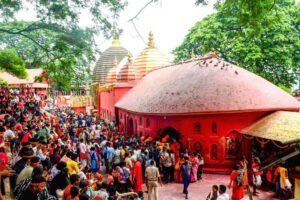
Among the many religious and cultural festivals of India, few possess the unique spiritual depth, symbolism, and mystique of the Ambubachi Mela. Held annually at the revered Kamakhya Temple in Assam, this extraordinary festival attracts lakhs of devotees, saints, ascetics, tantric practitioners, scholars, and tourists from across India and beyond. Unlike most religious gatherings that celebrate victories, births, or mythological events, Ambubachi Mela revolves around a profound acknowledgement of one of nature’s most fundamental biological processes—menstruation. The festival is centred on the belief that Goddess Kamakhya, the presiding deity of the temple and a manifestation of the Divine Mother, undergoes her annual menstrual cycle during this period. This unique belief transforms the festival into a powerful celebration of fertility, creation, womanhood, and the eternal cycle of life.
Situated atop the Nilachal Hills overlooking Guwahati, the Kamakhya Temple is one of the most sacred shrines of Shakti worship in India. It is regarded as one of the most important Shakti Peethas, where, according to Hindu mythology, the yoni of Goddess Sati is believed to have fallen. Unlike many temples that worship a deity through an idol, Kamakhya is revered through a naturally occurring rock formation symbolising the creative power of the feminine principle. This association with fertility and creation forms the philosophical foundation of Ambubachi Mela.
The word “Ambubachi” is generally interpreted as “water flowing” and is closely connected with fertility, monsoon rains, and agricultural renewal. The festival occurs during the Assamese month of Ahaar, usually in June, coinciding with the onset of the monsoon. Traditionally, agricultural societies viewed the earth as a living mother whose fertility became renewed with the arrival of rain. Ambubachi therefore symbolises the annual rejuvenation of Mother Earth, represented through the menstruation of Goddess Kamakhya.
The rituals of Ambubachi Mela are unlike those of any other festival. At the beginning of the observance, the temple doors are closed for three days. During this period, no worship is performed inside the sanctum, and devotees are not permitted to enter. The closure symbolises the period during which the Goddess is believed to be menstruating and resting. This ritualised seclusion reflects a remarkable theological recognition of menstruation as a sacred and natural process rather than something impure or shameful. After three days, elaborate purification ceremonies are performed, and the temple is ceremonially reopened amid immense celebrations and devotional fervour.
The reopening of the temple marks the most anticipated moment of the festival. Thousands of devotees queue for hours, and often days, to receive the blessings of the Goddess. One of the most sacred offerings distributed during this period is the Rakta Bastra, a piece of red cloth associated with the Goddess and regarded as a symbol of divine blessing and protection. Devotees preserve these sacred items with great reverence in their homes, believing that they bring prosperity, spiritual strength, and protection from adversity.
Ambubachi Mela is often described as the “Mahakumbh of the East” because of the enormous number of pilgrims who participate in it every year. The festival transforms Guwahati into a vibrant centre of spirituality. Pilgrims arrive from every corner of India. Sadhus, ascetics, and tantric practitioners establish temporary camps around the temple complex, creating a unique spiritual landscape that is rarely witnessed elsewhere. The gathering includes saints from various traditions, including Shaiva, Shakta, Vaishnava, Aghori, and Tantric sects.
One of the most distinctive aspects of Ambubachi Mela is its close association with Tantra. The Kamakhya Temple has long been recognised as one of the foremost centres of Tantric worship in India. During the mela, practitioners of Tantra gather in large numbers to perform spiritual disciplines, meditation, and rituals. For many tantric practitioners, Ambubachi is considered the most auspicious period of the year for spiritual attainment. The festival thus serves as a living repository of ancient spiritual traditions that have survived through centuries despite social and cultural transformations.
The significance of Ambubachi extends beyond religion. It offers an important cultural and philosophical lesson regarding attitudes towards menstruation. In many societies, menstruation has historically been surrounded by stigma, silence, and misconceptions. Ambubachi presents a radically different perspective by treating menstruation as sacred and life-giving. The festival celebrates the biological process that makes human existence possible and honours the creative power inherent in womanhood. In an era when discussions about gender equality and women’s health have become increasingly important, the symbolic message of Ambubachi carries profound contemporary relevance.
The festival also reflects humanity’s intimate connection with nature. The arrival of monsoon rains has always held special significance for agricultural communities. Rain nourishes the soil, replenishes rivers, and ensures successful cultivation. Ambubachi symbolically links this natural renewal with the fertility of the Goddess and Mother Earth. Through this connection, the festival emphasises the interdependence of humans and the natural world. It reminds people that fertility, growth, and prosperity arise from harmonious relationships with nature rather than domination over it.
For Assam, Ambubachi Mela represents far more than a religious event. It is a major cultural phenomenon that showcases the state’s rich heritage and traditions. During the festival, visitors encounter the diverse cultural expressions of Assam through music, dance, handicrafts, cuisine, and local customs. The mela serves as a platform where spiritual devotion and cultural identity come together, strengthening communal bonds and fostering pride in Assam’s unique heritage.
The economic significance of the festival is equally remarkable. Every year, the influx of pilgrims generates substantial economic activity throughout Guwahati and surrounding areas. Hotels, restaurants, transport operators, vendors, artisans, and small businesses benefit from the increased demand created by the festival. For many traders and local entrepreneurs, Ambubachi provides an important source of livelihood and income. The festival demonstrates how cultural and religious events can contribute meaningfully to regional economic development while preserving traditional practices and community values.
The logistical challenges associated with Ambubachi Mela are immense. Managing lakhs of pilgrims requires extensive planning and coordination among government agencies, temple authorities, security personnel, healthcare providers, and civic organisations. Special arrangements are made for accommodation, drinking water, sanitation, medical services, transportation, and crowd management. These efforts highlight the importance of collective cooperation in ensuring the smooth conduct of large-scale religious gatherings.
Environmental management has become an increasingly important aspect of the festival in recent years. With enormous crowds gathering within a limited area, concerns regarding waste management, sanitation, and ecological sustainability have gained prominence. Authorities have undertaken measures to maintain cleanliness and minimise environmental impact. These initiatives reflect a growing awareness that spiritual celebrations should be conducted responsibly and sustainably, preserving the natural environment that forms an integral part of the festival’s symbolism.
The enduring popularity of Ambubachi Mela demonstrates the resilience of traditional beliefs in a rapidly changing world. Despite technological advancement, urbanisation, and globalisation, millions continue to seek spiritual meaning through rituals and pilgrimages. Ambubachi provides an opportunity for reflection, devotion, and connection with values that transcend material concerns. For many participants, the journey to Kamakhya is not merely a religious obligation but a transformative experience that deepens their understanding of faith and existence.
The festival also serves as a powerful reminder of India’s extraordinary cultural diversity. Within the vast tapestry of Indian traditions, Ambubachi occupies a unique place because of its celebration of feminine power and fertility. It reveals the richness and complexity of Indian spiritual thought, where natural processes are integrated into sacred narratives and where divinity is understood through the rhythms of life itself.
The atmosphere during Ambubachi Mela is truly unforgettable. The chants of devotees, the prayers of ascetics, the fragrance of incense, the vibrant colours of traditional attire, and the collective energy of faith create an environment charged with spirituality. Visitors often describe a sense of awe and wonder as they witness thousands of people united by devotion and reverence for the Divine Mother. The festival transcends social, linguistic, and regional boundaries, bringing together individuals from diverse backgrounds in a shared expression of faith.
At its deepest level, Ambubachi Mela is a celebration of life itself. It honours creation, fertility, renewal, and the sacred feminine energy that sustains the universe. It challenges societal prejudices by elevating a natural biological process to the realm of the divine. It reminds humanity of its dependence upon nature and its connection with the eternal cycles of birth, growth, decay, and regeneration.
As another Ambubachi Mela unfolds at the sacred Kamakhya Temple, millions of devotees once again turn their hearts towards the Divine Mother. Their prayers, rituals, and acts of devotion continue a tradition that has endured for centuries. The festival remains a living testament to Assam’s spiritual heritage, India’s cultural richness, and humanity’s enduring quest to understand the mysteries of creation. In celebrating the fertility of the Goddess and the regenerative power of Mother Earth, Ambubachi Mela affirms a timeless truth: life flourishes through renewal, and the sacred resides within the very processes that sustain existence itself.