
The Silent Disappearance of the Dheki: A Reflection on Assam’s Vanishing Rural Tradition
Heramba Nath
At a time when technological advancement defines the rhythm of everyday life, many traditional practices that once formed the backbone of rural society are quietly fading into obscurity. Among these is the dheki, a simple yet deeply significant wooden device that was once an inseparable part of life in the villages of Assam. Its gradual disappearance is not merely the loss of an agricultural tool, but the erosion of a cultural identity shaped over centuries through labour, community, and tradition.
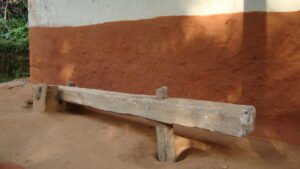
The dheki, traditionally used for husking paddy, represents one of the earliest forms of indigenous technology developed for food processing. The dheki is a natural instrument crafted entirely from wood. Its contribution to the diverse and colourful life of the village is immeasurable. Constructed from wood and operated through a foot-powered lever system, it reflects the ingenuity of rural craftsmanship. By applying pressure with the foot, the user lifts and drops a wooden pestle into a mortar filled with paddy, separating the rice grain from its husk. The process requires patience, skill, and coordination, often performed by women who gather in courtyards and work together in synchronised rhythm.
For generations, the dheki remained central to the food economy of Assamese households. It was not only used to produce rice but also to prepare a wide range of traditional food items. Rice flour, an essential ingredient for making pitha during festivals like Bihu, was prepared using the dheki. Likewise, chira (flattened rice), khandha (broken rice), and other staple forms were derived through this method. Food processed through the dheki was widely regarded as more wholesome and nutritious, as the manual technique preserved the grain’s natural qualities, unlike modern milling processes that often strip away essential nutrients.
Beyond its functional importance, the dheki carried profound social and cultural significance. It created a space of interaction where women shared stories, songs, and lived experiences while working together. The repetitive rhythm of the dheki formed a distinct soundscape that echoed across villages, symbolising both labour and harmony. It may also be mentioned that in the diverse and simple rural life of the village, the dheki played a significant role in bringing women together. There is also a unique charm and attraction in the very sound of the dheki. In many ways, it nurtured a sense of community and collective identity, binding individuals through shared effort and mutual dependence. Generally, for village weddings and feasts, the dheki was also used to pound ginger, garlic, and elephant apple (ou tenga). Furthermore, the dheki was also used to pound medicinal herbs and indigenous plants such as Bhedailota (Paederia foetida), Norsingha (curry leaves), and Manimuni (Centella asiatica), among others — plants that the local people of the village commonly consume as traditional indigenous food. This highlights the indispensable role of the dheki in both the culinary and medicinal traditions of rural Assamese life.
In our childhood days, the mothers and elderly women of the village would come together during the time of Bihu and, with the help of the dheki, prepare chira and khandha. Those days were filled with immense joy, reflecting the simple and unspoiled happiness of village life. The courtyard would echo with laughter, conversations, and the steady rhythm of the dheki. It was a time when work and celebration were intertwined, when tradition was lived rather than consciously preserved. Today, those days are gradually disappearing from the villages. In this age of mechanisation, they have become a painful nostalgia, reminding us of a world that once thrived on togetherness and simplicity.
The gradual decline of the dheki began with the advent of mechanised rice mills. These machines, capable of processing large quantities of paddy within minutes, offer a level of speed and convenience that traditional methods cannot match. As rural economies increasingly integrate with modern systems, the demand for efficiency has pushed the dheki into the margins. What once required time, effort, and collective participation can now be accomplished with minimal human involvement. The transformation has been swift, leaving little space for older practices to survive.
Today, the presence of the dheki in Assamese villages has become increasingly rare. In many places, it survives only as a relic, preserved more out of nostalgia than necessity. Younger generations, growing up in an age of modern appliances and digital lifestyles, often remain unfamiliar with its use or significance. The knowledge associated with its operation, once passed down through generations, now faces the risk of disappearing altogether.
This transition compels a deeper reflection on the cost of progress. Mechanisation has undeniably improved productivity and reduced physical labour, yet it has also contributed to the erosion of traditional knowledge systems and communal practices. The fading of the dheki reflects a broader pattern in which cultural heritage is overshadowed by the demands of modernity. It underscores the delicate balance between embracing technological advancement and preserving the richness of cultural traditions.
An environmental perspective further strengthens this concern. The dheki, being entirely manual, requires no external energy and produces no pollution. In contrast, modern milling systems depend heavily on electricity or fuel, contributing to environmental strain. In an era where sustainability has become a pressing global concern, revisiting such traditional practices offers valuable insight into environmentally harmonious ways of living.
Beyond its cultural and environmental significance, the dheki also served as a natural source of physical exercise for the human body. Operating the dheki required the continuous use of leg muscles, back muscles, and core body strength, as the user repeatedly pressed down the lever with the foot while maintaining balance and coordination. This rhythmic physical activity, performed regularly as part of daily household routine, contributed significantly to the overall fitness and health of rural women. In an age when lifestyle diseases such as obesity, diabetes, joint disorders, and cardiovascular problems were far less prevalent in rural communities, the dheki played a quiet but meaningful role in keeping the body active and healthy. Unlike modern sedentary lifestyles where physical activity must be separately scheduled, the daily use of the dheki naturally integrated exercise into the rhythm of everyday life. In this sense, the dheki was not merely a food processing tool but also a wholesome instrument of physical well-being, offering the benefits of a natural workout without the need for any gymnasium or modern fitness equipment.
There has, in recent years, been a renewed interest in organic and traditional food systems, which has brought some attention back to the dheki. Small-scale initiatives and community efforts have attempted to revive its use, particularly for producing speciality rice products that retain their natural nutritional value. Dheki-processed rice is increasingly appreciated for its distinct texture, taste, and health benefits, presenting an opportunity to blend tradition with contemporary awareness.
Preserving the dheki requires more than sentiment. It demands conscious efforts in documentation, education, and cultural promotion. Introducing such traditional practices within educational frameworks, encouraging their presence in cultural festivals, and recognising their heritage value can contribute to their survival. Community participation and institutional support can together create pathways for sustaining this legacy in meaningful ways.
The story of the dheki is, in essence, a story of transformation. It reflects the shifting patterns of rural life, the growing influence of mechanisation, and the evolving priorities of society. While it may no longer occupy the central place it once held, its significance endures as a symbol of a way of life rooted in cooperation, sustainability, and cultural continuity.
As the echoes of the dheki grow fainter, they carry with them the memory of a time when life moved in harmony with nature and community. Preserving that memory is not about resisting change, but about ensuring that the journey forward remains anchored in the wisdom of the past. The dheki may be disappearing from everyday use, but its legacy continues to live on in the collective consciousness of Assam’s villages — a quiet, rhythmic reminder of a heritage that deserves to be remembered and respected.