
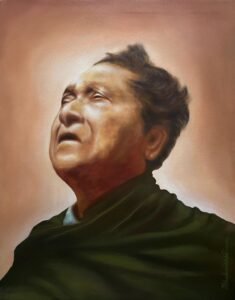
Bishnu Rabha’s Enduring Relevance in an Age of Cultural Anxiety
Siddharth Roy
(The author is a civil engineer, consultant (invitee) to
Rashtriya Raksha University under the Ministry of Home Affairs,
short story writer, columnist, and a contemporary affairs commentator)
Guwahati, Assam
Every year, June 20 is observed as Bishnu Rabha Divas across Assam. Cultural programmes, musical tributes and public meetings commemorate the life of one of the state’s most remarkable sons. Yet remembrance should not become ritual. The true measure of honour lies not in how elaborately a society celebrates its icons but in how seriously it engages with the ideas they stood for. More than five decades after his passing, Bishnu Rabha remains strikingly relevant—not because he belonged to history, but because many of the questions he grappled with continue to confront contemporary India.
Rabha defied easy categorisation. He was a revolutionary, artist, musician, playwright, actor, writer, dancer, social reformer and political activist. Few public figures embodied so many identities with equal conviction. His life demonstrated that art and politics need not exist in separate spheres. For him, culture was not a decorative pursuit reserved for elite audiences; it was an instrument of social awakening and democratic transformation. That understanding deserves renewed attention in an era when culture is increasingly reduced either to commercial entertainment or political symbolism.
The greatest tribute to Rabha is perhaps his refusal to treat culture as static. He celebrated Assam’s diverse traditions while remaining deeply receptive to global artistic influences. He studied classical forms, embraced folk traditions and drew inspiration from revolutionary movements across the world. His worldview reflected confidence rather than insecurity. He understood that cultures survive not by isolating themselves but by engaging with new ideas without losing their moral centre.
That lesson carries profound significance today. Across societies, debates about identity have become increasingly polarised. Globalisation has expanded opportunities for cultural exchange, yet it has also generated anxieties about preserving local languages, traditions and artistic practices. The response to such anxieties often oscillates between uncritical celebration of global culture and rigid cultural protectionism. Rabha offered a more balanced alternative. He believed that preserving cultural identity required creativity, participation and social justice rather than nostalgia alone.
Equally significant was his unwavering commitment to the marginalised. Rabha recognised that culture cannot flourish where inequality persists. The songs of ordinary workers, the stories of indigenous communities and the traditions of rural society occupied an important place in his artistic vision. He challenged the notion that culture belonged exclusively to urban elites or academic institutions. Instead, he viewed every community as a creator of knowledge and artistic expression deserving equal respect.
That perspective remains urgently relevant as rapid urbanisation and digital media reshape cultural consumption. While technology has democratised access to artistic content, it has also encouraged homogenisation. Algorithms privilege popularity over diversity, reducing visibility for regional languages and local artistic traditions. Commercial success increasingly determines cultural value, leaving many folk practices struggling for recognition. Preserving cultural diversity today requires more than documenting traditions in museums. It demands sustained investment in artists, community institutions and education that encourages younger generations to participate actively in cultural life.
Rabha’s legacy also invites reflection on the relationship between intellectual freedom and public life. He was never content with unquestioning conformity. Whether confronting colonial authority, social inequality or political orthodoxy, he believed that progress depended upon the courage to dissent. Democracies require precisely such independent minds. When public discourse becomes increasingly polarised, the space for thoughtful disagreement often narrows. Remembering Rabha should therefore inspire not only admiration for his achievements but also a commitment to protecting the intellectual openness that enabled them.
His life further illustrates that patriotism and regional identity need not exist in opposition. Rabha loved Assam deeply, yet his vision transcended narrow regionalism. He understood that local cultures enrich the broader national fabric rather than weaken it. India’s greatest strength has always been its capacity to accommodate extraordinary linguistic, cultural and religious diversity within a shared constitutional framework. Defending that pluralism remains one of the country’s most important democratic responsibilities.
There is another dimension of Rabha’s thought that deserves greater attention. He consistently emphasised the transformative power of education and artistic literacy. In an age dominated by artificial intelligence, social media and rapidly evolving technologies, education is often discussed primarily in terms of employability. While economic opportunities matter, societies also need citizens capable of critical thinking, empathy and cultural understanding. The arts cultivate precisely these qualities. Rabha recognised that a civilisation advances not merely through technological innovation but through the imagination of its people.
Unfortunately, contemporary public discourse frequently treats culture as an optional luxury rather than a developmental necessity. Budgetary priorities often reflect this assumption. Yet cultural institutions, libraries, theatres and museums contribute to social cohesion no less than physical infrastructure. They preserve collective memory, encourage dialogue across communities and nurture creativity that ultimately strengthens democratic life. Rabha understood this long before cultural policy became a subject of formal discussion.
Observing Bishnu Rabha Divas should therefore become more than an annual celebration of a legendary individual. It should serve as an opportunity to ask whether contemporary society is creating conditions in which art, dissent, diversity and social justice can flourish together. These were the values that animated his extraordinary life.
The relevance of Bishnu Rabha lies not in nostalgia for a celebrated past but in the unfinished future he imagined. His message reminds India that cultural confidence grows through openness, justice and creativity, not exclusion or complacency. Remembering him is important. Living by the ideals he championed would be the far more meaningful tribute.