United Nations Day: A Reflection on Humanity’s Collective Conscience
Heramba Nath
Every year on 24th October, the world observes United Nations Day — a moment that symbolises both commemoration and contemplation. It marks the anniversary of the entry into force of the United Nations Charter in 1945, a foundational document that established an international organisation built upon the ashes of the Second World War. On that day, the world, weary of the devastation of conflict, dared to dream of a new order governed by peace, cooperation, and dialogue rather than division and destruction. Since then, United Nations Day has stood not merely as a ceremonial observance but as a profound reminder of humanity’s shared responsibility towards a more just, secure, and compassionate world. It is a day to measure the moral temperature of the planet and to ask whether the ideals that inspired the creation of the UN have truly taken root in the hearts of nations and people.
The United Nations was born out of one of humanity’s darkest hours. The ruins of Europe and Asia bore silent testimony to the brutality of unchecked nationalism, fascism, and militarism. When the representatives of 50 nations gathered in San Francisco in 1945 to draft the Charter of the United Nations, their vision was anchored in the collective determination to prevent such a catastrophe from recurring. The Charter’s opening words, “We the peoples of the United Nations,” carried an emotional resonance that transcended governments and military alliances. It placed faith in the moral capacity of humankind to learn from suffering and to construct systems of cooperation that could safeguard future generations. This was the philosophical heartbeat of the organisation — a belief that humanity, despite its flaws, could evolve morally and politically.
In its early years, the United Nations embodied a promise that seemed almost utopian. It created an institutional framework through which dialogue could replace confrontation and through which even the smallest nations could raise their voices in the global assembly. The UN General Assembly became a theatre of ideas, where the moral and political struggles of the modern era played out before the eyes of the world. From the decolonisation movements of Asia and Africa to the debates on disarmament and human rights, the organisation became a symbolic space for the articulation of global aspirations. The United Nations also served as a moral compass during times when great powers sought to assert dominance, offering smaller nations a platform to assert their sovereignty and dignity.
Over the decades, the United Nations has evolved into a vast and multifaceted institution encompassing numerous specialised agencies, funds, and programmes. The World Health Organization (WHO), the United Nations Educational, Scientific and Cultural Organization (UNESCO), the United Nations Children’s Fund (UNICEF), the United Nations High Commissioner for Refugees (UNHCR), and the World Food Programme (WFP) are among the most visible manifestations of its global reach. Each of these bodies represents a facet of the UN’s mission — to uplift the human condition through health, education, humanitarian aid, and the promotion of peace. When earthquakes, famines, and epidemics strike, the blue emblem of the United Nations often arrives before any national flag. This is the moral essence of the organisation: to extend compassion where borders might otherwise block it.
United Nations Day thus becomes a reminder of the enormous human infrastructure that works, often silently and selflessly, to sustain global harmony. Yet it also invites introspection. The UN is both a triumph and a contradiction. Its ideals are noble, but its execution is often constrained by political realities. The Security Council, for instance, reflects the post-war balance of power more than the democratic aspirations of the twenty-first century. The five permanent members — China, France, Russia, the United Kingdom, and the United States — hold the power of veto, a mechanism that has repeatedly paralysed collective action in moments of grave humanitarian crisis. From the wars in Syria and Ukraine to the suffering in Gaza, the limitations of the United Nations are laid bare whenever geopolitical interests overshadow moral imperatives.
Still, to dismiss the organisation as ineffective would be an injustice to the spirit of its mission. The United Nations is not merely a political body — it is an evolving reflection of humanity’s conscience. It embodies the paradox of our age: the simultaneous existence of extraordinary technological progress and persistent moral immaturity. The world today stands at a crossroads where global challenges — climate change, pandemics, migration crises, economic inequality, and cyber threats — demand cooperation on a scale unprecedented in history. No single nation, no matter how powerful, can address these issues alone. In that sense, the founding vision of the United Nations has never been more relevant.
One of the most enduring legacies of the United Nations has been the Universal Declaration of Human Rights (UDHR), adopted in 1948. It remains one of the most profound affirmations of human dignity ever articulated. Drafted in the aftermath of the Holocaust and world war, it declared that all human beings are born free and equal in dignity and rights. This declaration has since become the moral and legal foundation for countless national constitutions, civil rights movements, and global campaigns for justice. On United Nations Day, the UDHR serves as both a mirror and a challenge — a mirror reflecting the progress we have made, and a challenge reminding us of the distance still to travel.
The role of the United Nations in peacekeeping remains one of its most visible and challenging functions. Blue-helmeted soldiers have served in conflict zones from the Congo to Cyprus, from Lebanon to South Sudan. They are the embodiment of international solidarity, yet their missions often reveal the complexities of enforcing peace in regions torn by ethnic hatred, political manipulation, and poverty. Many peacekeepers have laid down their lives in the service of global stability — their sacrifices a quiet testimony to the belief that peace, however fragile, is worth defending. The idea of peacekeeping itself reflects a profound philosophical shift — from war as a legitimate instrument of power to peace as the ultimate goal of civilisation.
United Nations Day is also an occasion to reflect on the organisation’s evolving relationship with development and sustainability. The Millennium Development Goals (MDGs), launched in 2000, and their successor, the Sustainable Development Goals (SDGs), adopted in 2015, represent humanity’s most ambitious attempt to align global progress with social justice and environmental balance. The SDGs, with their 17 interlinked objectives, aim to eradicate poverty, ensure quality education, promote gender equality, achieve clean energy, and protect the planet. They are, in essence, a moral blueprint for survival in the twenty-first century. They recognise that economic growth divorced from environmental care or social equity leads to destruction rather than prosperity. On this day, as nations take stock of their progress, the SDGs remind the world that development without empathy is hollow.
The pandemic years tested the resilience of global cooperation like never before. COVID-19 exposed the vulnerabilities of both rich and poor nations, revealing how deeply interconnected the world truly is. In this crisis, the United Nations and its agencies played a crucial role in coordinating health responses, providing humanitarian aid, and advocating for vaccine equity. Yet the pandemic also revealed the fractures of inequality — how wealthier nations hoarded vaccines while poorer ones struggled to protect their populations. These inequalities question whether the moral foundation upon which the UN was built has been eroded by the economic and political selfishness of states. United Nations Day thus becomes a moral checkpoint for humanity — a time to ask whether solidarity is a performative gesture or a lived reality.
Climate change, arguably the greatest existential challenge of our age, has brought the United Nations back to the centre of global discourse. The Intergovernmental Panel on Climate Change (IPCC), the United Nations Framework Convention on Climate Change (UNFCCC), and the annual Conference of the Parties (COP) meetings have all underscored the urgency of collective climate action. The Paris Agreement of 2015 was hailed as a landmark of international cooperation, binding nations to reduce carbon emissions and transition towards cleaner energy. Yet progress remains painfully slow, often undermined by political inertia and corporate interests. The UN’s role in this context is not just administrative — it is ethical. It seeks to remind nations that environmental degradation is not a local issue but a moral crime against future generations. United Nations Day therefore serves as a quiet warning against complacency — a call to reawaken our shared sense of planetary stewardship.
The role of the United Nations in promoting gender equality has also been transformative. Through UN Women and related agencies, the organisation has advanced the cause of women’s rights globally, advocating for equal pay, political representation, reproductive rights, and the end of gender-based violence. Women’s participation in peace processes, governance, and education is no longer seen as a privilege but as a necessity for sustainable development. Yet gender inequality remains one of the most stubborn barriers to human progress. From patriarchal traditions to economic exclusion, women across the world continue to face systemic injustices. On United Nations Day, it becomes imperative to remember that peace cannot flourish where half of humanity remains marginalised.
The United Nations has also played an indispensable role in shaping the moral vocabulary of the modern world. Terms such as “human rights,” “peacekeeping,” “sustainable development,” and “global citizenship” are now part of everyday discourse because the organisation gave them institutional legitimacy. In an era where populism and nationalism often dominate political rhetoric, the UN stands as a counterbalance — an institution that insists on the interconnectedness of human destiny. Yet this universality is increasingly under strain. The rise of unilateralism, economic protectionism, and digital misinformation threatens to undo decades of progress in multilateralism. In such times, United Nations Day reminds humanity that the alternative to cooperation is chaos.
For smaller nations, especially in the developing world, the United Nations represents both a shield and a bridge. It provides them with a voice in global governance and a platform to address issues like climate vulnerability, debt, and sustainable growth. In regions such as Africa, Asia, and Latin America, UN agencies have provided not only aid but also hope. In war-torn regions, the United Nations often serves as the last vestige of order, offering humanitarian relief where governments have failed. Its blue flag, fluttering in refugee camps or disaster zones, becomes a symbol of compassion that transcends race, religion, and nationality.
The educational and cultural role of UNESCO deserves special reflection on this day. By promoting the preservation of world heritage sites, advancing scientific cooperation, and nurturing cultural diversity, UNESCO reinforces the idea that peace begins in the minds of human beings. The preservation of culture, language, and art becomes a means of promoting understanding among civilisations. The very concept of world heritage unites humanity in the recognition that certain achievements — like the Pyramids of Egypt or the temples of Angkor — belong not to a single nation but to all of humankind. In an age when cultural identities are often politicised, UNESCO’s mission reminds us that diversity is not a threat but a treasure.
United Nations Day is also a moment to pay tribute to the countless individuals — diplomats, peacekeepers, doctors, teachers, and volunteers — who embody the spirit of the organisation. Their work often unfolds far from the spotlight, in refugee camps, classrooms, hospitals, and conflict zones. Their lives remind the world that the United Nations is not an abstract institution; it is a living organism powered by human compassion. The moral energy that sustains it comes not from resolutions passed in New York but from the quiet acts of service performed across continents.
Yet, even as we celebrate its achievements, we must acknowledge the growing disillusionment with global governance. Critics argue that the United Nations has become too bureaucratic, too slow to respond to crises, and too beholden to the interests of the powerful. The inability to prevent genocides in Rwanda and Bosnia, the paralysis during the Syrian civil war, and the inadequacy of responses to modern refugee crises have all damaged the organisation’s credibility. However, the failures of the UN are often reflections of the failures of its member states. The United Nations is, after all, a mirror of the world it serves — flawed, divided, but still striving towards something better.
In the twenty-first century, the very nature of conflict and cooperation is changing. Wars are no longer fought solely with weapons but with information, economics, and technology. Cyber warfare, artificial intelligence, and misinformation campaigns now pose new forms of threats that the founders of the UN could scarcely have imagined. In this new terrain, the United Nations must reinvent itself to remain relevant. It must expand its role from being a peacekeeper to becoming a peace enabler — a platform for ethical technology, digital governance, and cyber peace. United Nations Day, therefore, is not just about celebrating history but about preparing for an uncertain future.
The issue of refugee protection continues to test the conscience of the international community. According to UNHCR, over 120 million people are currently displaced by conflict, persecution, and climate change. The images of families crossing seas, deserts, and barbed wires have become symbols of a world that still fails to uphold its moral obligations. The UN Refugee Agency has worked tirelessly to provide shelter and dignity to displaced persons, yet the crisis continues to grow. The world’s apathy towards the suffering of refugees reflects the erosion of empathy that threatens the very foundation of international solidarity. On this day, the plight of the displaced becomes a moral question that transcends policy — it asks whether the world still believes in the humanity of strangers.
The debate over UN reform has become central to discussions about its future. The Security Council, designed in 1945, no longer represents the geopolitical realities of the twenty-first century. Nations like India, Japan, Brazil, and Germany have long called for permanent membership, arguing that the council’s structure must reflect contemporary power dynamics and population representation. India, with its consistent contributions to peacekeeping missions, its growing economic power, and its moral voice in global affairs, stands as a legitimate candidate. Yet reform remains elusive, blocked by political calculations and resistance from within. United Nations Day thus carries a message not only of celebration but also of demand — a demand for democratisation within global governance. For the United Nations to remain relevant, it must embody the very values it preaches: equality, fairness, and inclusion.
Digital governance has emerged as one of the most urgent frontiers for international cooperation. The digital revolution, while empowering billions, has also unleashed threats — data breaches, misinformation, surveillance, and the manipulation of artificial intelligence. The United Nations has begun to explore global frameworks for ethical AI and digital human rights. These initiatives reflect the growing recognition that cyberspace, like air and water, is a shared domain requiring collective stewardship. The digital divide between rich and poor nations, if left unaddressed, could deepen inequalities and undermine the very spirit of the SDGs. United Nations Day, in this context, is a reminder that global citizenship now extends beyond borders to virtual spaces, where truth, privacy, and ethics must be safeguarded as fiercely as physical territories.
Philosophically, the United Nations embodies the ancient ideal of global oneness. It echoes the spirit of thinkers like Tagore, Gandhi, and Einstein, who envisioned a world united not by conquest but by conscience. The very concept of multilateralism is rooted in humility — the recognition that no nation, however powerful, possesses all the answers. In times of growing nationalism, when countries retreat into self-interest and xenophobia, the UN’s existence reaffirms the moral truth that our destinies are intertwined. Global citizenship, therefore, is not merely a political concept; it is a spiritual realisation that compassion must guide policy. On United Nations Day, humanity stands before its own reflection, asking whether it still believes in the dream of a common home.
India’s relationship with the United Nations reflects both idealism and realism. As a founding member, India has consistently supported the UN’s mission, contributing significantly to peacekeeping operations and humanitarian efforts. From Congo to Lebanon, Indian soldiers have served with distinction under the blue flag. India’s voice in the UN has often echoed the aspirations of the developing world, advocating for decolonisation, disarmament, and equitable development. Today, as India emerges as a global power, its call for Security Council reform symbolises a broader demand for justice in world affairs. On United Nations Day, India’s role reminds the world that moral leadership, rooted in civilisation and compassion, remains as crucial as economic or military strength.
The future of multilateralism will depend on the ability of nations to reconcile sovereignty with solidarity. The pandemic, the climate crisis, and the digital age have shown that isolationism is an illusion. The global order must evolve from competition to cooperation, from dominance to dialogue. The United Nations can serve as the anchor of this transformation, but only if it sheds its bureaucratic rigidity and embraces innovation. Youth participation, technology-driven transparency, and accountability must define its future. United Nations Day, then, is both a commemoration of what humanity has built and a commitment to what it must build anew.
Every blue flag that flutters on this day symbolises a fragile but enduring hope — the hope that humanity, despite its greed and divisions, can still summon wisdom; the hope that dialogue can prevail over dominance, and justice over power; the hope that the phrase “We the peoples” can once again resonate not merely in documents but in hearts. Seventy-nine years after its birth, the United Nations remains humanity’s longest and most courageous experiment in collective conscience — its journey a story of perseverance amid disillusionment, of faith amid cynicism.
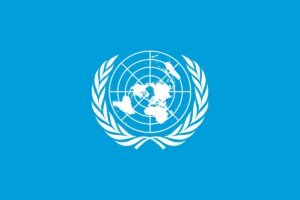
In the end, United Nations Day is less a celebration of an institution than of an idea — the idea that humanity, though diverse and divided, can still find unity in purpose. It is an affirmation that the moral arc of history, however slow, bends towards justice when guided by empathy and dialogue. The United Nations stands as both mirror and map: a reflection of what we are and a compass pointing towards what we must become. Its flag, with its world map surrounded by olive branches, carries a symbolism deeper than politics — it represents the eternal yearning of humankind to live in harmony within one shared home. On this day, the world pauses not just to commemorate the signing of a charter but to renew an ancient and sacred promise: that peace, though fragile, remains humanity’s highest calling.