
National Dengue Day and Public Awareness
Heramba Nath
National Dengue Day, observed annually on May 16 in India, stands as an important public health observance dedicated to raising awareness about dengue fever, encouraging preventive action, and mobilising communities to combat one of the country’s most persistent mosquito-borne diseases. The observance is led by the Ministry of Health and Family Welfare with the aim of educating citizens about the causes, symptoms, prevention, and treatment of dengue while promoting community participation in maintaining public health and environmental cleanliness.
In modern times, dengue has emerged as a serious challenge not only for India but for many countries around the world. What was once considered a seasonal illness confined to certain tropical regions has now become a widespread public health concern affecting urban, semi-urban, and rural populations alike. Rapid urbanisation, climate change, population growth, poor sanitation systems, increasing water stagnation, and environmental negligence have collectively accelerated the spread of dengue across different regions.
National Dengue Day therefore carries immense significance because it reminds society that diseases caused by environmental neglect and lack of awareness cannot be controlled through medical treatment alone. Prevention, awareness, discipline, cleanliness, and collective social responsibility remain the strongest weapons against dengue fever.
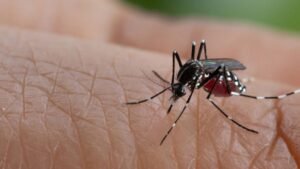
Dengue is caused by the dengue virus, which spreads through the bite of infected Aedes aegypti mosquitoes. Unlike ordinary mosquitoes that are more active during the night, Aedes mosquitoes generally bite during daytime, especially during early morning and late afternoon hours. These mosquitoes breed in clean stagnant water commonly found in household surroundings such as flower pots, water tanks, air coolers, construction sites, discarded plastic containers, tyres, coconut shells, and blocked drains.
One of the major reasons behind the growing spread of dengue is the changing pattern of urban living. Expanding cities often struggle with poor waste management, inadequate drainage systems, and uncontrolled construction activities. During the monsoon season, rainwater accumulates in numerous open spaces, creating ideal breeding grounds for mosquitoes. In many cases, even small amounts of stagnant water become dangerous because mosquitoes can breed rapidly within a few days.
Climate change has further intensified the threat. Rising temperatures, unpredictable rainfall patterns, floods, and humidity create favourable environmental conditions for mosquito survival and reproduction. Public health experts across the world have repeatedly warned that mosquito-borne diseases may become more severe in the future if environmental degradation and climate-related challenges are not addressed seriously.
The symptoms of dengue fever often begin suddenly and can vary from mild to severe. High fever, severe headache, body pain, muscle and joint pain, nausea, vomiting, fatigue, pain behind the eyes, and skin rashes are common symptoms associated with the disease. Because of the intense muscle and joint pain experienced by patients, dengue is sometimes referred to as “breakbone fever.”
While many patients recover with timely treatment, adequate hydration, and proper medical supervision, severe dengue can become life-threatening. Complications such as Dengue Haemorrhagic Fever and Dengue Shock Syndrome may lead to internal bleeding, dangerously low blood pressure, organ failure, and even death. Children, elderly individuals, and people with weak immunity are often more vulnerable to severe complications.
One of the greatest challenges associated with dengue is that its early symptoms are often ignored or mistaken for ordinary viral fever. Many people resort to self-medication without consulting doctors, which can delay proper diagnosis and treatment. Medical experts continuously advise citizens to seek immediate medical attention if symptoms such as persistent fever, weakness, vomiting, bleeding, or severe pain appear during dengue-prone seasons.
The observance of National Dengue Day becomes especially important in this context because awareness and early diagnosis can save lives. Public awareness campaigns educate people about recognising symptoms, avoiding self-medication, maintaining hydration, and seeking professional healthcare support at the earliest stage.
Prevention remains the most effective strategy in controlling dengue because there is still no universally accessible guaranteed cure capable of eliminating the disease entirely. The control of mosquito breeding therefore becomes the central focus of dengue prevention programmes. Every household, institution, and community must actively participate in preventing stagnant water accumulation.
Simple preventive practices can significantly reduce the spread of dengue. Water tanks should always remain covered. Coolers, flower pots, and storage containers should be cleaned regularly. Unused tyres, plastic bottles, and waste materials capable of collecting water should be disposed of properly. Drains should be kept clean to avoid waterlogging. Construction sites must ensure proper drainage management to prevent mosquito breeding.
Personal protection is equally important. People should wear full-sleeved clothing, particularly during monsoon months. Mosquito repellents, mosquito nets, and window screens can help minimise exposure to mosquito bites. Schools and parents should ensure that children are protected during outdoor activities because mosquitoes responsible for dengue bite mostly during daytime hours.
National Dengue Day also highlights the importance of public participation and community awareness. Government efforts alone cannot eliminate dengue unless citizens cooperate actively. Health departments may conduct fogging operations and awareness campaigns, but lasting success depends upon public discipline and civic responsibility.
Community cleanliness drives can play a transformative role in reducing mosquito breeding. Resident welfare groups, village committees, youth organisations, educational institutions, and local bodies should regularly organise awareness programmes and sanitation activities. When communities work together, the impact of preventive efforts becomes far more effective.
Educational institutions have a particularly important responsibility in promoting awareness among younger generations. Schools and colleges can organise debates, poster competitions, seminars, awareness rallies, and cleanliness campaigns focusing on mosquito-borne diseases. Students often become effective messengers of public health awareness within their families and neighbourhoods.
Healthcare workers and frontline staff deserve immense appreciation for their contribution during dengue outbreaks. Doctors, nurses, ASHA workers, sanitation workers, laboratory technicians, and municipal employees often work tirelessly under difficult conditions to control the spread of disease. Their responsibilities include identifying cases, conducting tests, providing treatment, carrying out surveillance activities, spreading awareness, and eliminating mosquito breeding sites.
In many rural and economically weaker regions, frontline health workers become the first point of contact for patients. Their role in educating communities about prevention and early treatment becomes extremely valuable in reducing complications and saving lives.
Media organisations also have a significant role in spreading awareness regarding dengue prevention. Responsible journalism can help educate people about symptoms, preventive measures, government advisories, and public health guidelines. During outbreaks, misinformation and rumours often spread rapidly through social media platforms, creating unnecessary panic and confusion. Scientific information and verified public communication therefore become essential in ensuring calm and informed public response.
The economic impact of dengue outbreaks is another serious concern. Families affected by dengue often face financial difficulties due to medical expenses, diagnostic tests, hospitalisation, loss of workdays, and prolonged recovery periods. In severe cases, economic hardship becomes an additional burden alongside physical suffering. At a larger level, widespread outbreaks affect productivity, educational activities, and healthcare infrastructure.
Public health experts repeatedly emphasise that investment in preventive healthcare is more effective and economical than dealing with large-scale outbreaks after they occur. Strengthening sanitation systems, improving drainage infrastructure, enhancing healthcare access, and increasing public awareness can significantly reduce the social and economic burden caused by dengue.
Scientific research and innovation continue to offer hope in the fight against dengue. Researchers around the world are working on vaccines, improved diagnostic technologies, mosquito control methods, and disease surveillance systems. Some countries have introduced experimental mosquito control programmes involving biological techniques aimed at reducing mosquito populations. India too continues to strengthen disease monitoring and healthcare preparedness through coordinated public health initiatives.
However, medical science alone cannot completely solve the problem unless environmental responsibility and public cooperation improve simultaneously. Dengue is deeply connected with human behaviour, urban planning, sanitation management, and civic awareness. Every neglected drain, every discarded plastic container, and every stagnant water source can potentially contribute to the spread of disease.
National Dengue Day therefore carries a larger social message beyond disease prevention. It reminds society about the importance of environmental cleanliness, responsible citizenship, and collective accountability. Public health cannot be separated from environmental protection. Clean surroundings, proper waste disposal, and disciplined civic behaviour are not merely aesthetic concerns; they are essential requirements for a healthy society.
India’s growing urban population makes the challenge even more complex. Expanding cities require stronger municipal systems, efficient waste management, scientific drainage planning, and continuous health awareness programmes. Rural areas too require improved sanitation infrastructure and healthcare accessibility to prevent seasonal outbreaks.
The observance of National Dengue Day encourages policymakers, healthcare professionals, educational institutions, media organisations, civil society groups, and ordinary citizens to work together with a shared sense of responsibility. Public health is not solely the duty of governments or hospitals; it is a collective social commitment that requires active participation from every individual.
At a time when the world continues to face various health challenges, the importance of preventive healthcare has become clearer than ever before. The lessons learned from disease outbreaks repeatedly demonstrate that awareness, preparedness, discipline, and community cooperation are essential in protecting public health.
National Dengue Day serves as a reminder that even small preventive actions taken consistently by millions of people can produce significant positive outcomes. Cleaning surroundings, avoiding water stagnation, seeking early medical care, spreading awareness, and maintaining hygiene are simple yet powerful steps capable of saving countless lives.
The fight against dengue is ultimately a fight for healthier communities, cleaner environments, stronger healthcare systems, and more responsible civic behaviour. A nation that values public health awareness and environmental discipline builds stronger protection against diseases and emergencies.
As India moves forward on the path of development and modernisation, strengthening public health awareness must remain a national priority. National Dengue Day symbolises not only the fight against a dangerous disease but also the collective determination to build a safer, cleaner, healthier, and more aware society for future generations.
Through sustained awareness campaigns, scientific advancement, environmental responsibility, community participation, and strong healthcare systems, the spread of dengue can be significantly controlled. The observance of National Dengue Day therefore stands as a meaningful call for unity, vigilance, and action — reminding every citizen that public health protection begins from individual responsibility and collective effort.