
Diwali: The Light We Must Carry Beyond the Festival
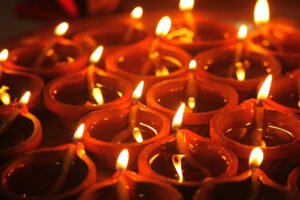
As dusk settles across India, thousands of lamps begin to glow in doorways, courtyards, temples and streets. Yet Diwali, celebrated as the Festival of Lights, is not simply an occasion for decoration, sweets and fireworks. Its enduring significance lies in the ideas it places before us: that goodness can overcome cruelty, knowledge can dispel ignorance, and hope can survive even the longest darkness.
The word Deepavali means a row of lamps. In the familiar account from the Ramayana, people of Ayodhya lit lamps to welcome Lord Rama, Sita and Lakshmana after fourteen years of exile and Rama’s victory over Ravana. The story gives the festival a powerful moral meaning. Rama’s return is not only the homecoming of a beloved prince; it represents the restoration of justice after a period of suffering. The lamps become a public expression of joy, faith and the belief that wrongdoing need not have the final word.
Diwali, however, does not have a single story or a uniform form of observance. In parts of southern India, the festival is associated with Lord Krishna’s victory over Narakasura. In Bengal, Odisha and Assam, many devotees worship Goddess Kali, seeking strength to confront destructive forces. Jain communities mark the nirvana of Lord Mahavira, while Sikhs celebrate Bandi Chhor Divas, recalling Guru Hargobind’s release from imprisonment and his insistence that others be freed as well. These traditions differ, but each gives light a meaning larger than the flame itself: liberation, courage, compassion and the triumph of what is right.
The festival is generally observed over five days, beginning with Dhanteras and followed by Naraka Chaturdashi, the main Diwali day, Govardhan Puja and Bhai Dooj, though customs vary across regions. Homes are cleaned, entrances decorated with rangoli, lamps placed in windows and sweets shared with relatives and neighbours. Lakshmi and Ganesha are worshipped for prosperity, wisdom and the removal of obstacles. These rituals express a desire for renewal. Cleaning a home before Diwali can also be understood as an invitation to clear the mind of resentment, envy and habits that diminish our lives.
The association with Goddess Lakshmi is often interpreted through the language of wealth. But prosperity should not be reduced to the possession of gold, property or expensive goods. Wealth has value when it brings dignity, security and the ability to help others. The spirit of Diwali is better served by thoughtful celebration, honest earnings, responsible spending and generosity towards those who have less.
The festival also has an important economic dimension. The weeks around Diwali support millions of small traders, artisans, potters, sweet makers, flower sellers, transport workers and seasonal employees. Purchases of clothes, household goods, gifts and food bring activity to local markets. The festival can therefore become an occasion to strengthen livelihoods, especially when consumers choose products made by local craftspeople and small businesses. Prosperity becomes more meaningful when it travels beyond the walls of one home.
Yet the brightness of celebration should not make us indifferent to its costs. Firecrackers can add to air and noise pollution, affecting children, older people and those with respiratory or heart conditions. The National Centre for Disease Control advises people with asthma and other lung diseases to avoid exposure to cracker smoke and recommends checking air quality. A Central Pollution Control Board assessment of Diwali 2019 recorded a 149 per cent rise in PM2.5 compared with the pre Diwali day. Such findings remind us that celebration should not come at the expense of another person’s health. Diyas, community celebrations and quieter festivities can preserve joy while reducing harm.
There is another lesson in the simple act of lighting a lamp. A flame does not argue with darkness or complain about its size. It simply shines. In a society often divided by suspicion, anger and public hostility, Diwali invites us to practise a similar quiet courage. A kind word, a repaired relationship, help offered without publicity or a refusal to participate in injustice may seem small, but each can change the atmosphere around us.
The true test of Diwali begins when the decorations come down and ordinary life resumes. If the festival leaves us more compassionate, less wasteful, more grateful and more willing to stand against wrongdoing, its purpose has reached beyond ritual. The lamps will eventually burn out, but the values they represent need not. Diwali asks us not merely to light our homes for one evening, but to become sources of light for one another throughout the year.
Siddharth Roy
Guwahati, Assam