
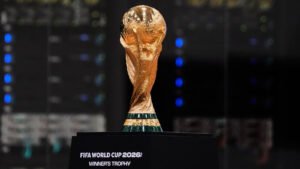
The World Cup Is Not Just Another Asset Class
For decades, the FIFA World Cup has been the closest thing sport has to a global public institution. Every four years, it transcends politics, geography and commerce to become a shared cultural experience. Commercial interests have always been part of the tournament—broadcast rights, sponsorships and merchandising generate billions of dollars, but these revenues have historically served the competition rather than defined it. That distinction is now under threat.
FIFA’s proposal to create a commercial subsidiary and sell a minority stake in it to private investors has triggered an unusually fierce backlash from UEFA and several other football confederations. UEFA has gone so far as to threaten a boycott of FIFA competitions if the proposal proceeds, arguing that football’s greatest tournament should not become an investment product. Even senior FIFA insiders have publicly criticised the plan, exposing divisions rarely seen within world football’s governing structure.
The immediate debate is about governance, but the larger question is philosophical: Can the world’s most important sporting competition remain a public sporting institution if financial investors acquire a stake in its commercial future?
FIFA insists that governance will remain entirely under its control. According to its proposal, investors would own only a minority interest in a newly created commercial enterprise, while sporting decisions would continue to rest exclusively with FIFA. The governing body argues that the new structure could unlock more than $10 billion in additional funding for football development worldwide.
On paper, the argument appears reasonable. Modern sport requires capital. Infrastructure is expensive, grassroots football needs sustained investment and developing nations often struggle to finance coaching, stadiums and youth academies. If private capital can accelerate these objectives without compromising sporting integrity, why should football refuse it?
Because ownership shapes incentives. Private investors do not invest to preserve heritage; they invest to maximise returns. Even minority shareholders expect rising revenues, expanding commercial opportunities and higher enterprise valuations. Once those expectations become embedded, commercial logic inevitably begins to influence institutional decisions, even if formal governance structures remain unchanged.
Football has already experienced this evolution. Domestic leagues have expanded television inventories, added tournaments, scheduled overseas fixtures and increased the number of matches largely because commercial revenues demanded continual growth. FIFA itself has enlarged the World Cup from 32 to 48 teams while simultaneously creating new global club competitions. Whether one supports these reforms or not, they reflect a broader trend: the game’s commercial calendar is increasingly driven by revenue optimisation. Introducing external investors risks reinforcing that trajectory.
The concern, therefore, is not that investors will decide refereeing appointments or tournament formats. It is subtler. Commercial expectations could create constant pressure to expand competitions further, introduce additional media products, seek new sponsorship categories or redesign tournaments primarily around financial returns rather than sporting merit.
That explains why UEFA’s opposition extends beyond the technical details of the proposal. Its criticism focuses as much on process as substance. European football authorities argue that a decision of such significance was developed with inadequate consultation and threatens the long-established principle that football’s governing institutions exist primarily as custodians of the sport rather than commercial asset managers.
This dispute also reflects a deeper institutional struggle. Under Gianni Infantino, FIFA has sought to centralise commercial influence through expanded competitions and more ambitious global revenue strategies. UEFA, whose own competitions already generate enormous revenues, fears not merely financial competition but a redefinition of football governance itself. The disagreement is therefore about power as much as principle.
Yet FIFA’s proposal should not be dismissed outright simply because it involves private capital. Professional sport has long relied on sophisticated financial models. Formula One, the Premier League and several major American leagues have successfully combined commercial expansion with sporting excellence. Investment itself is not the problem. The challenge is ensuring that commercial objectives never become the overriding purpose of sporting institutions. That is where FIFA’s proposal appears weakest.
For an organisation that already enjoys robust revenues, substantial reserves and unmatched commercial appeal, the case for introducing outside investors requires exceptional transparency. Instead, critics point to limited consultation, unanswered questions about valuation and uncertainty over the long-term implications of the proposed structure. Such opacity naturally breeds suspicion.
Football’s administrators often describe themselves as custodians rather than owners of the game. That distinction matters. Custodians are expected to preserve institutions for future generations, not simply maximise their financial value.
The World Cup undoubtedly requires sustainable financing to support football’s global growth. But sustainable finance is not synonymous with financialisation. There remains a profound difference between generating commercial revenue from the tournament and transforming its commercial future into an investable asset.
That is the line FIFA must be careful not to cross. The World Cup’s greatest strength has never been its balance sheet. It is the trust that billions of supporters place in the belief that the tournament ultimately belongs to football itself. Once that belief begins to weaken, no valuation model can restore it.
Siddharth Roy
Guwahati, Assam