
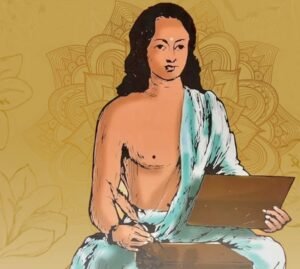
Sri Sri Madhabdev: The Eternal Light of Assamese Vaishnavism and Cultural Renaissance
Heramba Nath
The observance of the Janmotsav of Sri Sri Madhabdev on June 1 is not merely a religious occasion for Assam; it is a profound moment of collective remembrance, cultural reflection, and spiritual renewal. Across the length and breadth of Assam, from the historic satras to village naamghars and urban congregations, devotees gather to pay homage to one of the greatest saints, philosophers, poets, reformers, and architects of Assamese civilisation. His life remains a shining testament to devotion, scholarship, humility, and social transformation.
Sri Sri Madhabdev occupies an unparalleled place in the history of Assam. Revered as the foremost disciple and spiritual successor of Mahapurush Srimanta Sankardev, he played a decisive role in preserving, strengthening, and expanding the Neo-Vaishnavite movement that transformed Assamese society. If Sankardev laid the foundation of Ekasarana Naam Dharma, Madhabdev built upon that foundation and ensured its continuity for future generations. Through his literary genius, organisational abilities, spiritual leadership, and unwavering dedication, he helped shape the cultural identity of Assam in ways that continue to resonate even today.
Born on June 1, 1489, at Letekupukhuri in present-day Lakhimpur district according to traditional accounts, Madhabdev emerged during a period marked by social divisions, religious orthodoxy, and political uncertainties. Assam of the fifteenth and sixteenth centuries was a mosaic of diverse ethnic groups, customs, beliefs, and social structures. While this diversity enriched the region, it also created barriers and inequalities that often prevented social cohesion. It was in such an environment that the teachings of Sankardev and later Madhabdev offered a vision of unity grounded in devotion, morality, and human dignity.
The early life of Madhabdev reflected extraordinary intellectual promise. He received extensive education in Sanskrit literature, philosophy, scriptures, and traditional learning. Possessing a sharp intellect and a deeply inquisitive mind, he initially followed the Shakta tradition and was known for his commitment to established religious practices. Yet history often turns upon moments of profound transformation, and for Madhabdev, that transformation came through his encounter with Sankardev.
The meeting between Sankardev and Madhabdev remains one of the most significant episodes in Assamese spiritual history. Tradition records that Madhabdev initially approached Sankardev with the intention of engaging him in theological debate. Confident in his own scholarship and convictions, he sought to challenge the saint’s teachings. However, the encounter produced an entirely different outcome. Deeply moved by Sankardev’s wisdom, spiritual insight, and compassionate vision, Madhabdev underwent a remarkable change of heart. He embraced Ekasarana Naam Dharma and dedicated his life to its propagation.
This decision altered not only the course of his own life but also the future of Assamese society. Few examples in history illustrate such intellectual humility and spiritual courage. To abandon long-held beliefs and embrace a new path after sincere reflection requires extraordinary strength of character. Madhabdev’s transformation demonstrated his commitment to truth above personal pride and established the foundation for his later achievements.
After becoming a disciple of Sankardev, Madhabdev devoted himself completely to the service of his guru and the dissemination of Neo-Vaishnavite ideals. His loyalty, discipline, and spiritual dedication earned him the trust and affection of Sankardev. Over time, he emerged as the movement’s most capable organiser and interpreter. Following Sankardev’s passing, it was largely due to Madhabdev’s leadership that the movement survived numerous challenges and continued to flourish.
One of the most enduring aspects of Madhabdev’s legacy lies in his literary contributions. Assamese literature owes an immeasurable debt to his creative genius. His masterpiece, the revered Naam Ghoxa, occupies a sacred place in Assamese spiritual and literary life. Composed in lucid and melodious verse, the work presents profound philosophical teachings in a manner accessible to ordinary people. It continues to be recited daily in countless homes, satras, and naamghars throughout Assam.
The Naam Ghoxa is much more than a devotional text. It is a spiritual guide, a philosophical treatise, and a literary treasure. Through its verses, Madhabdev articulated the principles of devotion to one supreme God, emphasised humility and compassion, and encouraged moral living. The text reflects a remarkable synthesis of deep theological understanding and poetic elegance. Even centuries after its composition, its verses continue to inspire spiritual reflection and ethical conduct.
Apart from the Naam Ghoxa, Madhabdev enriched Assamese literature through numerous devotional songs known as Borgeets. These compositions occupy a distinguished position in the cultural heritage of Assam. Combining lyrical beauty with spiritual depth, they represent one of the finest achievements of medieval Assamese music. Their melodies continue to echo through satras and naamghars, carrying the timeless message of devotion and divine love.
Madhabdev was also a gifted dramatist. His contributions to the tradition of Ankiya Naat further strengthened the cultural foundations established by Sankardev. Through drama, music, dance, and performance, he helped communicate spiritual teachings to diverse audiences. These artistic forms transformed religious instruction into a vibrant communal experience, fostering both spiritual engagement and cultural participation.
Perhaps the greatest contribution of Madhabdev lies in his role as a social reformer. The Neo-Vaishnavite movement challenged rigid social hierarchies and emphasised the spiritual equality of all human beings. In an era when caste distinctions often determined social status and opportunities, Madhabdev advocated a more inclusive vision of society. The naamghar became a democratic institution where people from different backgrounds could gather for collective worship, discussion, and community life.
This emphasis on inclusiveness remains one of the most relevant aspects of his teachings today. Contemporary societies continue to grapple with various forms of discrimination, exclusion, and social fragmentation. Madhabdev’s message reminds us that genuine spirituality transcends barriers of caste, ethnicity, wealth, and status. His vision of community was rooted in mutual respect, shared devotion, and collective responsibility.
The institution of the satra, strengthened under Madhabdev’s guidance, became a powerful instrument of cultural preservation and social organisation. Satras functioned not only as centres of religious learning but also as hubs of education, literature, music, art, and community service. For centuries, they have played a vital role in safeguarding Assamese traditions and transmitting them from one generation to the next.
The cultural influence of Madhabdev extends far beyond religious boundaries. The values he promoted helped shape Assamese identity itself. Literature, music, theatre, dance, ethics, social organisation, and communal life all bear the imprint of his contributions. It is difficult to imagine the cultural landscape of Assam without the enduring legacy of the Neo-Vaishnavite renaissance led by Sankardev and sustained by Madhabdev.
The Janmotsav of Sri Sri Madhabdev therefore represents far more than the commemoration of a historical figure. It serves as an opportunity to reconnect with the ideals that guided his life. In a rapidly changing world marked by materialism, social tensions, and moral uncertainties, his teachings retain extraordinary relevance. They encourage simplicity amidst excess, compassion amidst conflict, and spiritual depth amidst distraction.
The celebration also highlights the importance of preserving Assam’s rich cultural heritage. The younger generation must be encouraged not only to learn about Madhabdev’s life but also to engage with the values embedded in his works. Educational institutions, cultural organisations, literary bodies, and religious communities all have an important role to play in ensuring that his legacy remains vibrant and meaningful.
As Assam continues its journey of development and modernisation, the wisdom of Madhabdev offers valuable guidance. Economic progress and technological advancement are undoubtedly important, but enduring progress must also be grounded in ethical values, social harmony, and cultural confidence. Madhabdev’s life demonstrates that true development encompasses both material prosperity and moral growth.
His teachings remind us that societies flourish when they nurture compassion, respect diversity, uphold justice, and cultivate spiritual awareness. These principles are as relevant in the twenty-first century as they were five centuries ago. They provide a framework for building communities that are both prosperous and humane.
On the occasion of the Janmotsav of Sri Sri Madhabdev, Assam bows in gratitude before one of its greatest sons. His contributions transcend time, geography, and generations. He remains not only a saint of the past but also a guide for the present and an inspiration for the future.
More than five hundred years after his birth, the light kindled by Madhabdev continues to illuminate countless lives. His words still resonate in prayer halls, his songs still inspire devotion, his ideals still guide communities, and his legacy still shapes the soul of Assam. As devotees gather to celebrate his birth anniversary, they reaffirm a timeless truth: the influence of great spiritual leaders does not diminish with the passage of time. Instead, it grows stronger, offering wisdom and hope to every new generation that seeks guidance from their example.
The Janmotsav of Sri Sri Madhabdev is therefore not merely a remembrance of history. It is a celebration of a living legacy—a legacy of faith, culture, knowledge, compassion, and human unity that continues to enrich Assam and inspire humanity.