
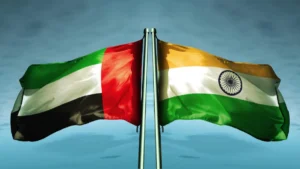
India and the UAE: Redefining Strategic Partnership in a Changing World
Heramba Nath
The growing partnership between India and the United Arab Emirates has emerged as one of the most significant diplomatic and economic developments in contemporary international relations. What was once a relationship largely defined by oil trade and expatriate employment has now transformed into a broad strategic partnership involving defence, energy security, technology, infrastructure, connectivity, maritime cooperation, food security, renewable energy, digital finance and geopolitical coordination. The recent understandings and agreements reached between the two countries indicate not merely diplomatic goodwill but the gradual construction of a long-term strategic architecture capable of influencing the future of Asia and the Middle East.
The present phase of India-UAE relations reflects the realities of a rapidly changing world order. The global economy is undergoing major transitions due to geopolitical tensions, technological competition, energy uncertainties, climate challenges and shifting trade networks. Nations are increasingly searching for reliable strategic partners capable of contributing to economic resilience and regional stability. In this context, India and the UAE have recognised the importance of deepening cooperation based on mutual interests, trust and long-term vision.
Recent high-level diplomatic engagements between New Delhi and Abu Dhabi have further strengthened bilateral ties. During Prime Minister Narendra Modi’s visit to the UAE in May 2026, several important agreements were signed relating to defence cooperation, petroleum reserves, liquefied petroleum gas supply and strategic investment partnerships. These agreements covered cooperation in maritime security, cyber defence, strategic communications, military training and energy infrastructure. Such developments demonstrate that India-UAE relations are no longer limited to economic exchange but are steadily evolving into a multidimensional strategic partnership with regional and global significance.
Historically, India and the Gulf region have shared centuries-old commercial and cultural interactions. Long before the emergence of modern nation-states, traders from western India regularly travelled across the Arabian Sea to Gulf ports carrying spices, textiles, handicrafts and agricultural products. Maritime trade linked Indian coastal regions with Arab societies, creating deep economic and cultural connections. These historical interactions laid the foundation for the strong people-to-people relations that continue even today.
The establishment of the United Arab Emirates in 1971 marked a new chapter in bilateral engagement. As the UAE developed into a major commercial and energy hub, Indian workers, professionals and entrepreneurs migrated to the country in large numbers. Over time, the Indian diaspora became one of the most important pillars of the bilateral relationship. Today, millions of Indians reside in the UAE and contribute significantly to sectors such as construction, healthcare, finance, education, technology and retail trade. Their contribution to the UAE’s economic growth has strengthened social and economic bonds between the two countries.
The Indian community in the UAE also plays an important role in India’s economy through remittances, investments and business networks. At the same time, the UAE benefits from the skills, labour and entrepreneurial capabilities of Indian expatriates. This interdependence has created a human dimension within bilateral relations that goes beyond formal diplomacy.
In recent years, however, the relationship has expanded far beyond diaspora and oil trade. The signing of the Comprehensive Economic Partnership Agreement (CEPA) in 2022 became a major turning point in India-UAE relations. The agreement reduced tariffs, improved market access and accelerated economic cooperation across multiple sectors. CEPA represented a strategic effort by both countries to create a more integrated economic framework capable of supporting long-term trade expansion.
The impact of CEPA has been substantial. Bilateral trade between India and the UAE crossed the remarkable milestone of 100 billion US dollars, demonstrating the rapid growth of commercial ties. Indian exports such as pharmaceuticals, gems and jewellery, textiles, engineering goods, processed food products and machinery gained greater access to UAE markets. Simultaneously, UAE investments in India’s infrastructure, renewable energy, logistics, ports and real estate sectors increased significantly.
The UAE today ranks among India’s major trading partners and one of the leading sources of foreign investment. Indian companies increasingly use the UAE as a gateway to access markets in Africa, Europe and West Asia. Dubai, in particular, has become a crucial hub for Indian business operations, financial activities and international trade.
Economic cooperation between the two countries is also being shaped by changing global supply chains. The disruptions caused by geopolitical tensions and global economic uncertainties have encouraged nations to diversify trade partnerships and logistics networks. India and the UAE are attempting to position themselves advantageously within these emerging economic transformations.
One of the most important dimensions of the India-UAE relationship is energy security. India remains heavily dependent on imported crude oil and gas to sustain economic growth and industrial expansion. The UAE, as one of the world’s leading energy producers, occupies a strategic position in India’s energy policy. Stable energy supplies from the Gulf are essential for India’s economic stability.
Recent agreements relating to strategic petroleum reserves and long-term energy supply arrangements indicate the growing strategic nature of energy cooperation between the two countries. India’s efforts to establish petroleum reserves are aimed at protecting the economy against disruptions in global energy markets. The UAE’s willingness to participate in these arrangements demonstrates confidence in India as a long-term strategic partner.
At the same time, both countries recognise that the global energy sector is gradually transitioning toward cleaner and more sustainable alternatives. Climate concerns, environmental regulations and technological innovation are reshaping the future of energy production and consumption. Consequently, India and the UAE are expanding cooperation in renewable energy sectors such as solar power, green hydrogen and sustainable infrastructure development.
The UAE has invested heavily in clean energy initiatives as part of its broader economic diversification strategy. India, meanwhile, has launched ambitious renewable energy programmes aimed at reducing carbon emissions and expanding green energy capacity. Cooperation in these sectors can create mutually beneficial opportunities for technology transfer, investment and research collaboration.
Defence and security cooperation represents another significant transformation in bilateral relations. Earlier, India-UAE relations were primarily economic in orientation, while defence cooperation remained limited. In recent years, however, regional geopolitical developments have encouraged both countries to strengthen security collaboration.
The Gulf region remains strategically important because of its location along major maritime trade routes and energy corridors. Instability in the region can directly affect global commerce, shipping and energy supplies. India and the UAE therefore share common interests in maintaining maritime security, combating piracy and ensuring the safety of international shipping lanes.
Joint military exercises, naval cooperation, intelligence-sharing mechanisms and counter-terrorism coordination have increased steadily between the two countries. Recent agreements covering cyber defence, strategic communications and military training indicate that security cooperation is becoming increasingly institutionalised.
India’s growing naval presence in the Indian Ocean and the UAE’s strategic geographical position in the Gulf create opportunities for greater maritime collaboration. Such cooperation also aligns with broader efforts to maintain regional stability amid geopolitical tensions in West Asia.
Counter-terrorism cooperation has become particularly important. Both countries recognise the dangers posed by extremism, radicalisation and transnational terrorism. The UAE’s support for combating terrorism and preventing illicit financial networks has strengthened security coordination with India.
Another emerging area of cooperation is digital and technological integration. The world economy is increasingly shaped by digital finance, artificial intelligence, cybersecurity and innovation ecosystems. India’s rapidly expanding digital economy and technological capabilities complement the UAE’s ambitions to become a global technology and innovation hub.
Recent initiatives linking India’s Unified Payments Interface (UPI) with UAE digital payment systems reflect efforts to modernise financial connectivity between the two countries. Similarly, the integration of RuPay and JAYWAN payment networks facilitates easier transactions, tourism and commercial exchanges.
Technology partnerships between India and the UAE extend beyond digital payments. Discussions on artificial intelligence, data infrastructure, smart cities, fintech innovation and semiconductor cooperation indicate the future-oriented nature of the relationship. The UAE sees India as a major source of technological expertise and skilled human resources, while India benefits from UAE investments and global financial connectivity.
Education and knowledge partnerships are also becoming increasingly important. Institutions such as IIT Delhi-Abu Dhabi reflect growing academic collaboration between the two countries. The establishment of higher educational institutions and research partnerships indicates a broader vision aimed at intellectual cooperation and innovation-driven development.
The UAE’s efforts to transform itself into a global centre for education, technology and sustainability align closely with India’s growing reputation as a knowledge economy. Academic exchanges, research collaboration and student mobility can strengthen long-term people-to-people engagement.
Food security is another critical area where bilateral cooperation has gained importance. Gulf countries face structural challenges related to agricultural production because of geographical and climatic limitations. India, with its vast agricultural base, can play a major role in ensuring food security for the UAE.
Investments in food processing, agricultural logistics, cold storage infrastructure and supply chains have therefore become important areas of cooperation. Such collaboration also benefits Indian farmers and agribusiness sectors by expanding export opportunities.
The India-UAE partnership also has broader geopolitical implications. West Asia has undergone major transformations in recent years due to shifting alliances, regional conflicts and economic diversification efforts. The UAE has adopted a pragmatic and economically driven foreign policy focused on modernisation, global partnerships and strategic balancing.
India, meanwhile, has intensified engagement with Gulf nations as part of its broader West Asia policy. Traditionally, India’s foreign policy toward the Gulf focused mainly on energy security and diaspora welfare. Today, however, India views the region through a wider strategic lens involving trade, connectivity, maritime cooperation and geopolitical influence.
The convergence of interests between India and the UAE has therefore created favourable conditions for deeper strategic alignment. Both countries support multipolarity, economic cooperation and regional stability. Their partnership reflects a practical diplomatic approach based on mutual benefit rather than ideological alignment.
Connectivity initiatives further highlight the strategic importance of the relationship. India, the UAE and several international partners are exploring economic corridors aimed at improving trade routes, infrastructure integration and logistical connectivity between Asia, the Middle East and Europe. Such projects could reshape global trade networks and reduce transportation costs while enhancing regional economic integration.
The UAE’s strategic location as a global logistics hub strengthens India’s access to international markets. Indian exports, businesses and supply chains benefit from the UAE’s advanced infrastructure, ports and financial systems. Simultaneously, the UAE benefits from India’s manufacturing capabilities, large consumer market and skilled workforce.
The partnership also carries significant implications for India’s global ambitions. India aspires to strengthen its position as a major economic and geopolitical power in the twenty-first century. Strong ties with the Gulf region are essential for achieving these objectives. The UAE, because of its economic influence and strategic location, occupies a central place in this vision.
For the UAE, cooperation with India supports economic diversification beyond hydrocarbons. The UAE understands that long-term prosperity will depend upon innovation, technology, global trade and strategic investments rather than oil alone. India’s expanding economy offers enormous opportunities in these sectors.
Despite impressive progress, certain challenges continue to exist. Geopolitical instability in West Asia remains a potential source of uncertainty. Conflicts involving regional powers can affect trade routes, energy supplies and diplomatic alignments. Global economic slowdowns and fluctuations in oil prices may also influence bilateral economic dynamics.
The welfare of migrant workers remains another important issue. Although labour reforms have improved conditions in recent years, concerns regarding wages, working conditions and legal protections occasionally arise. Ensuring the dignity, safety and welfare of expatriate workers must remain an important component of bilateral relations.
Environmental sustainability will also become increasingly important in future cooperation. Climate change poses serious risks to both India and the Gulf region through rising temperatures, water scarcity and extreme weather events. Joint efforts in renewable energy, climate adaptation and sustainable urban development can therefore become major pillars of future engagement.
The cultural dimension of India-UAE relations deserves equal recognition. The UAE’s multicultural society includes people from diverse national, religious and linguistic backgrounds. Indian culture, cuisine, cinema and traditions have become deeply embedded within the social landscape of the UAE. Cultural festivals, educational exchanges and tourism further strengthen people-to-people understanding.
Religious tolerance and coexistence promoted by the UAE have also contributed positively to bilateral goodwill. The construction of temples and support for cultural activities demonstrate respect for India’s diverse heritage and strengthen social harmony within expatriate communities.
The growing cooperation between India and the UAE also reflects broader changes occurring in global diplomacy. Traditional alliances based solely on military or ideological considerations are gradually giving way to partnerships focused on trade, technology, infrastructure and economic resilience. Nations increasingly seek flexible partnerships capable of addressing practical challenges in an interconnected world.
India and the UAE exemplify this emerging diplomatic model. Their partnership combines economic pragmatism with strategic cooperation while maintaining policy flexibility. This approach enables both countries to pursue national interests without becoming trapped within rigid geopolitical blocs.
As the world experiences rapid transformations driven by artificial intelligence, climate transition, digital economies and geopolitical competition, the India-UAE partnership is likely to acquire even greater importance. Cooperation in innovation, clean energy, logistics, maritime trade and digital finance can shape new economic opportunities across Asia and the Middle East.
The future trajectory of bilateral relations will depend upon sustained political commitment, institutional coordination and effective implementation of agreements. Symbolic diplomacy alone cannot guarantee long-term success. Concrete outcomes benefiting businesses, workers, investors, students and ordinary citizens will determine the real strength of the partnership.
The agreements and understandings reached today between India and the UAE therefore represent more than diplomatic formalities. They reflect the emergence of a comprehensive strategic partnership rooted in economic interdependence, geopolitical convergence and shared developmental aspirations. In an uncertain global environment, the growing cooperation between the two countries offers a model of pragmatic engagement capable of contributing to regional stability, economic integration and long-term prosperity.
The India-UAE relationship has travelled a remarkable distance from traditional trade links and labour migration to become one of the most influential partnerships in contemporary international relations. Its continued expansion will likely shape not only bilateral progress but also broader geopolitical and economic developments across the Indo-Pacific and West Asian regions in the decades ahead.