
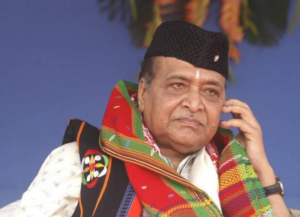
Bhupen Hazarika: The Music of a People, the Message of Humanity
When Bhupen Hazarika sang, he did more than give a tune to words. He gave people a way to recognise themselves. His songs carried Assam beyond its hills, fields and riverbanks, yet never lost the intimacy of home. On his death anniversary, fifteen years after he passed away on November 5, 2011, we must ask why his music continues to matter.
Born in Sadiya in 1926, Hazarika grew up in a land where rivers shape memory as much as geography. The Brahmaputra became a recurring presence in his work. So did ordinary people: boatmen, workers, mothers, the poor and those pushed to the margins. He listened to them, and his songs gave their experiences a place in public memory. His music was rooted in Assam, but its concerns belonged to everyone.
Education and travel widened his world. After studying in India, he went to Columbia University in the United States. New ideas and musical traditions broadened his outlook, but distance did not weaken his bond with home. It helped him see that struggles in one corner of the world often echo elsewhere. He could sing about the Brahmaputra and speak to anyone who had known loss, injustice or longing.
This ability to connect the local with the universal distinguished Hazarika. “Manuhe manuhor babe” remains a powerful expression of human solidarity. Its appeal is simple: people must stand by one another. There is no complicated philosophy in that thought, only a demand for compassion. When differences are too easily turned into divisions, the song sounds less like a relic and more like a reminder we need.
Hazarika was not only a singer. He was a composer, lyricist, poet and filmmaker. His work in Assamese, Bengali and Hindi brought the Northeast to audiences across India. “Bistirno Parore” and “O Ganga Behti Ho Kyun” used the river to question suffering and injustice. His music for films, including “Rudaali”, introduced his voice to people who may not have known his Assamese songs. He moved between languages without losing his artistic identity.
His contribution was also cultural. He showed that Assam’s identity was not a closed room, but a meeting place of communities, languages and traditions. Drawing from folk music and the shared heritage of the Northeast, he challenged the habit of viewing the region only through conflict or remoteness. His songs invited India to listen, rather than merely look.
Yet remembrance can become shallow when reduced to annual ceremonies and familiar tributes. Hazarika deserves more than a garland and a few hours of music. His works should be preserved and made accessible to young listeners. Schools and colleges can introduce his songs as windows into history, society and human feeling. His films, writings and recordings need preservation so future generations can encounter his creativity.
His work offers questions for our society. Do we hear those rarely heard? Do we respect cultural differences without treating them as threats? Can progress mean more than roads, buildings and economic figures, and include dignity for ordinary people? These concerns run through Hazarika’s music, even when unstated.
The Bharat Ratna, awarded posthumously in 2019, recognised his contribution to Indian culture. But the deepest measure of his achievement lies in the way his songs continue to belong to people. As Assam marks his birth centenary year, it has an opportunity to take his legacy beyond celebration and into public life.
Bhupen Hazarika is no longer here to sing. But his music still asks us to listen: to the river, to one another, and to the humanity we share. His songs keep this conversation alive, inviting each generation to find meaning.
Siddharth Roy
Guwahati, Assam