
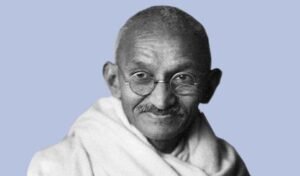
Why the Moral Imperative of Mahatma Gandhi Endures
On October 2, India observes Gandhi Jayanti to mark the birth anniversary of Mohandas Karamchand Gandhi. Beyond national borders, the United Nations commemorates this day as the International Day of Non-Violence. In an era defined by geopolitical polarization, institutional trust deficits, and accelerated societal change, returning to Gandhi’s legacy is not merely an act of nostalgic remembrance—it is a critical necessity for public life and modern statecraft.
Gandhi’s trajectory from a young lawyer in South Africa to the ideological core of India’s anti-colonial movement remains a defining chapter in modern political history. In the racial discrimination of South Africa, he refined Satyagraha—the insistence on truth through nonviolent resistance. Upon his return to India in 1915, Gandhi transformed what had been an elite political dialogue into a mass movement. His campaigns, from Champaran and Kheda to the Non-Cooperation Movement, the Salt March, and the Quit India Movement, demonstrated that nonviolence (Ahimsa) was not passive submission, but an active, strategic instrument of democratic assertion. By linking mass political participation with personal ethics, he challenged the legitimacy of imperial rule without resorting to armed conflict.
Yet Gandhi’s contribution to India extended far beyond securing political independence. He recognized that national freedom (Swaraj) without social and economic self-reliance would remain inherently incomplete. His philosophy rested on holistic development (Sarvodaya), measuring progress by the upliftment of the most vulnerable. He championed localized economic resilience (Swadeshi) and maintained that political agitation must be paired with internal social reform, including the eradication of untouchability and the promotion of communal harmony. Through his concept of trusteeship, he argued that wealth and knowledge should be held in trust for the collective benefit of society rather than personal exploitation.
In today’s global landscape, Gandhian thought offers practical frameworks for contemporary governance and diplomacy. Faced with escalating global conflicts, his emphasis on Ahimsa provides a pragmatic mechanism for conflict resolution. Amid a deepening environmental crisis, his warning that the world has enough for human need but not for human greed serves as a foundational principle for sustainable development. Furthermore, in an age of fragmented public discourse, his commitment to Satya (Truth) demands radical empathy and integrity in public conduct. His methods provided a proven template for global civil rights movements, directly inspiring figures like Martin Luther King Jr., Nelson Mandela, and Vaclav Havel.
Celebrating Gandhi Jayanti ultimately requires moving beyond routine tributes and ritualistic observances. The true honor to his memory lies in evaluating public policy, civic duty, and governance structures against his ethical framework. Gandhi’s vision demands that political authority remain accountable, economic growth remain inclusive, and social reform remain continuous. As India navigates its expanding role in a complex international order, the Mahatma’s insistence on uniting ethical means with noble ends provides an unyielding compass. Freedom, as he demonstrated, is an ongoing practice of self-discipline, ethical responsibility, and selfless service to humanity.
Siddharth Roy
Guwahati, Assam