India’s 80th Independence Day: The Long Journey from Subjecthood to Citizenship
On August 15, 2026, India will observe its 80th Independence Day. The arithmetic is worth clarifying: the country completes 79 years of independence, but this is the 80th occasion on which Independence Day is being observed. The distinction invites a larger question: what did independence mean in 1947, and how far has the republic travelled since?
Freedom did not arrive as a gift bestowed on India. It was the outcome of a long, uneven and profoundly diverse struggle. The uprising of 1857 was an early, formidable challenge to colonial authority, though it did not yet constitute a modern national movement. The decades that followed saw growing political consciousness and an increasingly articulate demand for Indian participation in governance. The founding of the Indian National Congress in 1885 gave this political awakening an institutional platform.
The movement acquired a broader social and economic character in the first decades of the twentieth century. The Swadeshi movement following the partition of Bengal in 1905 linked political freedom with economic self-reliance. Revolutionary groups, constitutional nationalists, social reformers and journalists pursued different paths, contributing to a growing rejection of colonial subordination.
Mahatma Gandhi transformed the scale and vocabulary of this struggle. Returning to India in 1915, he brought political mobilisation, mass participation and non-violent resistance together. The Non-Cooperation Movement, the Salt March and the Civil Disobedience Movement converted nationalism from an elite political project into a mass aspiration. Yet the freedom struggle was never Gandhi alone. Subhas Chandra Bose and the Indian National Army represented another strand of resistance; Bhagat Singh and his comrades embodied revolutionary impatience; workers, peasants, students, women and countless local organisers sustained the movement far beyond the national leadership.
The final phase was shaped by the Second World War. The Quit India Movement of 1942 demanded an immediate end to British rule and demonstrated the depth of popular impatience with colonialism. Its leaders were swiftly imprisoned, but the movement spread through strikes, underground networks and resistance. The war also transformed Britain’s economic position. The INA trials, post-war political unrest and the changing international balance further weakened the foundations of imperial rule.
Independence, however, came entwined with catastrophe. The Indian Independence Act of 1947 created two dominions, India and Pakistan. The transfer of power ended British political domination, but Partition unleashed communal violence and one of the largest forced migrations of the twentieth century. Millions were displaced and hundreds of thousands, perhaps more, were killed. The memory of August 15 must therefore contain both celebration and mourning.
The achievement of 1947 was not merely a change of rulers. Its significance lay in the decision to make political sovereignty answerable to citizens. The Constitution, adopted in 1949 and enforced in 1950, transformed freedom into a framework of fundamental rights, representative government, universal adult franchise and equality before law. India chose democracy at a time when many newly independent countries were struggling to establish durable institutions.
That choice has been tested repeatedly. Wars, food shortages, poverty, political centralisation, social conflict, the Emergency, economic crises and communal tensions have challenged the republic. Yet elections have remained central to the transfer of political power, institutions have evolved, and a diverse population has continued to negotiate its differences within a constitutional framework.
India in 2026 is vastly different from India in 1947. Life expectancy has risen, literacy has expanded, infrastructure has transformed mobility, the economy has diversified, and Indian science and technology have acquired global visibility. India is no longer a postcolonial state seeking recognition; it is a major country whose choices increasingly affect the international order.
But history should make us wary of confusing national power with national fulfilment. Independence was meant to secure dignity, not merely sovereignty. A democracy is weakened when inequality becomes entrenched, when opportunity depends excessively on birth, when institutions lose public trust, or when development proceeds at the cost of ecological security. The unfinished tasks of freedom are therefore as important as its achievements.
The 80th Independence Day should consequently be less an occasion for historical self-congratulation than for historical reflection. The generation of 1947 inherited a wounded but hopeful country and built institutions that allowed its citizens to govern themselves. The responsibility of the present generation is to keep freedom meaningful in everyday life.
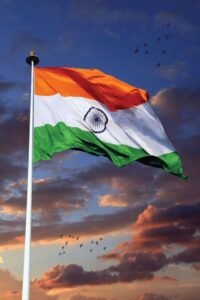
The tricolour flying above the Red Fort is a powerful symbol, but the true measure of independence lies elsewhere: in the farmer who can pursue a secure livelihood, the child who receives a good education, the citizen who can dissent without fear, the worker who finds dignified employment and the community that believes justice is available to all.
India’s freedom struggle ended colonial rule. The republic’s task is to make freedom substantive. Eighty Independence Days after 1947, that remains the most enduring promise of August 15.
Siddharth Roy
Guwahati, Assam