
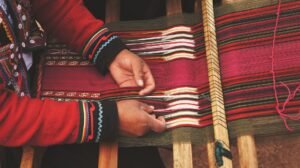
National Handloom Day: Weaving Heritage into India’s Future
Every year on August 7, India celebrates National Handloom Day, but the occasion deserves far more than ceremonial speeches, exhibitions and social media campaigns. It marks the anniversary of the Swadeshi Movement of 1905, when the boycott of imported textiles became an act of political resistance against colonial rule. The loom emerged as an instrument of self-reliance, while indigenous fabrics became symbols of dignity and national pride. More than a century later, India no longer fights colonialism, but it faces a different challenge: ensuring that its rich handloom tradition survives in an economy driven by mass production, fast fashion and changing consumer preferences.
National Handloom Day is therefore not simply about preserving a craft. It is about protecting livelihoods, celebrating cultural diversity and recognising that economic progress need not come at the expense of heritage.
India’s association with handwoven textiles predates recorded history. Ancient travellers and traders marvelled at Indian cotton, silk and muslin, which travelled from ports on the subcontinent to markets across Asia, Europe and Africa. Every region gradually developed its own weaving vocabulary. Banarasi silk, Chanderi, Sambalpuri, Pashmina, Patola, Kanchipuram, Muga and countless other traditions evolved through generations of artisans who transformed local resources into works of extraordinary craftsmanship. These fabrics reflected geography, climate, religion and community, making every weave a cultural archive.
This flourishing tradition suffered severe setbacks during colonial rule. British industrialisation flooded Indian markets with machine-made cloth, undermining local weaving communities that had sustained themselves for centuries. The Swadeshi Movement responded by encouraging Indians to reject imported textiles and support indigenous production. Later, Mahatma Gandhi turned khadi into a powerful symbol of economic freedom, arguing that political independence would remain incomplete without self-reliance in production. The spinning wheel came to represent not only resistance but also the dignity of labour.
The relevance of that message has not disappeared.
Today, the handloom sector remains among India’s largest providers of rural, non-agricultural employment. Millions of weavers, dyers, designers and allied workers depend directly or indirectly on this ecosystem. Women constitute a significant share of this workforce, making handloom an important contributor to rural incomes and household resilience. Unlike large-scale mechanised industries, handloom production distributes economic activity across villages and small towns, allowing traditional skills to remain embedded within local communities.
Yet the sector faces mounting pressures.
Machine-made textiles dominate retail markets because they are cheaper, faster to produce and easier to standardise. Handloom products, by contrast, require patience, craftsmanship and time. Consumers often compare prices without recognising the difference between industrial manufacturing and artisanal production. The result is predictable. Many weaving families struggle with irregular earnings, rising costs of yarn and dyes, limited access to markets and uncertain demand. Younger generations increasingly seek employment outside the profession, fearing that weaving no longer offers financial stability.
If this trend continues, India risks losing far more than an economic activity. It risks losing centuries of accumulated knowledge that cannot be replicated once abandoned. Traditional motifs, weaving techniques and natural dyeing practices represent intangible cultural heritage passed from one generation to the next through lived experience rather than textbooks.
Paradoxically, the global economy may now be moving in favour of handloom.
Consumers across the world are questioning the environmental costs of fast fashion. Textile waste has become a growing ecological concern, while energy-intensive manufacturing contributes significantly to carbon emissions. Handloom offers a sustainable alternative. It consumes minimal electricity, often uses natural fibres and produces significantly lower environmental impacts than mechanised textile production. In an era increasingly shaped by climate consciousness, India’s handloom heritage possesses a competitive advantage that extends well beyond aesthetics.
However, sustainability alone cannot secure the future of the sector.
Public policy must become more responsive to the realities faced by weavers. Affordable institutional credit, easier access to raw materials, improved design support and stronger marketing networks are essential. Digital commerce has opened new possibilities, but many artisans still lack the skills and infrastructure needed to participate effectively in online markets. Bridging this gap should become a national priority.
Branding also requires fresh thinking. Handloom should not be marketed merely as an occasional luxury or a product associated with festivals. It deserves recognition as an everyday expression of quality, authenticity and responsible consumption. Greater collaboration between designers, educational institutions, cooperatives and private retailers can help expand domestic and international demand while ensuring fair compensation for artisans.
Consumers have an equally important role. Every handwoven saree, shawl or fabric purchased supports a family whose knowledge has been refined over generations. Choosing handloom is not simply an act of consumption; it is an investment in India’s living cultural heritage. While industrial textiles will continue to dominate large segments of the market, there remains ample space for handcrafted products that celebrate individuality and craftsmanship.
The story of Assam’s Muga silk, Kashmir’s Pashmina, Odisha’s Ikat and Gujarat’s Patola demonstrates that India’s textile diversity remains one of its greatest cultural strengths. These traditions enrich tourism, strengthen local economies and reinforce India’s global identity as a civilisation of remarkable artistic excellence.
National Handloom Day should therefore encourage reflection rather than ritual. It reminds us that development is most meaningful when it carries communities forward without erasing their past. India’s looms have survived colonial exploitation, economic transitions and changing fashions because they embody far more than commercial value. They represent resilience, creativity and the enduring relationship between culture and livelihood.
Preserving handloom is not an exercise in nostalgia. It is a commitment to inclusive growth, environmental responsibility and cultural continuity. As India aspires to become a developed nation, the fabric of its progress must be woven not only with technology and industry but also with the timeless skill of the millions whose hands continue to keep one of the country’s oldest traditions alive.
Siddharth Roy
Guwahati, Assam