
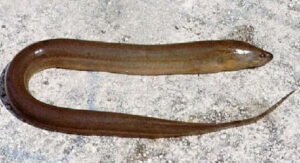
Monopterus cuchia: The Vanishing Swamp Eel of Assam
Heramba Nath
The freshwater swamp eel known as Monopterus cuchia is gradually disappearing from the wetlands and water bodies of Assam, raising serious concern among environmentalists, researchers, and local fishing communities. Once commonly found in ponds, marshes, beels, paddy fields, canals, and muddy wetlands across the state, this unique aquatic species has now become increasingly rare in many regions. The decline of Monopterus cuchia is not only the possible disappearance of an important freshwater species but also a warning sign regarding the deteriorating condition of Assam’s wetland ecosystems and aquatic biodiversity.
Monopterus cuchia, commonly known as “Cuchia,” belongs to the family Synbranchidae and is often called the swamp eel because of its ability to survive in muddy and marshy habitats. Its elongated cylindrical body resembles a snake, causing many people to misunderstand or fear it. The species possesses a smooth, slippery body without scales and generally appears dark brown or blackish in colour. Unlike ordinary fishes, it has no paired fins, and its body structure is specially adapted for life in wetlands and oxygen-deficient environments.
One of the most remarkable characteristics of Monopterus cuchia is its extraordinary adaptability. The species can survive in muddy environments where oxygen levels are extremely low. It has specialised respiratory adaptations that allow it to breathe atmospheric oxygen, enabling survival even when water bodies dry up partially during summer. During dry periods, the swamp eel burrows deep into moist mud and remains alive until favourable conditions return. For generations, rural people in Assam have observed this unique behaviour and maintained a close connection with the species as part of their wetland-based lifestyle.
Traditionally, Monopterus cuchia has been valued both as food and as a source of livelihood. In many rural areas of Assam and neighbouring regions, it is considered highly nutritious due to its rich protein, iron, calcium, and mineral content. Some communities also associate the species with traditional medicinal value, believing that it helps improve physical strength and recovery from illness. Because of increasing awareness of its nutritional importance, the demand for cuchia has grown considerably in domestic and international markets.
The growing commercial demand has transformed Monopterus cuchia into a valuable export commodity. Local fishermen and traders collect the species from wetlands and sell it at high prices in regional markets. For economically weaker communities, especially those dependent on wetland fishing, the sale of cuchia provides an important source of income. However, this economic demand has also become one of the major reasons behind the rapid decline of the species in Assam.
Overexploitation is now threatening the survival of Monopterus cuchia in natural habitats. Large-scale indiscriminate harvesting takes place throughout the year without proper conservation measures. Even immature and juvenile individuals are frequently captured before they can reproduce. Continuous and uncontrolled catching has reduced the natural breeding population significantly. In several areas where cuchia was once abundant, local fishermen now report that finding the species has become increasingly difficult.
Habitat destruction has further accelerated the decline of Monopterus cuchia in Assam. Wetlands, ponds, marshes, and floodplain ecosystems are disappearing rapidly because of urbanisation, encroachment, road construction, and unplanned development activities. Many traditional wetlands are being filled up for buildings, commercial establishments, and agricultural expansion without considering their ecological importance. Since Monopterus cuchia depends heavily on muddy wetland habitats for feeding, shelter, and breeding, the destruction of these ecosystems directly threatens its survival.
Agricultural pollution has become another serious danger for the species. Excessive use of chemical fertilisers, pesticides, and insecticides contaminates water bodies and destroys aquatic biodiversity. Toxic chemicals affect the swamp eel directly while also reducing the population of small aquatic organisms on which it depends for food. Household waste, sewage discharge, plastic pollution, and industrial contamination have further degraded wetland ecosystems across Assam. As a bottom-dwelling species living within mud and sediment, Monopterus cuchia is especially vulnerable to pollutants accumulating in wetland soils.
Climate change is also emerging as a growing threat. Irregular rainfall patterns, prolonged droughts, floods, and rising temperatures are affecting freshwater ecosystems throughout Northeast India. Seasonal wetlands often dry earlier than before, while sudden floods disturb breeding and feeding habitats. Such environmental instability weakens the long-term survival prospects of wetland-dependent species like Monopterus cuchia.
The decline of Monopterus cuchia reflects the broader ecological crisis facing Assam’s wetlands. Wetlands are among the most productive ecosystems in the world and provide immense ecological benefits. They help control floods, recharge groundwater, purify water, maintain biodiversity, and support thousands of aquatic organisms. Assam’s traditional wetlands have historically sustained rural livelihoods, fisheries, agriculture, and ecological balance. When species like cuchia begin disappearing, it indicates that the health of the entire wetland ecosystem is under severe stress.
Conservation of Monopterus cuchia therefore requires urgent and coordinated efforts. Protection and restoration of wetlands must become a priority for both government authorities and local communities. Illegal encroachment and destruction of wetlands should be strictly controlled through proper environmental regulations. Sustainable wetland management policies are essential for preserving aquatic biodiversity and maintaining ecological balance.
Scientific research and conservation programmes can also play an important role in protecting the species. Researchers in Northeast India have already initiated studies on artificial breeding and sustainable aquaculture of Monopterus cuchia. Captive breeding techniques may help reduce pressure on wild populations while supporting the livelihood of fishing communities. Community participation is equally important because local people possess valuable traditional knowledge regarding wetland ecosystems and aquatic species.
Awareness programmes should educate people about the ecological significance of Monopterus cuchia and the importance of conserving wetlands. Sustainable harvesting practices must be encouraged, including restrictions during breeding seasons and protection of juvenile individuals. Conservation efforts should balance ecological protection with the livelihood needs of wetland-dependent communities so that both biodiversity and human welfare can survive together.
The story of Monopterus cuchia is deeply connected with the environmental heritage of Assam. For generations, the species quietly thrived within the muddy wetlands and tranquil waters of the region, contributing to ecological balance and supporting rural livelihoods. Today, however, human activities are pushing this remarkable swamp eel towards local extinction in many parts of the state. If immediate conservation measures are not taken, future generations may know Monopterus cuchia only through books and memories rather than through living wetlands.
Protecting Monopterus cuchia means protecting Assam’s wetlands, biodiversity, and traditional ecological heritage. The survival of this unique swamp eel depends upon responsible environmental management, scientific conservation, public awareness, and sustainable coexistence between humans and nature. With timely action and collective responsibility, it may still be possible to preserve Monopterus cuchia and restore the fragile wetland ecosystems upon which it depends for survival.