
International Museum Day: Preserving Humanity’s Cultural Memory and Civilisational Heritage
Heramba Nath
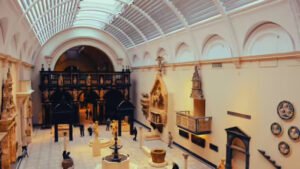
International Museum Day, observed every year on May 18, is one of the most significant global cultural observances dedicated to recognising the importance of museums in preserving history, civilisation, art, science, and human identity. Organised by the International Council of Museums (ICOM), the observance aims to raise public awareness about the role museums play in the development of society. Across the world, museums function not merely as buildings displaying ancient artefacts but as living institutions that connect generations, preserve collective memory, encourage education, inspire creativity, and strengthen cultural understanding.
In the modern age, where rapid urbanisation, technological transformation, environmental crisis, and globalisation are reshaping societies at an unprecedented pace, museums have become more important than ever before. They preserve the stories of humanity, protect cultural diversity, and remind people of their historical roots. Museums safeguard the achievements, struggles, beliefs, traditions, and artistic expressions that define civilisations. Without museums, countless chapters of human history would disappear forever.
The history of museums reflects humanity’s long-standing desire to preserve memory and knowledge. Ancient civilisations such as Egypt, Mesopotamia, Greece, India, and China maintained royal collections, libraries, temples, and repositories containing objects of religious, artistic, and political significance. The modern concept of museums gradually developed during the Renaissance and Enlightenment periods, when scholars and collectors began systematically preserving paintings, manuscripts, fossils, archaeological artefacts, and scientific specimens for public education and intellectual advancement.
Over the centuries, museums evolved from private collections accessible only to elites into public institutions dedicated to education and cultural preservation. Today, museums exist in numerous forms across the world. Archaeological museums preserve ancient relics and historical remains; art museums celebrate human creativity and imagination; science museums inspire innovation and scientific curiosity; natural history museums document biodiversity and the evolution of life; ethnographic museums protect indigenous traditions and folk cultures; literary museums preserve the legacies of writers and intellectuals; military museums record the sacrifices and realities of war. Every museum, regardless of size or subject, contributes to humanity’s understanding of itself.
One of the most important functions of museums is the preservation of cultural heritage. Human civilisation has witnessed repeated destruction caused by wars, invasions, natural disasters, religious extremism, environmental degradation, theft, and neglect. Entire cities and monuments have vanished over time, leaving behind only fragments of evidence. Museums act as protectors of these fragments. They preserve manuscripts, sculptures, paintings, coins, pottery, textiles, fossils, weapons, jewellery, ceremonial objects, and historical records that help reconstruct the stories of past societies.
Cultural heritage preserved in museums is not limited to royal dynasties or monumental architecture. Museums also document the lives of ordinary people. Agricultural tools, household items, folk musical instruments, tribal crafts, traditional clothing, and local artworks provide valuable insights into social history and cultural diversity. Such collections help future generations understand how people lived, worked, celebrated, worshipped, and interacted with nature across different historical periods.
Museums are therefore guardians of identity and continuity. They remind societies of their roots and preserve memories that shape collective consciousness. In many communities, museums play a crucial role in protecting endangered languages, indigenous traditions, oral histories, and local customs threatened by modernisation and cultural homogenisation. Globalisation has increased cultural interaction but has also accelerated the disappearance of many traditional lifestyles. Museums help ensure that these traditions are not forgotten.
Education is another fundamental contribution of museums. Museums provide experiential learning that cannot be replicated fully through textbooks or digital screens. Seeing an ancient manuscript, a fossil millions of years old, a freedom fighter’s belongings, or a centuries-old sculpture creates an emotional and intellectual connection with history. Museums transform abstract historical facts into tangible reality.
For students and young learners, museum visits often become deeply inspiring experiences. Museums encourage curiosity, creativity, observation, and critical thinking. Interactive exhibitions, educational workshops, guided tours, public lectures, storytelling sessions, and hands-on activities make learning more engaging and memorable. Many museums collaborate with schools, universities, and research institutions to support academic learning and historical awareness.
Science museums and technology museums are particularly important in promoting scientific temperament and innovation. Exhibitions related to astronomy, robotics, renewable energy, medicine, biodiversity, environmental science, and space exploration encourage young people to develop interest in scientific inquiry. Such institutions help bridge the gap between scientific knowledge and public understanding.
Museums also contribute significantly to research and scholarship. Historians, archaeologists, anthropologists, geologists, zoologists, art historians, and literary scholars depend heavily on museum collections for academic study. Ancient inscriptions help historians reconstruct political and social history; fossils help scientists understand prehistoric life and evolution; traditional artefacts reveal patterns of technological and cultural development; manuscripts preserve literary, philosophical, and religious thought.
Many important discoveries about ancient civilisations have emerged through museum-based research and archaeological preservation. Without museums, much of humanity’s intellectual and historical heritage would remain inaccessible or lost. Museums therefore function not only as exhibition centres but also as important research institutions contributing to knowledge creation and academic advancement.
The role of museums in promoting cultural understanding and social harmony is equally important. In multicultural and diverse societies, museums create spaces where people can learn about traditions, histories, religions, and lifestyles different from their own. Exhibitions on tribal cultures, migration, colonialism, social reform movements, women’s history, and indigenous heritage encourage dialogue and empathy among communities.
Museums challenge stereotypes and narrow interpretations of history by presenting multiple perspectives. They remind people that civilisations have always interacted, exchanged ideas, and influenced one another. In a world increasingly affected by intolerance, misinformation, and social polarisation, museums promote the values of coexistence, diversity, and shared humanity.
Another significant contribution of museums lies in cultural diplomacy. International exhibitions and collaborative projects between museums encourage cultural exchange among nations. Artefacts and artworks displayed across borders help people appreciate the richness of other cultures. Museums therefore strengthen international understanding and cooperation through the language of heritage and art.
The economic importance of museums is often overlooked despite their enormous contribution to tourism and employment. Museums attract millions of visitors annually and play a major role in the global tourism industry. Famous institutions such as the Louvre Museum, British Museum, Vatican Museums, and Metropolitan Museum of Art generate substantial economic activity through tourism.
Museums create employment opportunities for curators, conservators, researchers, historians, educators, artists, designers, guides, archivists, technicians, and administrative workers. Cultural tourism associated with museums also supports hotels, restaurants, transport services, local handicrafts, and small businesses. In many countries, museums have become important components of urban cultural economies.
India possesses one of the world’s richest museum traditions due to its ancient civilisation, cultural diversity, and historical depth. Indian museums preserve Buddhist sculptures, Mughal miniature paintings, temple art, tribal crafts, manuscripts, coins, archaeological remains, and artefacts connected with the freedom movement. Institutions such as the Indian Museum, National Museum, and Salar Jung Museum hold invaluable collections representing the richness of Indian civilisation.
The North-East region of India also possesses remarkable cultural and historical diversity. Assam in particular has a deep civilisational heritage shaped by indigenous traditions, the Ahom kingdom, Vaishnavite movements, folk culture, literature, and colonial history. Museums in Assam preserve manuscripts, weapons, textiles, tribal artefacts, archaeological remains, and cultural objects reflecting the identity of the region.
These museums play an important role in preserving the heritage of various indigenous communities whose traditions are vulnerable to rapid social change. Folk music, oral traditions, weaving techniques, agricultural practices, and local crafts preserved in museums help strengthen cultural continuity among younger generations. However, many regional museums face challenges related to inadequate funding, insufficient conservation facilities, shortage of trained professionals, and lack of public awareness.
The digital revolution has transformed museums worldwide. Modern museums increasingly use technology to make collections more accessible and engaging. Virtual tours, digital archives, augmented reality, interactive displays, audio guides, and multimedia exhibitions have changed how visitors experience museums. Online exhibitions allow people from distant regions to explore collections remotely, expanding educational access beyond physical boundaries.
Digitisation also helps preserve fragile manuscripts and rare artefacts by reducing excessive handling. Digital records protect valuable information even if original objects are damaged by natural disasters or environmental conditions. Many museums are now using artificial intelligence, 3D scanning, and advanced conservation technologies to improve preservation methods and audience engagement.
At the same time, museums must maintain a careful balance between technological innovation and historical authenticity. Technology should enhance public understanding rather than reduce heritage into superficial entertainment. The emotional experience of standing before an original artefact, painting, or manuscript remains irreplaceable.
Museums today also face serious global challenges. Illegal trafficking and smuggling of antiquities continue to threaten cultural heritage worldwide. Historical artefacts stolen from archaeological sites and monuments are often sold in international black markets. Such activities destroy historical context and deprive communities of their cultural inheritance. Stronger international cooperation is necessary to combat heritage crimes and facilitate the return of stolen artefacts.
Another major issue involves the repatriation of cultural objects taken during colonial rule or conflict. Several countries have demanded the return of artefacts housed in foreign museums. Debates regarding ownership, ethics, justice, and historical accountability have become increasingly prominent in the international museum community. Many museums are now reassessing their collections and exploring more ethical and collaborative approaches to cultural preservation.
Climate change has emerged as a growing threat to museums and heritage sites. Floods, rising temperatures, humidity, earthquakes, wildfires, and environmental degradation can severely damage historical collections. Coastal heritage locations are especially vulnerable to sea-level rise. Museums must therefore invest in climate-resilient infrastructure, disaster preparedness, and sustainable conservation techniques.
Environmental sustainability has become an important focus of modern museums. Many institutions are reducing energy consumption, adopting eco-friendly exhibition practices, and organising educational programmes on biodiversity and environmental awareness. Museums can play a vital role in encouraging environmental responsibility by demonstrating how environmental changes have influenced human societies throughout history.
The relationship between museums and communities is also evolving. Traditional museums were sometimes criticised for being elitist spaces disconnected from ordinary people. Contemporary museums increasingly seek to become inclusive and participatory institutions. Community museums, local heritage centres, and grassroots cultural initiatives encourage public involvement in preserving local history and traditions.
Inclusiveness and accessibility are essential for the future of museums. Museums should be accessible to children, senior citizens, persons with disabilities, economically weaker sections, and rural communities. Affordable entry policies, multilingual exhibitions, mobile museums, and outreach programmes can help expand public participation in cultural heritage preservation.
Youth engagement is particularly important. Young people today live in a digital world dominated by social media and fast entertainment. Museums must therefore innovate continuously to remain relevant and attractive. Interactive storytelling, educational games, cultural festivals, youth workshops, and creative exhibitions can encourage greater interest among younger generations. Schools and educational institutions should actively promote museum visits as part of holistic learning.
Museums also hold emotional and philosophical significance. They remind humanity of the continuity of civilisation and the passage of time. Standing before an ancient sculpture, prehistoric fossil, freedom fighter’s diary, or centuries-old painting creates a sense of connection with countless generations that shaped human history. Museums encourage humility by reminding people that societies rise, flourish, transform, and sometimes disappear.
In times of conflict and instability, museums become symbols of resilience and cultural survival. The destruction of museums and heritage sites during wars and extremist violence is not merely an attack on buildings; it is an attack on identity, memory, and civilisation itself. Protecting museums therefore means protecting the cultural soul of humanity.
International Museum Day carries a message that extends beyond annual celebration. It reminds governments, educational institutions, scholars, artists, cultural organisations, and citizens that heritage preservation is a collective responsibility. Museums cannot survive and flourish without public awareness, governmental support, professional expertise, and community participation.
As humanity moves deeper into the twenty-first century, museums will continue to play a vital role in preserving cultural diversity and historical consciousness. In a rapidly changing world overwhelmed by information, museums provide depth, perspective, and continuity. They preserve the evidence of human creativity, struggle, innovation, and resilience while inspiring future generations to value knowledge, tolerance, and cultural understanding.
International Museum Day is therefore a celebration of humanity’s shared heritage and collective wisdom. Museums are not silent storehouses of the past; they are living institutions shaping the intellectual and cultural future of society. By preserving history and promoting understanding, museums strengthen humanity’s connection with its roots and guide civilisation towards a more informed, inclusive, and culturally conscious future.