
The Timeless Relevance of Ganesh Chaturthi
As the rhythmic beats of the dhol-tasha reverberate through public squares and homes across India, Ganesh Chaturthi arrives once again to transform the nation’s landscape. Lord Ganesha—the elephant-headed deity revered as Vighnaharta (the remover of obstacles) and Buddhidayaka (the bestower of wisdom)—is welcomed with fervent devotion, vibrant colors, and unyielding optimism. Yet, to view Ganesh Chaturthi merely as a religious festival is to miss its deeper, extraordinary role in shaping India’s socio-cultural consciousness.
Historically, the modern public celebration of Ganesh Chaturthi owes its structure to a stroke of nationalist genius. In 1893, freedom fighter Bal Gangadhar Tilak transformed what was primarily a private, domestic ritual into a grand public event (Sarvajanik Ganeshotsav). Facing strict British bans on political gatherings, Tilak recognized the deity’s universal appeal as a catalyst to bypass colonial restrictions. By installing large idols in public pavilions, he created an inclusive space where people across rigid caste hierarchies, economic strata, and social divides could gather under a unified identity.
Decades after independence, Tilak’s vision of community solidarity remains strikingly relevant, even as its modern expressions evolve. Today, the pandal culture serves as a vibrant microcosm of Indian pluralism. For ten days, neighborhood committees bring together people from all walks of life—volunteers, artisans, neighborhood youth, and local businesses—working in tandem to host cultural performances, food drives, and community outreach projects. In an era increasingly marked by social fragmentation and digital isolation, Ganesh Chaturthi acts as a vital civic bridge, pulling individuals out of their private screens and returning them to shared physical spaces of community bonding.
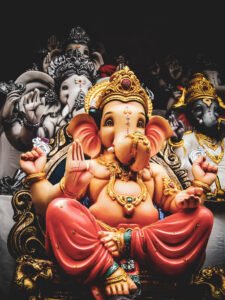
Beyond its social dimension, the festival offers profound philosophical insights for contemporary living. Lord Ganesha’s iconic iconography carries timeless allegories for personal and collective growth. His large head symbolizes expansive thinking and wisdom; his large ears denote the importance of active listening before acting; his small eyes emphasize intense focus; and his trunk represents adaptability in navigating life’s complex terrain.
Crucially, the festival’s final act—Visarjan, or the ritual immersion of the idols in water bodies—delivers one of the most powerful spiritual lessons in modern times. As millions bid farewell to the beautifully crafted deities with tears and chants of “Pudhashya Varshi Lavakar Ya” (Return early next year), they engage in a profound exercise of letting go. In a world obsessed with permanence, accumulation, and material attachment, Visarjan serves as a stark reminder of the transient nature of existence. It teaches that creation and dissolution are cyclical, and that true reverence lies in understanding when to release that which we hold dear.
However, as the scale of celebrations has expanded over the decades, the festival has confronted new challenges—most notably, environmental degradation. The immersion of non-biodegradable Plaster of Paris (PoP) idols coated in chemical paints has historically posed a severe threat to rivers, lakes, and coastal ecosystems. Fortunately, a quiet revolution is taking place. Driven by heightened civic awareness, citizens, artisans, and municipal bodies are pivoting toward eco-friendly Clay Ganesha (Shadu mati) idols embedded with seeds, natural organic dyes, and artificial immersion tanks. This shift demonstrates that traditional devotion can adapt to ecological responsibility, reinforcing the idea that honoring the creator must go hand-in-hand with protecting creation.
As India navigates an era of rapid modernization, complex global challenges, and socio-economic shifts, the essence of Ganesh Chaturthi offers a grounding blueprint. It calls for intellect balanced with humility, tradition reconciled with sustainability, and individual aspirations aligned with community welfare.
When we bow before Lord Ganesha this year, the true celebration lies in internalizing his qualities: approaching complex societal problems with wisdom, listening more deeply to one another, and breaking down the obstacles that divide us. In doing so, we honor not just the deity, but the enduring spirit of unity and renewal that Ganesh Chaturthi has brought to the nation for generations.
Siddharth Roy
Guwahati, Assam