
A New Era of Hope and Responsibility in Assam: Expectations from the NDA Government (2026)
Heramba Nath
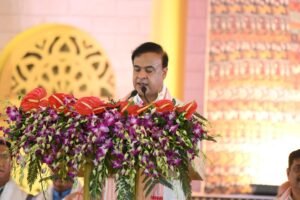
On May 12, 2026, Assam witnessed another significant democratic milestone as the National Democratic Alliance (NDA) once again formed the government in the state under the leadership of Dr Himanta Biswa Sarma. The grand swearing-in ceremony, held at the Veterinary College Field in Khanapara, Guwahati, marked the beginning of the second consecutive term of Dr Himanta Biswa Sarma as the Chief Minister of Assam. Conducted in the dignified presence of Assam Governor Lakshman Prasad Acharya, the ceremony symbolised not merely political continuity but also the renewal of public expectations, democratic responsibility and developmental aspirations across the state.
The ceremony attracted widespread public attention across Assam and beyond. Prime Minister Narendra Modi attended the occasion along with several senior BJP and NDA leaders, Union Ministers and political dignitaries from different parts of the country. The presence of Prime Minister Narendra Modi highlighted the national political significance of Assam within the broader framework of northeastern India. Senior leaders including Amit Shah and Jagat Prakash Nadda were also associated with the event, reflecting the importance that the national leadership attached to Assam’s political landscape and future developmental direction.
The Veterinary College Field in Khanapara witnessed a massive gathering of citizens, party supporters, political workers and well-wishers who arrived from different parts of Assam to witness the oath-taking ceremony. The atmosphere reflected celebration, optimism and renewed political enthusiasm. Extensive security arrangements, traffic management systems and administrative preparations had been undertaken considering the presence of the Prime Minister and other national leaders. The scale of the programme demonstrated the magnitude of the NDA’s electoral mandate in Assam and the public visibility of Dr Himanta Biswa Sarma’s leadership in contemporary Assam politics.
The return of Dr Himanta Biswa Sarma for a second consecutive term as Chief Minister reflected the confidence that a significant section of the electorate continued to place in his leadership and governance model. The victory of the NDA alliance was viewed by many political observers as a strong endorsement of administrative continuity, developmental promises and political stability in Assam. However, along with renewed political success also came renewed public expectations and responsibilities. Citizens across Assam now expect the government led by Dr Himanta Biswa Sarma to work with even greater sincerity, transparency and determination for the welfare and comprehensive development of the state.
Many supporters and political observers often describe Dr Himanta Biswa Sarma as the “Chanakya of Assam politics” because of his strategic political leadership, administrative experience and influential role in shaping contemporary politics in Assam. His political decision-making abilities, organisational strategies and strong public communication have contributed significantly to his image as one of the most influential political leaders in the northeastern region of India. As Dr Himanta Biswa Sarma began his second consecutive term as Chief Minister, public expectations naturally increased regarding governance, development and administrative efficiency.
Whenever a new government assumes power, people begin to dream of a better tomorrow. Citizens expect positive changes in governance, development and public welfare. Assam, despite its rich cultural heritage, natural resources and strategic importance, continues to face several serious challenges that directly affect the lives of ordinary people. Problems such as corruption, unemployment, inflation, inadequate healthcare facilities, educational inequality, rural underdevelopment, devastating floods, artificial floods in Guwahati, agricultural distress and illegal encroachment on government lands and forest areas continue to remain major concerns across the state.
Therefore, the newly formed government under Dr Himanta Biswa Sarma now carries both immense responsibility and historic opportunity. The people expect the government to work tirelessly and sincerely to address these long-standing issues and lead Assam toward a future of stability, prosperity and inclusive development.
One of the strongest expectations from the people is that the ministers and elected representatives of the new government should dedicate themselves wholeheartedly to public service. Political power should never become a means for personal gain, privilege or corruption. Rather, it should be viewed as a constitutional and moral responsibility toward the welfare of the people. Citizens expect their elected representatives to remain transparent, accountable and committed to public welfare in every aspect of governance.
Corruption has long remained one of the greatest obstacles to development. Whenever corruption spreads within administration, public confidence weakens and developmental progress suffers. Funds meant for welfare schemes often fail to reach deserving beneficiaries. Roads remain incomplete, hospitals lack facilities, schools continue to suffer from neglect and ordinary citizens are forced to endure unnecessary hardship. Therefore, the people strongly expect the government led by Dr Himanta Biswa Sarma to continue strengthening anti-corruption measures and establish a more transparent administrative system where public resources are utilised honestly and efficiently.
Government officials, ministers and public representatives should become role models of integrity and discipline. Strict action against corruption in every department is necessary for restoring people’s confidence in governance and strengthening democratic institutions. Public money should always be used responsibly and transparently for developmental works and welfare schemes rather than for political favouritism or personal benefit.
The people also expect the government to remain sensitive toward public grievances. Governance becomes meaningful only when leaders remain connected with the struggles of ordinary citizens. A farmer suffering because of floods, a patient unable to afford treatment, a student struggling to continue education or an unemployed youth searching for opportunities all deserve sincere attention and support from the government.
The newly formed government has the opportunity to send a strong and positive message across Assam. Development should not remain confined to political speeches and election promises alone. Instead, it should become visible through practical improvements in the lives of ordinary people. Citizens expect the government to introduce meaningful reforms in sectors such as healthcare, education, agriculture, infrastructure, employment generation, rural development and flood management.
Healthcare remains one of the most important sectors demanding immediate attention. Although Assam has witnessed certain improvements in recent years, many rural and remote regions continue to suffer due to inadequate healthcare facilities. Many villages still lack proper hospitals, specialist doctors, diagnostic services and emergency medical care. Poor families often face severe hardship during medical emergencies. Many patients are forced to travel long distances to urban centres for treatment, creating both financial and emotional suffering.
The government led by Dr Himanta Biswa Sarma is therefore expected to strengthen the public healthcare system across the state. More hospitals, medical colleges and community healthcare centres should be established, particularly in underserved areas. Existing hospitals should be modernised with advanced medical equipment, better infrastructure and improved staffing facilities. Recruitment of qualified doctors, nurses and healthcare workers should receive high priority to ensure quality healthcare services for all citizens.
People also expect the government to make healthcare more affordable and accessible for economically weaker sections of society. Healthcare should never become a luxury reserved only for financially privileged individuals. Free or subsidised treatment, affordable medicines and improved ambulance services can significantly reduce the suffering of ordinary families. Poor patients should never be denied proper medical treatment because of economic difficulties.
Special attention should also be given to maternal healthcare, child nutrition and elderly care. Pregnant women in rural areas often face difficulties accessing proper healthcare facilities, while malnutrition continues to affect children in economically weaker communities. Strengthening awareness programmes related to nutrition, vaccination, sanitation and preventive healthcare can significantly improve public health conditions across the state.
Flood seasons frequently create public health crises in Assam. Waterborne diseases spread rapidly during floods, affecting thousands of people. Therefore, emergency healthcare systems, mobile medical units, temporary health camps and disaster preparedness mechanisms should be strengthened considerably to minimise suffering during natural disasters.
Digital healthcare and telemedicine services should also become part of Assam’s long-term healthcare strategy. Modern technology can help patients from remote areas consult specialist doctors without travelling long distances. Such initiatives can reduce healthcare inequality and improve medical accessibility throughout Assam.
Education is another sector where people expect major transformation from the government formed in 2026. Education forms the backbone of social progress, economic development and democratic awareness. Assam possesses immense intellectual potential, yet many students continue to struggle because of poverty, inadequate infrastructure and shortage of teachers.
Government schools, particularly in rural areas, require urgent development. Many institutions still lack proper classrooms, libraries, science laboratories, drinking water facilities and clean sanitation systems. Teacher shortages continue to affect educational quality in several regions. Therefore, comprehensive reforms are necessary to improve educational infrastructure and learning standards throughout Assam.
Teachers play an extremely important role in shaping society and guiding future generations. Proper teacher recruitment, training and support systems should therefore receive serious attention. Teachers deserve respect, professional security and adequate facilities so that they can contribute effectively to the educational and moral development of society.
Modern education should not remain limited to textbook learning alone. Students should be encouraged to develop creativity, scientific awareness, critical thinking and ethical values. Digital education infrastructure should be expanded across Assam so that students from rural and economically weaker backgrounds can access modern learning opportunities. Smart classrooms, computer laboratories and internet connectivity can help reduce educational inequality.
Higher education institutions should also receive greater governmental support. Universities and colleges require improved infrastructure, research facilities and academic resources. Scholarships and financial assistance programmes for meritorious and economically disadvantaged students should be expanded so that no talented student is forced to discontinue education because of poverty.
Vocational education and skill development are equally important in addressing unemployment. Many educated youths remain jobless because their education does not adequately match modern employment demands. Skill development centres focusing on information technology, healthcare, tourism, entrepreneurship and industrial training can help create a skilled and self-reliant workforce.
The people also hope that the government led by Dr Himanta Biswa Sarma will gradually make education more affordable and partially free for economically vulnerable families. Investment in education ultimately becomes an investment in the future prosperity and stability of Assam.
Agriculture continues to remain the backbone of Assam’s rural economy. A large section of the population depends directly or indirectly on farming for livelihood. However, farmers continue to face numerous challenges such as floods, erosion, rising cultivation costs, inadequate irrigation systems and unstable market prices. Many small farmers remain trapped in cycles of poverty and uncertainty.
The government led by Dr Himanta Biswa Sarma is expected to adopt farmer-friendly policies to strengthen agriculture and improve rural livelihoods. Irrigation projects, crop insurance schemes and soil conservation initiatives require serious attention. Farmers should have access to modern agricultural technology, quality seeds and affordable financial support.
Assam possesses immense potential in organic farming, fisheries, horticulture, dairy farming and bamboo cultivation. These sectors can generate employment and improve rural incomes if they receive adequate policy support and investment. Tea cultivation, which remains globally associated with Assam, should also continue receiving governmental encouragement and protection.
Farmers deserve fair prices for their produce. Middlemen often exploit small farmers, reducing their profits and increasing financial distress. Therefore, agricultural cooperatives, storage systems and direct market access mechanisms should be strengthened to provide economic security and dignity to farmers.
Climate change has further complicated agricultural challenges in Assam. Irregular rainfall, floods and soil erosion continue to threaten agricultural productivity. Agricultural universities and research institutions should therefore work closely with farmers to promote climate-resilient agricultural methods and sustainable farming practices.
Flood management remains one of the most urgent and emotional issues in Assam. Every year, devastating floods destroy homes, roads, schools, agricultural land and livelihoods across multiple districts. Thousands of families lose everything they have built through years of hard work. Floods create not only economic damage but also deep emotional and social suffering.
Despite decades of discussions and multiple governmental initiatives, flood-related problems continue to affect Assam severely. Therefore, the people now expect the government formed in 2026 under Dr Himanta Biswa Sarma to adopt scientific and long-term flood management strategies rather than relying solely on temporary measures.
Embankments should be strengthened and maintained regularly. River dredging, afforestation, watershed management and erosion-control initiatives require serious attention. Experts, engineers, environmentalists and local communities should work together to develop sustainable flood-control mechanisms capable of providing long-term relief to affected populations.
One of the most important expectations from the people is the permanent resolution of the artificial flood problem in Guwahati. Every year during heavy rainfall, many parts of the city become submerged because of poor drainage systems, unplanned urbanisation and encroachment on wetlands and natural water channels. Roads remain underwater for hours, traffic comes to a standstill and daily life becomes extremely difficult for residents.
Businesses suffer financial losses, students face difficulties reaching educational institutions and many families experience damage to property and household belongings. Therefore, people expect the government led by Dr Himanta Biswa Sarma to take strong and effective measures to solve Guwahati’s artificial flood problem permanently.
Drainage systems should be modernised scientifically and maintained regularly. Illegal encroachments on wetlands, hills and natural drainage channels should be removed strictly. Urban planning must become environmentally responsible and sustainable. Wetlands and water bodies should be protected rather than destroyed for short-term commercial interests. A modern capital city cannot continue suffering from preventable artificial floods every monsoon season.
The people of Assam also expect the government led by Dr Himanta Biswa Sarma to take strong and lawful measures to free government land and forest areas from illegal encroachment. Large areas of land and valuable forest resources in different parts of Assam have reportedly been occupied unlawfully over the years, creating serious environmental, social and administrative concerns.
Illegal encroachment not only damages ecological balance and forest biodiversity but also creates obstacles to planned development, wildlife protection and public welfare projects. Forest conservation is extremely important for Assam because the state possesses rich biodiversity, wildlife habitats and ecological resources essential for environmental sustainability and climate balance.
Illegal occupation and destruction of forest areas increase the risks of deforestation, soil erosion, environmental degradation and flood-related disasters. Therefore, strict protection of forests, wetlands and government land should remain an important priority of governance.
Inflation and rising prices of essential commodities remain another major concern for ordinary citizens. The increasing cost of food, medicine, fuel and daily necessities places tremendous pressure on middle-class and low-income families. Many households struggle to maintain basic living standards despite working hard.
Therefore, the government led by Dr Himanta Biswa Sarma should adopt effective policies to control inflation and provide relief to economically vulnerable sections of society. Fair-price shops, subsidies and market-monitoring systems can help reduce the burden on common people. Economic development should benefit every section of society rather than remaining concentrated among privileged groups alone.
Employment generation remains one of the greatest expectations from the government formed in 2026. Unemployment among educated youth continues to create frustration and insecurity throughout Assam. Many talented young individuals complete their education but fail to secure suitable employment opportunities.
The government led by Dr Himanta Biswa Sarma should therefore focus on industrial development, entrepreneurship promotion and skill-based training programmes. Assam possesses tremendous economic potential in sectors such as tourism, agriculture, handicrafts, information technology and renewable energy.
Tourism deserves special attention because Assam is blessed with extraordinary natural beauty, cultural diversity and wildlife heritage. Places such as Kaziranga National Park attract visitors from around the world. By improving tourism infrastructure, transportation and hospitality services, the government can generate large-scale employment opportunities.
Small and medium industries should also receive financial and technical support. Start-up initiatives and innovation programmes can encourage young people to become entrepreneurs rather than depending solely on government jobs. Transparent and merit-based recruitment systems are equally important for maintaining public confidence.
Rural development is another essential area requiring greater focus. Villages form the backbone of Assam’s social and economic structure, yet many rural areas continue to lack adequate roads, healthcare services, educational institutions and employment opportunities.
The government led by Dr Himanta Biswa Sarma should strengthen rural infrastructure by improving roads, bridges, electricity supply, drinking water systems and internet connectivity. Rural healthcare centres and schools require urgent attention. Farmers, artisans and rural entrepreneurs should receive financial assistance and developmental support.
Women’s empowerment should also become a central priority of governance. Women contribute immensely to Assam’s economy, culture and family structure, yet many continue to face discrimination and lack of opportunities. Self-help groups, educational support, entrepreneurship schemes and financial inclusion programmes can strengthen women socially and economically.
Youth development deserves equal importance because young people represent the future strength of Assam. Sports infrastructure, cultural activities, career counselling and skill development initiatives can help youth utilise their talents positively. Drug abuse and social alienation among young people should also be addressed through awareness campaigns and rehabilitation support.
The preservation of Assam’s cultural identity and heritage is another important responsibility of the government. Assam is home to diverse ethnic communities, languages, traditions and artistic expressions. Protecting this cultural richness while promoting social harmony should remain a major objective of governance.
Environmental protection is equally essential for Assam’s future. The state possesses rich forests, rivers, wetlands and biodiversity that require protection from pollution, deforestation and environmental degradation. Sustainable development policies should balance economic progress with ecological preservation.
Law and order also remain important aspects of governance. People expect peace, security and justice within society. The government should strengthen policing, judicial efficiency and community safety while ensuring that constitutional rights and human dignity remain protected.
Administrative efficiency is equally necessary for effective governance. Bureaucratic delays, negligence and corruption often create frustration among citizens. Public services should therefore become more transparent, faster and citizen-friendly. Digital governance initiatives can improve efficiency and reduce unnecessary complications.
Along with the Chief Minister and Ministers, every MLA should also work sincerely and responsibly for the development of their respective constituencies. People expect elected representatives to carefully monitor and implement developmental works transparently and efficiently. Funds allocated under MLA development schemes should be utilised honestly and properly for public welfare rather than being wasted or misused.
Roads, schools, hospitals, drinking water facilities, sanitation systems, rural connectivity and other public infrastructure projects deserve genuine attention from every legislator. Development should not remain confined only to urban centres while villages continue struggling with poor infrastructure and neglect. Every constituency deserves balanced and meaningful progress.
MLAs should maintain regular communication with the people of their constituencies and sincerely understand their real problems. Public representatives must remember that they were elected to serve the people, not merely to enjoy political power and privileges. When developmental funds are utilised transparently and honestly, the people of the constituency genuinely benefit.
At the same time, citizens begin to realise the true significance and value of their democratic right to vote. Democracy becomes meaningful only when elected representatives remain accountable to the people and work continuously for their welfare, dignity and progress. The true success of governance lies not merely in winning elections but in fulfilling the trust placed by the people.
The people also hope that the newly formed government led by Dr Himanta Biswa Sarma will undertake revolutionary and historic initiatives for the all-round development of Assam. Development should not remain limited to a few sectors or urban centres alone. Instead, every department should witness visible, meaningful and dynamic progress.
Whether it is healthcare, education, agriculture, transport, rural development, industry, tourism, sports, culture, technology, environmental protection or public infrastructure, every sector should move forward with efficiency, transparency and long-term vision. Citizens expect the government led by Dr Himanta Biswa Sarma to introduce modern policies, scientific planning and people-oriented governance capable of transforming Assam into a stronger, more prosperous and more developed state.
Roads, bridges, drainage systems, hospitals, educational institutions, public transport and digital infrastructure should all continue receiving improvement and expansion. Development should reach villages, towns and remote regions equally so that no citizen feels neglected or excluded from progress.
The NDA government formed in Assam in 2026 therefore carries both historic responsibility and immense opportunity. The oath taken before Governor Lakshman Prasad Acharya on May 12, 2026, should not remain merely ceremonial. It should become a moral commitment toward honesty, service and people-centric governance. Political power should always be viewed as a responsibility rather than a privilege.
The people of Assam sincerely hope that the government led by Dr Himanta Biswa Sarma will truly become a government of the people. They hope for an administration that listens to public grievances, reduces corruption, improves healthcare and education, controls inflation, strengthens agriculture, creates employment opportunities and solves flood-related problems effectively.
If the government succeeds in fulfilling these expectations, Assam can move confidently toward a future of stability, prosperity and social harmony. The people now look forward with renewed hope, believing that the government formed in 2026 under the leadership of Dr Himanta Biswa Sarma will work sincerely for the welfare, dignity and progress of every citizen of Assam.