
The Toba Theory: Fact or Fiction?
Ankurjyoti Hatimuria
Joysagar; Sivasagar
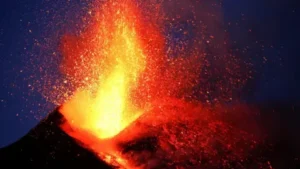
The Toba supervolcano, located in present-day Indonesia, is one of the most significant geological events in Earth’s history. Approximately 74,000 years ago, it erupted in what is considered one of the largest volcanic eruptions known to humanity. This cataclysmic event had profound effects not only on the environment but also on human populations and the trajectory of human evolution. In the recent studies suggest that this eruption may have nearly erased humanity, leading to a bottleneck in genetic diversity that has ramifications even today. Understanding the Toba eruption provides crucial insights into the interplay between geological phenomena and human development.
The Toba eruption released an estimated 2,800 cubic kilometers of volcanic material into the atmosphere, resulting in a dramatic decrease in global temperatures and significant climatic changes. The immediate aftermath saw a “volcanic winter,” where sunlight was blocked by ash particles and sulfuric aerosols, leading to plummeting temperatures across the globe. This abrupt change posed severe challenges to flora and fauna alike. The alteration of ecosystems likely resulted in widespread extinction events for many species and dramatically reduced available food sources for early humans.
Evidence from genetic studies indicates that modern humans experienced a population bottleneck around this period. Genetic diversity among contemporary human populations suggests that only a small number of our ancestors survived this catastrophic event. Some estimates propose that as few as 10,000 individuals might have remained after the eruption, profoundly affecting genetic variation within Homo sapiens. This reduction in population size could explain certain traits observed in modern humans today—traits that might not have otherwise emerged had there been larger population numbers.
The Toba event also raises questions about adaptability and survival strategies among early humans. The ability to develop new technologies or migrate to different regions would have played critical roles during this period of ecological upheaval. Archaeological evidence shows that early humans began creating more sophisticated tools around this time, suggesting adaptive responses to environmental stresses caused by the eruption. Migration patterns may also have shifted as groups sought more hospitable climates or areas with more abundant resources.
Furthermore, while some researchers argue that the Toba supervolcano represented a near extinction event for humanity, others contend that its impact may have varied geographically. Certain populations may have been more resilient due to their location or lifestyle choices prior to the eruption. For instance, groups living along coastal areas may have had access to marine resources that provided sustenance even when terrestrial food sources dwindled.
In addition to its immediate effects on climate and ecology, the long-term consequences of the Toba eruption shaped human culture and society for millennia thereafter. The drastic environmental changes likely influenced migration patterns across Asia and beyond as survivors sought out new habitats conducive to survival. Cultural adaptations such as changes in diet or social structures could be seen as direct responses to these newfound challenges.
In conclusion, while much remains unknown about the precise impacts of the Toba supervolcano on early human populations, it is clear that this monumental event played a pivotal role in shaping humanity’s evolutionary journey. The interplay between volcanic activity and human survival underscores how environmental factors can influence genetic diversity and cultural evolution over time. As research continues into both geological records and archaeological findings related to Toba’s eruption, we gain deeper insights into how such natural disasters can affect not just ecosystems but also entire species’ routes.