The Seventh Largest Country: India
Udayan Chetia
Dhemaji
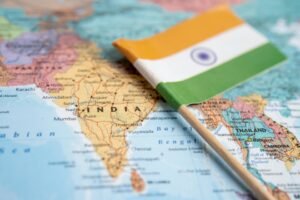
India is a vast country and is the seventh largest country in the world. There are 28 states and 08 union territories in the country. The neighbours country of India are China (Tibet), Nepal and Bhutan in the North, Myanmar and Bangladesh in the East, in Southern neighbours across the sea consists of two island countries, namely, Srilanka and Maldives and in North-West Pakistan and Afghanistan. Andaman and Nicobar Islands located in the Bay of Bengal and Lakshadweep Islands are located in the Arabian Sea. India is also called as Sub-Continent. In India, Gujarat, Madhya Pradesh, Tripura, Chattisgarh, Jharkhand, West Bengal and Mizoram are the states through which the Tropic of Cancer passes. The states that located in the North-Eastern parts of India are, Arunachal Pradesh, Assam, Mizoram, Meghalaya, Manipur, Nagaland and Tripura. India is the most populous country in the world. There are 08 union territories of India. The union territories are, Delhi, Daman and Diu, Andaman and Nicobar Island, Chandigarh, Dadra and Nagar Haveli, Jammu and Kashmir, Ladakh, Lakshadweep and Puducherry. India is surrounded by three oceans i.e; Indian Ocean in the South, Arabian Sea on the West and the Bay of Bengal in the East. Maharastra, Goa, Kerala, Gujarat, Karnataka are the states and Daman and Diu, Dadra and Nagar Haveli, Lakshadweep, Puducherry (Western Cost) are the Union Territories surrounded by Arabian Sea. Tamil Nadu, Andhra Pradesh, Odisha, West Bengal are the states and Puducherry, Andaman and Nicobar Island is the Union Territories surrounded by Bay of Bengal.
India was independent on 15th August, 1947 and there is a partition of India due to Mohammad Ali Jinnah who wanted a separate Muslim country and had formed two separate countries, i.e; India and Pakistan. There were many conflicts in between the countries after partition. Many woman’s were raped and children’s were killed. After partition in 1947, India became the Hindu Majority country and Pakistan became the Muslim majority country. Pt. Jawaharlal Nehru became the first Prime Minister and Dr. Rajendra Prasad was the first President of India after Independence. Dr. Bhimrao Ramji Ambedkar, known as Babasaheb Ambedkar, who had formed the Constitution of India. He formed the Constitutional Assembly and he was the Chairman of the Assembly. India’s Constitution is the largest written Constitution of the world. After partitions many laws, fundamental rights, Right to Information Act, 2005 etc; had been formed. The Constitution is written documentary of majority countries of the world. The provisions of the constitutions had been borrowed from different countries of the world, like, Britain, Canada, French etc. Indira Gandhi was the first woman Prime Minister and Pratibha Patil was the first woman President of India.
In India, the states,calso separated on the basis of language. Andhra Pradesh was the first state of India to formed on the basis of language. Later Assam was separated from Bengal and Assamese language is the main language of Assam, Gujarati is the language of Gujarat, Marathi is the language of Maharashtra, Tamil is the language of Tamil Nadu etc.
‘The Magnificent Tiger’ is the National Animal of India. ‘The Indian Peacock’s is the National Bird of India. ‘Mango’ is the National Fruit and ‘Lotus’ is the National Flower of India. ‘The Banyan Tree’ is the National Tree and ‘Indian Pumpkin’ is the National Vegetable of India. ‘Rupee’ is the Indian Currency. ‘Hockey’ is the National Game of India and according to the constitution, Article 343(1), in Devanagri Script, Hindi shall be the official language of the union. ‘Tricolour’ or ‘Tiranga’ is the National Flag of India. ‘Delhi’ is the Capital of India.
‘Jana Gana Mana’ is the National Anthem of India and it was written by Rabindranath Tagore. It was originally composed in Bengali languageand later it was translated into Hindi language and adopted as the National Anthem of India by the Constituent Assembly on 24th January, 1950. ‘Vande Mataram’ is the National Song of India and it was written by Bankim Chandra Chatterjee. On 24th January, 1950 it was adopted as National Song of India by the Constituent Assembly.
Brahmin, Vaishya, Kshatriya, Dalit are some of the castes and Bodo, Garo, Nyishi people, Today people, Jarawa, Naga people, Gadaba people, Karbi, Deori, Rabha people, Khasi people, Rajbongshi people etc; are same of the tribes found in India.
Independence Day is celebrated on 15th August, 1947. On that day is a public holiday in India. 15th August is celebrated by Flag hoisting, parade, fireworks, singing patriotic songs and the National Anthem ‘Jana Gana Mana’ and also had speech by the Prime Minister and President of India.
The Republic Day of India is celebrated on 26th January, 1950. On that day of the year 1950, Constitution of India came into effect. A constituent Assembly was made and the Chairman of the Assembly was Dr. B. R. Ambedkar. This constituent Assembly had adopted the Constitution of India. The Constitution of India is the longest written constitution in the world and the provisions of Constitution was taken from various countries of the world such as Canada, Britain, Ireland, French etc.
India is a diverse country and has many languages. For example, Gujarati, Assamese, Rajasthani, Punjabi, Telegu, Tamil, Marathi, Bodo, Urdu, etc. Even Sanskrit language speaks and write in India. But there are also such languages that cannot be write but can be speak. For example, Mishing, Santhali etc. In India, people are of various castes, tribes, religions etc.
India is a democratic country. Democracy provides the Rights to Freedom to the citizens of the country. In India, the Constitution has provided the rights and freedoms to each and every citizens of the country. Right to Equality, Right to Constitutional Remedies, Right to Freedom, Right to Freedom of Religion, Right Against Exploitation and Cultural and Educational Rights are the six fundamental rights in the Indian Constitution.
Mahatma Gandhi, Netaji Subhash Chandra Bose, Saheed Bhagat Singh, Kanaklata Barua, Mukunda Kakoti etc; are some of the freedom fighters of India.
India is a country located in Southern part of Asian Continent. Major mountains of India are as follows Himalayas, Kanchenjunga, Kedarnath, Rishi Pahar, Panchchuli, Guru Shikhar, Nanda Devi etc. Himalayas, a mountain, cross five countries, India, China, Bhutan, Nepal and Pakistan. Ganga, Brahmaputra, Tapi, Yamuna, Krishna, Narmada, Indus, Kaveri, Godavari, Mahanadi, Sabarmati etc; are some of the major rivers of India. The plateaus of India are Western Ghats, Eastern Ghats, Chota Nagpur Plateau, Highland, Shillong Plateau etc. Many culture are also celebrated in different parts of India such as Bihu, Navaratri, Holiday, Diwali, Kali Puja, Lakshmi Puja, Eid-al-Fitr, Makar Sankranti, Hanuman Jayanti, Christmas Day etc.
The cultures and traditions of India are as follows, Greetings, Festivals and Religious, Family Structure, Religious Customs etc.
‘Mahabharta’ and ‘Ramayana’ are the great Hindu epics of India. This epics had been written in the forms of poems. ‘Ramayana’ was written by Valmiki and ‘Mahabharata’ was written by Ved Vyasa, which is the longest written poem.
The classical dance of India are originated in different states of the country. Kathakali, Sattriya, Bharatanatyam, Kuchipudi, Odissi etc; are some of the classical dances of India.
India is a beautiful country. There are many temples and movements in India. Taj Mahal, Qutub Minar, Sun Temple, Rang Ghar, Kareng Ghar, Statue of Unity, Ghanashyam House, Humayun’s Tomb etc; are some of the movements of India. Kamakhya Temple, Umananda Temple, Meenakshi Temple, Lingaraj Temple etc; are some of the temples in India.
National Parks are the protection areas is established for the protection of Wildlife in India. Kaziranga National Park, Manas National Park, Hemis National Park, Gir Forest National Park, etc; are some of the National Parks of India.
There are also many Wildlife Sanctuaries and Bird Sanctuaries found in India. Mehao Wildlife Sanctuary, Eaglenest Wildlife Sanctuary, Dibang Wildlife Sanctuary, Laokhowa Wildlife Sanctuary etc; are some of the Wildlife Sanctuaries and Deepor Beel Bird Sanctuary, Attiveri Bird Sanctuary, Khijadiya Bird Sanctuary, Chitragudi Bird Sanctuary etc; are some of the Bird Sanctuaries found in India.
India is a secular country. Hinduism, Islam, Christianity, Judaism, Buddhism, Jainism etc; are some of the religious found in India and even in India all the religious gets equal rights in every aspects like, education, freedom etc. There are also several tribal religious in India such as Damaji-Polo, Santhal, a tribal religion followed by the Santhal people etc.
Languages, symbols like Fasting, Eating with hands, Indian Matial Arts, Scriptures or Epics etc; are some of the cultures of India.
Bhagavad Gita, Mahabharata, Ramayana, Vedas, Upanishads, Puranas, Quran, Bible, Adi Granth, Tipitaka, Agam Sutra etc; are the Holy or Scared books of different religions like, Hinduism, Jainism, Christianity, Sikhism etc. There are also different symbols of different religious. ‘The Aum’, ‘The Swastika’, ‘The Conch Cell’, ‘Dharmachakra’, ‘Cross’, ‘Crescent and Star’, ‘The Khanda’ etc; are the symbols of different religions and has different meaning. ‘The Aum’ symbol often written as ‘OM’, symbolizes the universe and ultimate reality. It is one of the most important religions symbol to Hinduism. ‘The Aum’ symbol consists of three letters, i.e; A-U-M and in Hindi अ, उ, म। ‘Cross’ is a important symbol of Christianity. The ‘Cross’ symbol meant to evoke the crucification of Jesus and his passion. ‘The Star and Crescent’ is one of the important religious symbol of Islam. This symbol is also seen in the flags of many Muslim countries for example, Pakistan, Turkey, Malaysia,aldives etc. This, there are many such other symbols of different religions.
There are several folk songs of India. Bihugeet from Assam, Baul from Bengal, Lavani from Maharashtra, Zeliang from Nagaland, Pandavani from Odissa, Madhya Pradesh, Chattisgarh etc; are some of the folk songs of different states of India.
There are some physical features of India can be grouped under the following physiographic divisions are The Northern Plain, Himalayan Mountains, The Penisular Plateau, The Indian Desert, The Coastal Plains, The Islands.
Therefore, India is also a most developing country. India develops in various things such as technology, education system, medicals etc. Chandrayaan-1 the first and Chandrayaan-2 the second lunar exploration mission developed by the Indian Space Research Organisation (ISRO) but both the missions got failed. But due to the hardwork of ISRO, Chandrayaan-3, which is the third mission in the Chandrayaan Programme, became successful. Chandrayaan-3 is launched in 14th July, 2023.
• References:-
1) Various Geography and History Books, NCERTs etc.
2) Internet