
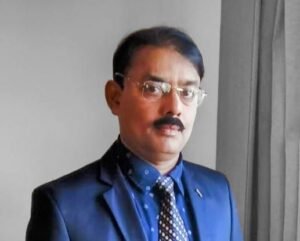
The Quiet Luminary of Assam’s Medical World: The Life and Legacy of Dr Dhiren Kumar Nath
Heramba Nath
(A profound reflection on compassion, excellence, and the unseen grace of service)
In an era when the world often celebrates loud achievements, public triumphs, and ostentatious declarations, the most meaningful stories quietly unfold through individuals whose influence is profound precisely because it is unassuming. In Assam’s medical landscape, one such luminary is Dr Dhiren Kumar Nath, Senior Consultant in Head & Neck Oncology and Deputy Superintendent at the North East Cancer Hospital and Research Institute (NECHRI), Jorabat. Undoubtedly, Dr Nath is one of the most dedicated doctors in his specialization, blending exceptional technical expertise with unwavering compassion and human sensitivity. His commitment to Head & Neck Oncology is matched by the gentleness with which he treats his patients, making him not only a highly skilled surgeon but also a trusted guide and confidant. His journey embodies the rare combination of professional brilliance, moral integrity, and gentle humanity, a blend that leaves an indelible impact not only on the lives of his patients but also on the ethos of medical practice in the North East. Dr Nath’s life demonstrates that the power of service lies not in publicity or acclaim, but in sustained dedication, compassion, and the quiet dignity with which one approaches duty.
Born in the tranquil village of Solpam in Darrang district, Assam, Dr Nath grew up amidst the serenity of rural life, where the rhythms of the seasons, the whispering of the fields, and the simple values of community shaped his earliest understanding of the world. His father, the late Debendra Chandra Nath, a morally upright and revered teacher at Dumunichowki MV School, and his mother, the late Maikan Nath, a gentle, wise, and steadfast homemaker, instilled in him the virtues of honesty, discipline, empathy, and unwavering responsibility. From the earliest days, the young Dhiren was taught that character was more valuable than recognition, duty more essential than display, and sincerity more enduring than superficial brilliance. Within this quiet domestic environment, he absorbed lessons not just through instruction but through the lived example of his parents’ lives, a foundation that would shape both his professional and personal identity.
Dr Nath’s schooling began at Solpam Lower Primary School, where even at a very young age, his curiosity, diligence, and gentle temperament were apparent. Dr Dhiren Kumar Nath achieved first position in the Lower Primary School Scholarship from Solpam Lower Primary School all over Darrang District, a rare and outstanding achievement that reflected exceptional intellectual promise, discipline, and academic excellence at a remarkably early stage of life. As he progressed to Pakadali High School, his dedication and consistent hard work earned him the Middle English School Scholarship, further affirming his exceptional aptitude and commitment to education.
During his high school years at Pakadali High School, he completed his HSLC examination with a bright and commendable result, obtaining 78 percent, including letter marks in General Mathematics, Advanced Mathematics, and Sanskrit. Teachers admired not only his academic brilliance but also his gentle behaviour, humility, and focused temperament. They foresaw that this disciplined, empathetic, and intellectually gifted boy would grow into a doctor capable of combining skill with humanity.
Following this, he pursued higher secondary education at Cotton College, now known as Cotton State University, where his outstanding performance in the higher secondary examination earned him the National Scholarship, which he held for five consecutive years up to the completion of his MBBS course. This recognition highlighted both his intellectual capabilities and his sustained dedication to the pursuit of medical excellence. His achievements during these formative years established a foundation of academic brilliance, ethical grounding, and perseverance that would shape the exceptional physician he would become.
Even in his childhood, Dr Nath displayed a remarkable temperament, blending focus with calmness, seriousness with gentleness, and ambition with humility. Teachers who recall his school years speak of a boy whose mind was disciplined, whose curiosity was insatiable, and whose temperament suggested maturity far beyond his years. He approached every task with quiet precision, never hurried, never distracted, never seeking applause, and never swayed by superficial enticements. This early inner discipline, nurtured by family and reinforced by the simplicity of village life and school environment, became the guiding principle that would define his academic journey and professional career.
Dr Nath pursued his MBBS and subsequently his MS in ENT (Ear, Nose, and Throat) at Gauhati Medical College and Hospital (GMCH), an institution that has produced some of the finest medical professionals in the region. Throughout these formative years, he distinguished himself not merely through academic performance but through the measured manner with which he approached learning and life. He absorbed knowledge with patience, asked questions with humility, and treated every peer, teacher, and patient with the respect that would later become the hallmark of his professional persona. Colleagues recall that even as a student, his presence was calm yet commanding in its quiet insistence on correctness, ethics, and thoughtfulness. His academic rigor was matched by an emotional sensitivity that often allowed him to perceive not only the scientific complexities of medicine but also the human fragility intertwined with illness.
It was the opportunity to undertake Post Graduate Training (PGT) in Head & Neck Oncology at Tata Memorial Hospital, Mumbai, that marked a decisive phase in his career. Tata Memorial, renowned for its exacting standards and intense exposure to complex oncological cases, honed Dr Nath’s technical skills, surgical precision, and diagnostic acuity. Yet beyond the rigour and clinical challenges, the institution exposed him to the profound emotional realities of oncology: patients and families navigating fear, hope, and uncertainty, and the immense responsibility resting upon every surgical decision. Here, Dr Nath’s innate empathy matured alongside his technical expertise. He learned to integrate clinical proficiency with human understanding, realising that healing extends beyond the operating theatre, encompassing reassurance, dignity, and emotional support.
Over the years, his professional journey also included crucial experiences in prominent hospitals in Guwahati, where he served as Senior Resident Doctor at Down Town Hospital and later as Consultant in ENT and Head & Neck Services at Agile Hospital. These roles, demanding both clinical expertise and administrative sensitivity, further cultivated his ability to manage complex patient scenarios while maintaining composure and professionalism. Each interaction reinforced his understanding that medicine is as much about human connection as it is about medical intervention.
At NECHRI, Dr Nath has become a beacon of excellence, blending intellectual mastery with profound human sensitivity. Every patient who enters his chamber carries an invisible weight of anxiety and fear, and every family carries silent hope for reassurance. Dr Nath’s approach to consultations is meticulous and unhurried; he listens intently, absorbs not only clinical information but also the subtleties of emotional state, and communicates with a clarity that transforms complex medical explanations into understandable guidance. His body language itself — steady posture, gentle gestures, calm eye contact — conveys reassurance and competence. The calmness he radiates does not merely comfort; it becomes therapeutic. Patients often remark that his presence alone imbues a sense of trust and hope.
Colleagues and subordinates are equally impressed by the elegance of his etiquette. He greets each person — whether a nurse, administrative staff, junior doctor, or visiting consultant — with warmth and respect, never condescending, never brusque. In meetings, in corridors, in the operation theatre, he embodies consistency of behaviour, demonstrating that dignity, humility, and patience are not situational but ingrained. His voice is calm, his words measured, his instructions clear without being authoritarian. In an era when the pressures of modern medical practice often breed impatience or brusqueness, his unassuming politeness stands as a quiet but powerful testament to the humanity of medicine.
What further distinguishes Dr Nath is the subtlety with which he combines firmness with tenderness. He is exacting in surgical precision and medical standards, yet infinitely gentle with patients struggling emotionally, fearful, or in pain. Families often recount that the careful explanations he provides before surgery reduce fear as much as the operation itself. Many patients, moved by his compassion, have likened his presence to a divine blessing, calling him “another incarnation of God.” Such expressions, far from being mere hyperbole, reflect the lived experience of those who have encountered a professional whose care integrates intellect, skill, and empathy into a singular, holistic practice.
Dr Nath’s influence extends far beyond the hospital. The villagers of Solpam continue to regard him with affection and pride, not merely because of his professional stature but because of his unbroken connection to the community and his unassuming nature. Despite national and regional recognition, he walks through the village streets with the same humility that defined his youth. For them, he exemplifies how achievement need not come at the cost of moral and social rootedness. His presence is a reminder that greatness can remain grounded, and integrity need not be compromised in the pursuit of professional excellence.
Equally compelling is his literary and cultural engagement. Dr Nath’s poetic sensibility manifests in both lyrics and reflective prose, often exploring the intersections of human emotion, suffering, and resilience. His poem “Deutar Kolom…”, written as a homage to his late father, has touched countless hearts and was publicly read by Union Minister Pabitra Margherita, bridging his medical persona with his literary voice. Beyond poetry, his lyrical compositions, such as “Aai Mor Dhunia…”, sung by classical singer Tarali Sarma, capture universal tenderness and emotional depth. These contributions reveal a man whose precision in the operating theatre is complemented by a sensitivity to the subtleties of human experience, a duality rare in professionals whose time is consumed by clinical demands.
Dr Nath’s mind operates at the convergence of intellect and compassion. He approaches diagnosis with analytical clarity, surgical interventions with meticulous skill, and patient interactions with empathic understanding. Yet he also reflects on the philosophical and ethical dimensions of medicine. He recognises that every patient embodies a narrative beyond pathology: a story of life, struggle, hope, and vulnerability. His professional philosophy emphasises that technical proficiency without human engagement is incomplete, and that care without kindness is insufficient. This alignment of science with ethics, knowledge with empathy, and authority with humility defines his enduring impact.
His leadership at NECHRI, as both Senior Consultant and Deputy Superintendent, reflects a rare balance. He guides with quiet authority, mentoring junior doctors without dominance, correcting errors without embarrassment, and fostering collaboration without coercion. His leadership is an exercise in moral gravity rather than positional assertion. Junior doctors are inspired to follow him not through obligation but through admiration. Patients entrust him not out of compulsion but because his integrity, competence, and calm confidence evoke trust. Here, the practice of leadership extends beyond administration, becoming an ethical model for those around him.
The trust Dr Nath inspires is anchored in consistency. In oncology, where emotional fragility and critical decisions intersect daily, the ability to maintain calm, clarity, and compassion is invaluable. He carries the burdens of his patients’ suffering with equanimity, never allowing stress to distort communication or demean behaviour. His calmness becomes an unseen stabiliser, influencing the entire medical team. Many colleagues describe his presence as transformative: a few moments in his company restore focus, composure, and morale, qualities that are as important in healthcare as surgical skill or diagnostic acumen.
Dr Nath’s hands are instruments of both science and faith. Every incision, every diagnosis, every reassurance conveys not only technical proficiency but also decades of experience tempered by empathy. Patients feel the confidence emanating from these hands long before any procedure begins, sensing a steadiness, precision, and gentleness that transcends mere surgery. These are hands that heal both the body and the spirit, forging a connection between doctor and patient that persists in memory long after recovery.
His mind, likewise, is a repository of knowledge, insight, and reflection. Beyond scientific expertise, he contemplates life, suffering, and human resilience. His essays, poems, and personal reflections illustrate a mind attuned to both rational analysis and emotional understanding. He writes not for recognition but to articulate truths observed in the clinical arena and the human world beyond. His literary contributions illuminate the sensibilities underpinning his professional life, revealing the holistic nature of his understanding of the human condition.
Dr Nath’s story also reminds us that true greatness does not require visibility or self-promotion. His accomplishments are substantial: advanced medical training, prestigious fellowships, leadership roles, published literary works, and countless lives touched. Yet he remains unassuming, letting action and character communicate his excellence. In a society enamoured with spectacle, his life demonstrates that moral authority, technical competence, and compassion together constitute a more enduring legacy than accolades or media attention ever could.
The quiet, continuous accumulation of his virtues — patience, listening, politeness, empathy, precision, leadership, and reflection — sets him apart. He exemplifies the highest ideals of medicine: to cure, to comfort, to educate, and to inspire. Young doctors observing him learn that clinical mastery must be accompanied by emotional intelligence; that authority must coexist with humility; and that ethical consistency is the truest measure of professional success. Patients, in turn, experience a form of care that transcends procedures, embodying the principle that medical practice is a moral engagement as much as it is a scientific one.
Even as modern healthcare faces commercialisation, administrative pressures, and escalating stress, Dr Nath demonstrates that it is possible to maintain humanity without compromising efficiency. He remains fully committed to his patients, approachable despite his responsibilities, and considerate despite constant demands. His work exemplifies how medicine, when practised with moral clarity, transforms not only health outcomes but also the confidence and dignity of those who seek care. He stands as a model of how personal character and professional skill must harmonise to create the fullest impact.
His life also extends an invitation to reflect on the values society often overlooks. In a world distracted by speed, noise, and self-promotion, Dr Nath’s example reminds us that perseverance, humility, consistency, and empathy are forms of power as enduring as technical brilliance. By walking his path with integrity, compassion, and quiet authority, he encourages a culture of responsibility, trust, and moral clarity that reaches beyond his immediate sphere of influence. The villagers of Solpam, his colleagues, his students, and countless patients bear witness to this influence, a silent light that does not fade with passing time.
In observing Dr Nath’s trajectory, one realises that the truest accomplishments are seldom celebrated loudly. They manifest in lives touched, suffering alleviated, hope restored, and dignity preserved. His journey exemplifies how the pursuit of excellence can coexist with simplicity, how intellectual mastery can coexist with humility, and how professional distinction can coexist with human warmth. These qualities together create a luminous presence whose influence extends far beyond hospital walls, into communities, homes, and hearts across Assam and the North East.
May Dr Dhiren Kumar Nath continue to find the inner strength, composure, and spiritual steadiness that have characterised his journey so far. May his hands heal with the same precision and grace that countless patients have come to trust, and may his mind continue to illuminate not just medical pathways but also ethical, philosophical, and emotional insights. May his compassion remain a guiding light for young doctors, colleagues, and patients alike, demonstrating that humanity, patience, and kindness are as crucial to medicine as skill, knowledge, and discipline. May he continue to enjoy robust health, enduring happiness, and lasting prosperity, and may his unwavering dedication to the service of humanity flourish ever more, inspiring generations and enhancing the lives of countless patients.
For Assam, for the medical profession, and for humanity at large, Dr Dhiren Kumar Nath is a quiet luminary — a figure whose brilliance is measured not in public acclaim, media headlines, or fleeting recognition, but in the enduring virtue that guides every decision, every action, and every interaction. His power lies not in visibility, nor in the ostentation of awards or accolades, but in the steadfast fidelity with which he embraces his duty, the moral courage with which he confronts complex human suffering, and the consistency with which he manifests empathy, patience, and precision. In a world increasingly fascinated with spectacle, Dr Nath exemplifies the rare truth that genuine influence is cultivated in silence, through repeated acts of care, honesty, and service that leave an imprint far beyond the gaze of observers.
His life reminds us that the most enduring impact is neither immediate nor always visible; it is measured in the quiet alleviation of fear, in the reassurance of anxious families, in the restoration of hope to those confronted by the gravest uncertainties, and in the nurturing of young doctors who come to embody the principles he exemplifies. Each patient who leaves his care carries with them more than physical healing — they carry dignity, reassurance, and the confidence that they were understood, listened to, and treated as a whole human being rather than a case to be managed. Each colleague who witnesses his conduct learns that authority can be exercised without arrogance, that leadership can inspire without dominance, and that excellence can coexist harmoniously with humility.
His journey is an enduring testament that true greatness does not shout; it does not demand notice or applause. It endures quietly, nurtures consistently, and illuminates persistently. It changes lives not by declaration but by example, by presence, by the steady rhythm of daily commitment to a higher purpose. The influence of Dr Nath flows not only through the corridors of hospitals or the classrooms where young doctors are trained, but also through communities, homes, and hearts across Assam and beyond. It is a living lesson that the synthesis of skill, compassion, moral clarity, and humility can create a legacy that neither time nor circumstance can diminish.
In witnessing Dr Dhiren Kumar Nath, we see that the essence of human service, the pinnacle of professional dedication, and the truest form of leadership converge in a life lived with ethical consistency and quiet excellence. His legacy affirms that medicine, at its highest calling, is not merely a profession but a moral vocation — one that heals, uplifts, inspires, and ultimately leaves the world measurably better for the care, conscience, and integrity of those who devote themselves wholly to it. In every sense, Dr Nath embodies this ideal: a luminous presence whose impact is profound precisely because it is exercised with humility, sustained by principle, and directed toward the enduring good of others.