
Seeti 2.0 shapes discussion on tourism and identity at Culinary Cascades
Shillong, Rongili Barta: Meghalaya is positioning itself as a state defined by strong cultural identity, community-led development and emerging economic opportunity, speakers said during an interactive session at Culinary Cascades, held at Wards Lake here.
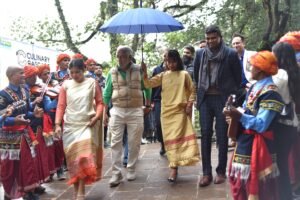
The two-day festival, supported by Meghalaya Tourism, coincided with the ongoing Seeti 2.0, a culinary heritage immersion programme, with both platforms coming together for a collaborative exchange on food, culture and storytelling.
Speaking at the session, Dr. Vijay Kumar D., IAS, Chairman & Managing Director, Meghalayan Age Ltd., said the state is consciously working towards building a distinct global narrative rooted in its culture, people and natural strengths.
“We have an amazing story. And this story needs to be told,” he said, adding that Meghalaya is leveraging platforms and collaborations to showcase its unique identity and opportunities.
Tracing the evolution of this approach, Kumar referred to earlier initiatives such as the Meghalayan Age Festival, inspired by the globally recognised geological time scale named after the region, and said the state is now focused on positioning itself as a hub of excellence, beauty and opportunity.
Highlighting economic priorities, he said Meghalaya’s growth strategy is centred on agriculture and the services sector, with increasing emphasis on value addition, food processing and tourism-led employment.
He noted that the state produces high-quality organic products such as Lakadong turmeric, premium pineapples, ginger and strawberries, and is developing farm-to-market linkages through processing ecosystems involving farmers, entrepreneurs and institutions.
Kumar also stressed the importance of skilling, both for local employment and global opportunities, citing examples such as international placements of nurses and collaborations in specialised agricultural practices.
On tourism, he said the state is expanding beyond established destinations and creating decentralised employment opportunities, while adopting a model of “low footfall, low impact, high value tourism” to ensure sustainability.
Addressing concerns around cultural dilution amid increasing exposure, Kumar said there is a conscious effort to balance economic growth with preservation of identity.
“We engage with the best and learn from the best, but while keeping our identity strong,” he said.
He further highlighted the community-led nomination of Meghalaya’s living root bridges for UNESCO World Heritage status as an example of participatory governance, noting that 86 villages were involved in the process.
Moderating the discussion, Image Guru and Litigation Landscaper Dilip Cherian said initiatives such as Culinary Cascades and Seeti 2.0 reflect growing national confidence in Meghalaya’s potential.
“Bringing leading chefs and hospitality voices to Meghalaya is a vote of confidence in what the state is capable of,” he said, adding that such platforms are helping overcome perceived barriers of distance and integrate the state more closely with mainstream economic and cultural networks.
Cherian also emphasised the importance of strengthening local cultural identity even as the state engages with wider markets and collaborations.
Seeti 2.0 has brought together around 50 of India’s leading chefs, culinary experts and storytellers for a five-day immersive journey across Meghalaya, engaging with local communities, indigenous ingredients and traditional food practices. The initiative aims to position the Northeast more prominently within India’s culinary narrative by enabling participants to experience, interpret and amplify the region’s food heritage.
Seeti 2.0, a five-day culinary immersion bringing together chefs, creators and cultural practitioners, is currently underway across the state and will conclude on March 31, while Culinary Cascades concluded in Shillong on Saturday.