
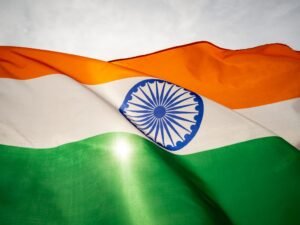
Republic Day: The Making of a People’s Constitution
Every year on January 26, India pauses to remember a defining moment in its history. Republic Day is not just a commemoration of a date, but a celebration of an idea — that a diverse and complex nation chose to govern itself through a Constitution crafted by its own people. As India celebrates its 77th Republic Day, the occasion invites reflection on the historical journey that led to this day and on the continuing relevance of the Republic in a changing world.
The road to January 26, 1950, began long before independence. British colonial rule in India was sustained not only by military power but also by laws that denied Indians a voice in their own governance. Early resistance movements in the 19th century, including the Revolt of 1857, revealed a growing desire for self-rule. Over time, this aspiration took organised political form with the founding of the Indian National Congress in 1885. What began as a demand for limited reforms gradually evolved into a mass movement for complete independence.
The first decisive break came in 1930. At its Lahore session, the Congress declared Purna Swaraj, or complete independence, as its goal. January 26 of that year was observed across the country as Independence Day, with Indians pledging to resist colonial rule. Though freedom was still distant, this declaration marked a moral turning point. It made clear that Indians would no longer accept half-measures or dominion status under the British Crown.
Seventeen years later, India finally achieved independence on August 15, 1947. Yet, freedom came at a heavy cost. Partition led to one of the largest migrations in history, accompanied by violence, displacement and loss. The newly independent nation faced enormous challenges: economic weakness, social divisions, administrative disruption and the task of integrating hundreds of princely states. At this fragile moment, India needed a framework that could hold the nation together and guide its future.
That framework was the Constitution of India. The Constituent Assembly, formed in 1946, brought together leaders from across regions, communities and ideologies. Their task was unprecedented: to design a system of governance for a country marked by deep diversity and widespread poverty. Under the leadership of Dr B R Ambedkar, the Drafting Committee worked through intense debates to produce a document that balanced authority with liberty and unity with diversity.
The Constitution was adopted on November 26, 1949, but it came into effect on January 26, 1950. The choice of this date was deliberate. By linking the birth of the Republic to the 1930 declaration of Purna Swaraj, India honoured the sacrifices of the freedom struggle and affirmed continuity between the quest for independence and the practice of self-rule. On that day, India ceased to be a dominion and became a sovereign, democratic republic.
Republic Day marks the moment when political freedom was given constitutional meaning. The Constitution did not merely outline the structure of government; it articulated a vision of India. It guaranteed fundamental rights such as equality before the law, freedom of expression and freedom of religion. At the same time, it laid down principles to guide the state in building a just social order. Most significantly, it introduced universal adult franchise, granting every adult citizen the right to vote. This was a bold affirmation of trust in the people, rare among newly independent nations of that era.
Over the past 77 years, the Republic has endured many tests. India has faced wars, internal conflicts, economic crises and political turbulence. Yet, the constitutional framework has shown remarkable resilience. Institutions have evolved, laws have been amended, and social norms have shifted, but the core values of justice, liberty, equality and fraternity remain intact. Republic Day is a reminder that democracy is not static; it is sustained through constant engagement and renewal.
The significance of Republic Day today lies in its reminder that rights come with responsibilities. The Constitution empowers citizens, but it also expects them to uphold unity, respect diversity and abide by the rule of law. In an age of polarised debate and instant opinion, these constitutional values serve as a stabilising force. They encourage dialogue over confrontation and inclusion over exclusion.
Republic Day also underlines the importance of India’s diversity. Few nations have attempted democracy on such a scale and with such complexity. The Constitution’s genius lies in its ability to accommodate differences while preserving unity. Federalism, linguistic recognition and cultural freedom are not concessions but strengths that have helped India remain intact as a Republic.
As India celebrates its 77th Republic Day, the occasion is not only about remembering the past but also about assessing the present and imagining the future. Economic growth, technological advancement and global influence have transformed the country, but challenges of inequality, social justice and institutional trust persist. The answers to these challenges do not lie outside the constitutional framework, but within it.
Republic Day, therefore, is a call to renewed commitment. It asks citizens and institutions alike to live up to the spirit of the Constitution, not just its letter. It reminds us that the Republic is not an abstract concept, but a shared responsibility. Seventy-seven years on, the strength of India’s Republic lies not only in its endurance, but in its capacity to adapt while remaining true to its founding ideals.