
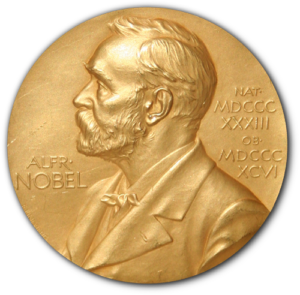
Nobel Prize Day: A celebration of human endeavour and intellect
Heramba Nath
Nobel Prize Day stands as a testament to human endeavour, curiosity, and the relentless pursuit of excellence across the spectrum of human knowledge. Observed annually on 10 December, it marks the day of the passing of Alfred Nobel in 1896, whose visionary bequest established an enduring legacy in the recognition of extraordinary contributions to humanity. The day, beyond its ceremonial grandeur, carries a profound message about the value of intellect, creativity, and moral responsibility in shaping the contours of modern civilisation. Nobel Prize Day, while celebratory, invites reflection on the deep interconnectedness of human progress, the burdens and privileges of knowledge, and the timeless responsibility of those who lead society into uncharted territories of discovery and understanding.
The story of the Nobel Prizes begins with Alfred Nobel, the Swedish chemist, engineer, inventor, and industrialist whose life bridged the material and intellectual worlds. Nobel, widely remembered as the inventor of dynamite, lived a life marked by the dualities of creation and destruction, progress and peril. The pervasive influence of his inventions in both construction and conflict compelled him to contemplate the ethical dimensions of scientific advancement. It was a life of deep reflection and worldly engagement, culminating in his decision to devote his vast fortune to the celebration of human achievement in fields that extend beyond the pursuit of mere wealth or power. In his last will, Nobel articulated a vision of reward for those whose work conferred the “greatest benefit to humankind,” a vision that crystallised into the Nobel Prizes in Physics, Chemistry, Physiology or Medicine, Literature, and Peace, with the later addition of the Prize in Economic Sciences in Memory of Alfred Nobel. Each award, in its specificity, reflects Nobel’s prescient understanding of the diverse channels through which human insight and creativity could elevate the world.
The observance of Nobel Prize Day is not merely ceremonial. Across Stockholm and Oslo, the meticulous preparation for the prize ceremonies, the anticipation of laureates, and the public engagement with scientific, literary, and humanitarian achievements transform the day into a cultural and intellectual festival of global significance. In Stockholm, the awards in the sciences, literature, and economics are presented with a formal rigour that resonates with the historical weight of the occasion. The ceremonies involve meticulous orchestration, from the presentation of the Nobel diplomas and medals to the ceremonial banquet at the Stockholm City Hall, where dignitaries, scholars, and members of the Swedish Royal Family assemble to honour the laureates. Meanwhile, in Oslo, the Nobel Peace Prize is conferred in a separate ceremony, reflecting the unique international focus of peace and diplomacy. The dual centres of celebration underscore the global and multifaceted nature of the awards, blending national pride with universal recognition of achievement. The ceremonies are not only events of pomp and prestige; they are symbolic affirmations of the enduring value of knowledge, literature, and humanitarian effort in the construction of a better world.
Nobel Prize Day serves as a mirror of human aspiration, reflecting the highest ideals that guide civilisation. In the sciences, laureates are recognised for discoveries and innovations that often redefine the boundaries of human understanding. The contributions in physics may illuminate the hidden forces of the universe, in chemistry they may unravel the intricate structures of matter, and in physiology or medicine, they may reveal the mechanisms of life itself or pave the way for treatments that alleviate suffering on a global scale. Each award in these fields is a celebration of rigorous inquiry, disciplined observation, and imaginative theorising, attributes that exemplify the quintessence of the scientific method. Moreover, Nobel Prize Day reminds us that the fruits of scientific endeavour are rarely solitary achievements; they are embedded in networks of mentorship, collaboration, and accumulated knowledge. The day thus becomes a reflection on the communal and cumulative nature of human intellect, highlighting the interconnectedness of generations of thinkers who collectively advance the frontier of understanding.
In the realm of literature, the Nobel Prize occupies a unique and transformative position. Unlike scientific discovery, the impact of literary achievement is both intimate and expansive, touching the minds and hearts of individuals while shaping the broader cultural and philosophical discourse. Writers who receive the Nobel Prize are celebrated not solely for the aesthetic qualities of their work, but for their ability to illuminate the human condition, articulate the unspoken truths of society, and challenge prevailing norms through the nuanced power of language. The literary laureates of the past century, from Albert Camus to Toni Morrison, have transcended the boundaries of geography and culture, offering narratives that are simultaneously particular and universal. Nobel Prize Day, therefore, stands as a reminder that literature is an enduring conduit for empathy, reflection, and moral engagement, and that the act of storytelling remains central to the construction of collective memory and conscience.
The Peace Prize, perhaps the most publicly celebrated and politically resonant of the awards, embodies a moral imperative that transcends disciplinary boundaries. It recognises the individuals, organisations, and movements that confront violence, injustice, and oppression, striving instead for reconciliation, understanding, and the establishment of enduring frameworks for peace. The laureates of the Peace Prize are often those who operate under conditions of immense personal risk, navigating the treacherous waters of diplomacy, conflict resolution, and grassroots activism. The significance of conferring this prize on Nobel Prize Day is heightened by the stark reminder that peace is both fragile and precious, that the triumphs of humanity are inseparable from the efforts to prevent destruction and suffering, and that recognition of courage and ethical vision can catalyse broader social transformation. The award is, therefore, not merely an accolade; it is an ethical exhortation, a call to acknowledge the intrinsic value of human dignity and to elevate the pursuit of justice as a universal aspiration.
The economic sciences prize, established much later in 1968, highlights the evolving contours of human inquiry and the recognition of complex societal systems. Economics, as a discipline, engages with questions of resource allocation, market dynamics, and the structures that shape human prosperity. Laureates in this category are acknowledged for insights that elucidate patterns of behaviour, inform policy, and contribute to the understanding of the mechanisms by which societies function and flourish. On Nobel Prize Day, the recognition of economists serves as a reminder that human welfare is not solely a product of technology, literature, or diplomacy, but is profoundly influenced by thoughtful analysis and judicious planning of social and economic systems. It underscores the interdependence of knowledge domains and reinforces the principle that the advancement of humanity is holistic, encompassing material well-being, moral understanding, and intellectual enrichment.
Beyond the formal ceremonies and public acclaim, Nobel Prize Day invites introspection about the ethical dimensions of human achievement. The awards, by design, celebrate extraordinary accomplishment, yet they also raise questions about access, equity, and the societal structures that enable or hinder the pursuit of excellence. The history of the Nobel Prizes is replete with instances that prompt reflection on these issues: the underrepresentation of women and minority groups, the geopolitical implications of scientific research, and the moral dilemmas posed by discoveries with both constructive and destructive potential. By grappling with these questions, Nobel Prize Day becomes not only a celebration but a forum for critical engagement, challenging societies to examine how the fruits of knowledge and creativity are nurtured, distributed, and applied for the greater good.
The anticipation and media coverage surrounding Nobel Prize Day also have a profound cultural impact. For many, the announcement of laureates is a moment of inspiration, particularly for students, researchers, and aspiring writers. The recognition of human endeavour on a global stage validates years of persistent effort and exemplifies the possibilities that can emerge from dedication, intellectual curiosity, and moral courage. In a world often dominated by transient trends, political strife, and commercial imperatives, Nobel Prize Day reorients attention toward enduring values: the pursuit of truth, the cultivation of empathy, and the relentless striving for solutions to humanity’s most pressing challenges. It fosters a culture that prizes depth over superficiality, reflection over reaction, and foresight over expediency.
Nobel Prize Day also bridges generational and cultural divides. While the prizes themselves are conferred in specific national contexts, their significance is universal. The accomplishments celebrated are not the property of any single country or culture; they belong to the world. Scientific breakthroughs, literary masterpieces, and acts of peace resonate across borders, transcending language, ethnicity, and political affiliation. The day, therefore, becomes a celebration of shared humanity, a reminder that progress and compassion are collective endeavours, and that recognition of excellence can inspire cooperation, dialogue, and mutual respect among nations and peoples.
It is also instructive to consider the cumulative legacy of the Nobel Prizes. Each laureate represents a narrative, a journey of struggle, insight, and transformation. Collectively, they compose a rich tapestry that chronicles the evolution of human thought and achievement over the past century and more. From the early 20th-century physicists who unlocked the secrets of atomic structure, to contemporary writers and activists shaping discourse in the digital age, the continuum of laureates embodies the dynamic interplay of creativity, knowledge, and social consciousness. Nobel Prize Day, in its reflection of this history, prompts societies to honour not only individual accomplishment but also the broader currents of human endeavour that enable such achievements.
Moreover, Nobel Prize Day serves as a subtle critique of complacency, challenging individuals and institutions to aspire toward excellence and to confront ethical dilemmas with courage and integrity. The awards are a reminder that greatness is not accidental but the product of sustained effort, critical thinking, and moral reflection. They encourage the cultivation of environments in which inquiry is valued, creativity is nurtured, and humanitarian values are integrated into the practice of science, literature, and public service. In celebrating laureates, the day underscores the responsibilities inherent in knowledge and talent, affirming that recognition carries not merely prestige but also the duty to contribute meaningfully to the broader world.
The cultural and educational impact of Nobel Prize Day is further amplified by its presence in media, academia, and public discourse. Documentaries, scholarly analyses, and media commentaries contextualise the achievements of laureates, making them accessible to wider audiences and inspiring new generations of thinkers and doers. The day, thus, functions as both a marker of excellence and a pedagogical tool, shaping perceptions of what constitutes meaningful achievement and illustrating the tangible and intangible ways in which human effort can transform lives. By providing narratives of perseverance, insight, and ethical engagement, Nobel Prize Day becomes a vehicle for moral and intellectual education, reinforcing the values of diligence, curiosity, and responsibility.
In contemplating Nobel Prize Day, one is inevitably drawn to the broader philosophical and humanistic questions it evokes. What constitutes true contribution to humanity? How should societies recognise and reward excellence? What ethical obligations accompany knowledge, creativity, and power? The day, in its combination of celebration and reflection, does not provide facile answers but encourages continuous engagement with these enduring questions. It embodies the tension between recognition and responsibility, between individual achievement and collective welfare, and between the pursuit of knowledge and the imperatives of conscience.
At its core, Nobel Prize Day is both a commemoration and a call to imagination, courage, and moral reflection. It is a celebration of those who have expanded the horizons of human understanding, enriched cultural life, and fostered peace and justice. It reminds societies of the enduring value of curiosity, intellect, and ethical commitment, and of the importance of nurturing these qualities across generations. The day transcends ceremony, acting as a mirror in which humanity can examine its aspirations, achievements, and moral compass. It is a day to honour the transformative power of human endeavour while recognising that the pursuit of knowledge and virtue is an ongoing, collective responsibility, intimately bound to the well-being of the world and the flourishing of human civilisation.
In observing Nobel Prize Day, the world is invited to celebrate both the extraordinary achievements of individuals and the shared ideals that unite humanity. It is a day that celebrates discovery and insight, creativity and compassion, and the tireless pursuit of a more enlightened and just society. It stands as a reminder that the quest for knowledge, the commitment to ethical action, and the courage to imagine a better world are not only the province of a few but responsibilities shared across generations. In this sense, Nobel Prize Day is both a culmination and a commencement: a recognition of remarkable accomplishment and an exhortation to continued striving, reflection, and engagement in the service of humanity.