
Magh Bihu: A Festival of Gratitude, Community and Renewal
Siddharth Roy
Civil Engineer, Writer and Columnist
Magh Bihu, also known as Bhogali Bihu, is one of Assam’s most cherished festivals. Celebrated in mid-January, it marks the end of the harvesting season and stands as a tribute to hard work, abundance and community spirit. Unlike other festivals that focus on prayer or ritual, Magh Bihu is about sharing, togetherness and gratitude for nature’s generosity. In many ways, it reflects the simple yet profound values that continue to bind Assamese society.
At its core, Magh Bihu is a harvest festival. After months of labour in the fields, farmers welcome the season of plenty with joy and relief. The granaries are full, the fields are at rest, and families can finally come together to celebrate. The festival is a reminder of Assam’s agrarian roots and of the deep relationship between people and the land. In an age where food often reaches our plates through long and invisible supply chains, Magh Bihu reconnects society with the source of sustenance and the dignity of agricultural labour.
The celebrations begin with Uruka, the eve of Magh Bihu, which is perhaps the most eagerly awaited part of the festival. Families and communities gather near fields or riverbanks, cook together, sing, laugh and share meals late into the night. Temporary huts called bhela ghars are built using bamboo, hay and banana leaves, symbolising simplicity and collective effort. The communal feast, featuring traditional dishes made from rice, lentils, vegetables and fish, reflects a culture where sharing food is an expression of equality and belonging.
The next morning marks the main day of Magh Bihu, when people light the meji, a ceremonial bonfire. The burning of the meji is both symbolic and spiritual. It represents the end of the old and the welcoming of the new, a gesture of gratitude to the fire god and to nature for a successful harvest. People offer pithas, larus and other traditional foods to the fire before taking its blessings for prosperity and well-being in the coming year. The sight of mehis burning across fields and open spaces creates a powerful sense of collective celebration.
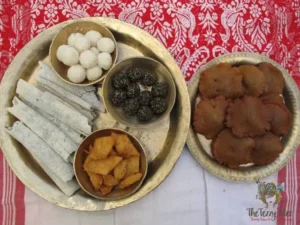
Food occupies a central place in Magh Bihu, earning it the name Bhogali, or the festival of feasting. Traditional rice-based delicacies such as til pitha, ghila pitha, sunga pitha and various larus are prepared in households across Assam. These foods are not just festive treats; they carry memories, skills and stories passed down through generations. In many homes, the preparation of pithas becomes an intergenerational activity, where elders teach younger members the art of preserving tradition through taste.
Magh Bihu is also a festival of community bonding. It cuts across age, class and religious lines, bringing people together in shared celebration. In villages, neighbours come together to build bhela ghars and organise feasts, while in urban areas, communities recreate these traditions in parks, societies and public spaces. Even as lifestyles change and cities grow, the essence of Magh Bihu continues to adapt, proving the resilience of cultural traditions.
Beyond celebration, Magh Bihu carries deeper social and environmental messages. The festival promotes respect for nature, moderation in consumption and the value of collective living. The use of natural materials for bhela ghars and the emphasis on seasonal food reflect sustainable practices rooted in traditional knowledge. At a time when climate change and environmental degradation pose serious challenges, such indigenous practices offer valuable lessons in harmony with nature.
Magh Bihu also serves as a reminder of rural realities and the importance of farmers in Assam’s economy and culture. While the festival celebrates abundance, it also highlights the uncertainties faced by those dependent on agriculture, from erratic weather to market challenges. Honouring Magh Bihu in its true spirit requires renewed attention to farmer welfare, sustainable agriculture and rural development.
For the Assamese diaspora, Magh Bihu holds special emotional significance. Celebrated far from home, it becomes a link to roots, identity and shared memory. Community gatherings, cultural programmes and festive meals help recreate a sense of belonging and keep traditions alive across generations and geographies.
As Assam continues to modernise and integrate with the wider world, Magh Bihu offers a moment of pause and reflection. It reminds society that progress need not come at the cost of tradition, and that cultural festivals can coexist with change. The challenge lies in preserving the spirit of Magh Bihu—its simplicity, inclusiveness and gratitude—while adapting its celebrations to contemporary realities, including concerns around safety, environmental impact and public spaces.
Ultimately, Magh Bihu is more than a festival. It is a celebration of life, labour and community. In lighting the meji and sharing food, people reaffirm values that are timeless: respect for nature, joy in togetherness and hope for renewal. In these values lies the enduring relevance of Magh Bihu—not just for Assam, but as a reminder of how societies can celebrate abundance with humility and unity.