
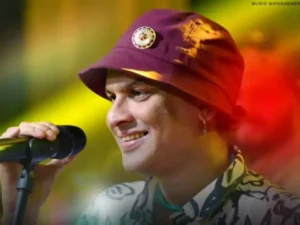
Heartthrob Zubeen Garg: The Voice that Defines Assam’s Soul
Heramba Nath
(A reflective tribute on the occasion of Zubeen Garg’s birthday, 18th November — celebrating a voice that transcends borders, generations, and genres.)
In the cultural mosaic of Assam, where every river hums a song and every heart beats to a rhythm of its own, one name has become synonymous with music, emotion, and identity — Zubeen Garg. Born on 18th November 1972 in Jorhat, Assam, Zubeen has not only defined an era of Assamese music but also redefined what it means to be a true artist — a restless spirit who refuses to be confined by the limits of genre, language, or geography. His journey is more than a tale of musical success; it is the story of a man whose voice has become a mirror to the Assamese heart, a thread that connects the hills and valleys of the Northeast with the wider soundscape of India. As he celebrates another year of life, his birthday on 18th November stands not just as a date of birth, but as a day of pride, emotion, and reflection for millions of admirers whose lives have been touched by his songs.
Zubeen Garg’s artistic voyage is as vast as the Brahmaputra itself — deep, unpredictable, and always flowing. His music has evolved through decades, adapting to the changing tastes of audiences yet retaining the same soulful honesty that first won people over. To understand Zubeen is to understand Assam’s emotional geography. He embodies its melancholy and its mirth, its rebellion and its resilience. From romantic ballads to patriotic anthems, from cinematic numbers to experimental fusions, Zubeen’s versatility has no boundary. He is a singer, a composer, an actor, a lyricist, a filmmaker, and above all, a storyteller who speaks the language of emotions. Every generation finds something new in his songs — a voice of love, protest, memory, and belonging.
The story of Zubeen’s rise from a small-town dreamer to a national icon is deeply rooted in the soil of Assam. He was born into a culturally rich family — his mother, the late Ily Borthakur, was a well-known singer of the 1960s, and his father, Mohini Mohan Borthakur, was a writer. Music ran in his veins; creativity was his inheritance. From a very young age, Zubeen displayed an extraordinary sensitivity to sound. He learned classical music, tabla, and various instruments, nurturing a discipline that would later allow him to blend folk and modern sounds effortlessly. His debut album “Anamika” in the early 1990s changed the landscape of Assamese music. It wasn’t merely a collection of songs; it was an awakening. “Anamika” became the anthem of an entire generation that was yearning for a modern expression of Assamese identity. Through his soulful voice, he gave that identity sound and shape.
Zubeen’s rise coincided with a new phase in Assamese popular culture — one that sought to balance tradition and modernity. While his predecessors like Bhupen Hazarika had given voice to Assam’s cultural pride through timeless folk-rooted songs, Zubeen carried that torch into a new age of globalisation, digital music, and youth culture. He became the bridge between the old and the new, between nostalgia and aspiration. He introduced modern beats and western influences into Assamese pop without diluting its native soul. In doing so, he opened the floodgates for a new generation of artists who could dream beyond boundaries.
Yet, Zubeen’s genius cannot be reduced merely to technical skill or popularity. What makes him unique is his emotional range. When he sings a song like “Mayabini,” his voice carries the tenderness of a poet in love; when he performs “Ei Prithibi Ek Krirangan,” there is a burning passion for life; when he sings “Ya Ali” in the Bollywood film Gangster, he carries the agony and yearning of the human soul to a universal level. His art resonates because it is born not from performance but from lived experience. Zubeen lives his music. Every note seems to come from his heart, unfiltered, unguarded. He often breaks the expected mould, sings offbeat, adds spontaneous improvisations, or shifts tone — these are not errors but expressions of freedom, a refusal to be tamed by commercial formulae.
Over the decades, Zubeen has given thousands of songs in Assamese, Hindi, Bengali, and many other languages. His linguistic versatility reflects not just his musical capacity but his worldview — inclusive, diverse, and unifying. He has composed songs in over 20 languages, each imbued with a distinctive emotional honesty. The magic lies in his ability to make every listener feel that he is singing just for them. His voice has that rare intimacy which touches the human core, cutting across barriers of age, class, and culture.
Behind the glamour and applause, however, lies a man of remarkable depth and conviction. Zubeen Garg has never been afraid to speak his mind. His outspoken nature and uncompromising stance on cultural and social issues have often invited both admiration and controversy. But even his critics admit that he is authentic — a man who believes in what he says. He has championed numerous causes, from environmental conservation to the promotion of Assamese language and identity. His activism is not political posturing; it is emotional, rooted in love for his motherland. When he takes to the streets or voices dissent, it is the artist in him rebelling against silence. He has stood by the people of Assam during moments of crisis, whether in floods or during socio-political turmoil, not as a celebrity seeking limelight but as one of them, a son of the soil.
Zubeen’s humanitarian side is often overshadowed by his flamboyant persona. But those who know him closely speak of his generosity and humility. He has quietly helped numerous young artists, financed local films, supported musicians, and contributed to charitable causes without publicity. His foundation, Zubeen Garg Foundation, works for underprivileged children and for promoting art and culture. To the public, he might appear as a restless rebel, but beneath that outward intensity lies a compassionate heart that feels deeply for others. His empathy comes through in his art — every time he sings of love, loss, or hope, one can feel the pulse of humanity behind it.
Over the years, Zubeen has also emerged as a powerful symbol of Assamese identity in the broader Indian cultural landscape. When he sang “Ya Ali,” it wasn’t just a song; it was a breakthrough moment for Assamese music on the national stage. For the first time, a singer from Assam captured the imagination of the entire country with a song that blended Sufi soul with pop modernity. The success of “Ya Ali” proved that Assamese talent could conquer Bollywood without losing authenticity. But even after national fame, Zubeen never distanced himself from his roots. He returned to Assam again and again, producing albums, films, and cultural projects that nurtured the local industry. Unlike many artists who forget their origins, Zubeen carried Assam wherever he went — in his words, melodies, and heart.
His journey through cinema is equally fascinating. As an actor, Zubeen has brought emotional truth to the screen. His films, such as Mon Jai, Mission China, Kanchenjunga, Rowd, and Kanchanjangha, have showcased not only his acting talent but also his directorial vision. He often uses cinema as a medium to express his views on society, corruption, youth struggles, and patriotism. Mission China, one of the biggest Assamese blockbusters, demonstrated his ability to combine commercial entertainment with regional pride. Through his cinematic ventures, Zubeen has revived the Assamese film industry, giving it confidence and momentum in a time when regional cinema struggles for visibility.
Zubeen’s creative energy seems boundless. He writes poetry, composes symphonies, experiments with fusion music, and continuously reinvents himself. Even after decades in the limelight, his hunger for creation remains undiminished. His concerts are legendary — electric, spontaneous, and emotionally charged. The way he connects with audiences, joking, talking, and singing as if he were one of them, makes his performances unforgettable. There is a rawness, a lack of pretence that makes people feel they are part of something sacred — a communion through music. In those moments, distinctions vanish: between artist and audience, between fame and anonymity, between self and song.
Zubeen’s personality is an intricate blend of contradictions — sensitive yet fierce, spiritual yet rebellious, grounded yet otherworldly. These contradictions are the source of his artistic power. He feels intensely, and that intensity sometimes manifests as turbulence. His openness about his struggles — emotional pain, creative frustration, and even his differences with authority — makes him a profoundly human figure. He is not a distant idol but a living, breathing artist who bleeds and heals through his art. In that vulnerability lies his greatness.
For the people of Assam, Zubeen Garg is more than a musician. He is a phenomenon. His birthday, 18th November, is celebrated across the state not merely as a date but as a festival of music and love. Fans gather in towns and villages, playing his songs, holding events, distributing sweets, lighting candles — a kind of cultural thanksgiving for the gift of his presence. No other artist has evoked such devotion, such intimate connection with the masses. It is as though every Assamese household has a fragment of his song within its walls.
His impact on Assamese youth is immeasurable. He gave young people the courage to dream, to believe that they too could stand tall in a world dominated by larger industries and louder voices. Through his journey, he taught them that art is not about imitation but about self-expression, that true greatness lies in authenticity. He has inspired countless musicians who now carry forward his legacy — each trying, in their own way, to echo that blend of courage, emotion, and sincerity that defines the Zubeen Garg phenomenon.
Zubeen’s relationship with his fans is not of idol and admirer; it is one of mutual affection. He often refers to them as friends, brothers, and companions. His concerts feel like family gatherings — spontaneous, emotional, filled with humour and warmth. He listens to their letters, acknowledges their love, and sometimes even fights for their causes. There is an intimacy in his bond with his audience that few artists in India can claim. Perhaps it is because he never built walls around himself. His fame did not isolate him; it made him more accessible. He continues to walk through markets, eat at roadside dhabas, mingle with common people — gestures that endear him to the public and make him an inseparable part of Assam’s everyday life.
The versatility of his voice is unmatched. He can render a soft romantic ballad like “Maya,” switch to a philosophical composition like “Ei Prithibi Ek Krirangan,” move to a patriotic number, and then perform a high-energy rock track — all with equal conviction. His ability to adapt yet remain authentic is the essence of his artistry. In each performance, there is sincerity; in every lyric, there is life. His songs are not products of the studio but extensions of his inner world.
Zubeen Garg is also a poet at heart. Many of his lyrics reveal a deep philosophical understanding of life. They speak of love, loneliness, social decay, and the passage of time. His writing often carries traces of pain, nostalgia, and longing — a reflection of an artist who has seen beauty and suffering alike. His words, when sung, become prayers of the soul.
In today’s commercialised music industry, where auto-tune often replaces emotion and fame overshadows artistry, Zubeen stands as a symbol of authenticity. He is unpredictable, sometimes controversial, always passionate — qualities that make him real. He does not seek perfection; he seeks truth. In his world, mistakes are not flaws but fragments of honesty. That rawness is what makes him immortal in the hearts of his admirers.
As the years pass, his music continues to evolve. He experiments with new genres, collaborates with younger artists, and embraces technology without losing the human warmth that defines his work. His legacy grows richer not only through his creations but through the spirit he represents — the spirit of Assam’s resilience, creativity, and pride.
The significance of Zubeen Garg’s birthday goes beyond celebration; it is a reminder of the power of art to unite and uplift. In a world fragmented by differences, his songs remind people of shared humanity. They inspire hope in despair, love in hatred, and courage in fear. His life, with all its triumphs and struggles, is a lesson in perseverance — how one can remain rooted in one’s culture while soaring across worlds.
Every November, when his birthday arrives, Assam seems to sing in unison. Streets echo with his melodies; young and old alike hum his tunes. It becomes not just a celebration of a man, but of a collective emotion that he has nurtured for decades. Zubeen’s name is no longer just an individual’s identity; it is a cultural movement. His music is not heard — it is felt, lived, and remembered.
And perhaps that is his greatest achievement — that he has turned music into memory, and memory into love. His voice has become the heartbeat of a generation and the echo of a land that refuses to fade into silence. Through his songs, Assam speaks to the world — proud, emotional, and eternal.
As the beloved heartthrob of millions turns another year older, one truth remains unshaken — Zubeen Garg is not merely a musician; he is a movement, a melody of life that refuses to end. His voice will continue to echo through time, carrying with it the pride of Assam and the pulse of every heart that has ever loved, lost, or dreamed through his songs. His birthday is not a calendar date — it is an emotion that will keep resonating through generations, as eternal as the river that sings his name.