
Good Governance Day: Remembering Atal Bihari Vajpayee and the moral architecture of indian democracy
Heramba Nath
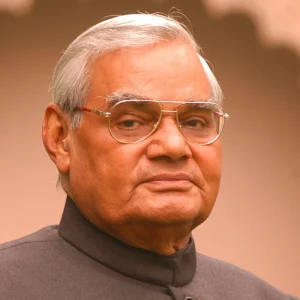
Good Governance Day, observed on December 25, coincides with the birth anniversary of Atal Bihari Vajpayee, one of India’s most respected and enduring statesmen. The decision to observe this day on his birthday is deeply symbolic, for Vajpayee’s life and public conduct reflected the very essence of good governance — ethical leadership, democratic responsibility, compassion for the people, and an unwavering commitment to the nation. The observance is not merely a formal tribute to a former Prime Minister, but a reminder of the standards he set in public life and the moral compass he offered to Indian democracy.
Governance, at its core, is not a technical exercise of administration alone. It is a continuous dialogue between the state and its citizens, shaped by trust, transparency, accountability, and justice. In a country as vast, diverse, and complex as India, governance has always required sensitivity, patience, and moral clarity. Good governance demands that power be exercised with restraint, policies be framed with empathy, and authority be guided by responsibility. Atal Bihari Vajpayee understood this deeply, and throughout his long political journey, he demonstrated how governance could be both firm and humane, decisive yet democratic.
Born on December 25, 1924, in Gwalior, Atal Bihari Vajpayee grew up during a time when India was struggling to free itself from colonial rule. The atmosphere of national awakening, combined with his early exposure to literature, philosophy, and nationalist thought, shaped a personality that was reflective, articulate, and deeply rooted in Indian values. Unlike many leaders whose public lives are marked by constant confrontation, Vajpayee evolved as a bridge between ideologies, generations, and institutions. His entry into public life was guided not by personal ambition but by a sense of service and commitment to the nation.
Vajpayee’s parliamentary career spanned more than five decades, during which he witnessed and shaped some of the most critical phases of India’s democratic evolution. From the early years of nation-building to the challenges of economic reform and global realignment, he remained a consistent voice of reason and balance. Even when seated in the opposition, his speeches in Parliament reflected statesmanship rather than hostility. He believed that disagreement was essential in a democracy, but it must never erode mutual respect or constitutional decorum.
He was undoubtedly a great patriot, a true lover of the country India, not in a narrow or aggressive sense, but in a deeply inclusive, thoughtful, and civilisational manner. Atal Bihari Vajpayee’s patriotism was rooted in love rather than anger, in responsibility rather than rhetoric. He viewed India not merely as a political entity, but as a living civilisation shaped by centuries of coexistence, sacrifice, and shared cultural memory. His nationalism was expansive enough to include diversity and strong enough to withstand dissent. He believed that loving the nation meant strengthening its democratic institutions, protecting its constitutional values, and ensuring dignity for every citizen, irrespective of faith, language, or region.
This profound sense of patriotism influenced every aspect of his governance. Vajpayee understood that national pride must be accompanied by ethical conduct and moral restraint. He never equated criticism of the government with disloyalty to the nation. On the contrary, he saw constructive criticism as a sign of democratic vitality. His respect for the freedom of the press, independence of the judiciary, and the authority of Parliament reflected his belief that the strength of India lay in its institutions rather than in individuals.
Everyone should follow his philosophy because Vajpayee’s worldview offers timeless guidance for public life as well as individual conduct. His philosophy was grounded in moderation, dialogue, tolerance, and moral courage. He demonstrated that leadership does not require constant aggression, that authority need not silence empathy, and that ideological commitment can coexist with openness to other viewpoints. In a world increasingly marked by polarisation, his belief in consensus-building and respectful disagreement stands as a powerful lesson for politicians, administrators, and citizens alike.
Following Vajpayee’s philosophy means placing national interest above personal or partisan gain. It means recognising that power is temporary but institutions are enduring, and that decisions taken today must be judged by their impact on future generations. His life teaches that governance should be guided by conscience as much as by competence. For ordinary citizens, his philosophy encourages civic responsibility, respect for democratic processes, and faith in dialogue over division. For leaders, it demands humility, accountability, and the courage to act ethically even under pressure.
Good governance also demands transparency and accountability, principles that Vajpayee consistently upheld. He recognised that citizens are not subjects to be ruled but partners in governance. His administration made conscious efforts to communicate policies clearly and to foster public trust through openness. While no government is free from shortcomings, Vajpayee’s leadership style was marked by sincerity and an absence of vindictiveness. He believed that trust, once broken, weakens the moral authority of the state.
Economic governance during Vajpayee’s tenure reflected a pragmatic and people-oriented approach. He inherited an economy undergoing transition and facing the dual challenge of growth and equity. Rather than pursuing reform as an abstract goal, he viewed economic policy as a means to improve the everyday lives of ordinary Indians. Infrastructure development became a cornerstone of his vision, driven by the understanding that roads, communication networks, and energy systems are not symbols of power but instruments of inclusion.
The Golden Quadrilateral highway project remains one of the most visible legacies of his government. It aimed not only to connect major cities but also to integrate markets, reduce regional imbalances, and create employment opportunities. Its deeper significance lay in Vajpayee’s belief that physical connectivity could strengthen national unity and economic opportunity. Such initiatives reflected the long-term thinking that is central to good governance — planning beyond electoral cycles and investing in the future of the nation.
Social governance under Vajpayee was shaped by sensitivity to India’s plural character. He understood that diversity is not a weakness but a defining strength of the nation. His efforts to promote dialogue among communities and to address social tensions through persuasion rather than coercion demonstrated a humane approach to leadership. Even during moments of crisis, his speeches appealed to conscience and collective responsibility rather than division.
In foreign policy, Vajpayee displayed a mature understanding of India’s global role. His leadership combined strategic firmness with diplomatic engagement. The nuclear tests of 1998 were followed by sustained efforts to explain India’s position to the world, emphasising restraint and responsibility. This approach reflected a patriotism that was confident but not reckless, assertive yet mindful of global stability.
His initiatives towards peace, particularly with neighbouring countries, revealed another dimension of his love for India. Vajpayee believed that lasting national security could not be achieved through perpetual hostility. His historic journey to Lahore symbolised his willingness to take bold steps for peace, despite political risks. Although such efforts faced setbacks, they underscored his conviction that dialogue is not a sign of weakness but of strength.
Ethics formed the backbone of Vajpayee’s public life. He was widely respected for his personal integrity, simplicity, and humility. In an era when public trust in politics is often eroded by allegations of corruption and self-interest, his life stood as a reminder that moral authority enhances political legitimacy. He believed that leadership without integrity eventually loses its purpose.
Vajpayee’s oratory carried a unique blend of poetry and pragmatism. His speeches often rose above partisan politics and touched upon the deeper aspirations of the nation. Drawing from India’s philosophical traditions, he spoke of duty, responsibility, and compassion as guiding principles for governance. These were not abstract ideals but values he sought to translate into public policy and political conduct.
Good Governance Day is therefore not merely an occasion to recall administrative efficiency, but an invitation to reflect on the ethical foundations of leadership. Governance in the contemporary world faces new challenges — technological disruption, environmental crises, social polarisation, and economic uncertainty. Addressing these challenges requires not only technical expertise but also moral clarity, patience, and empathy. Vajpayee’s life offers enduring lessons in this regard.
He believed in cooperative federalism long before the term became fashionable. His respect for the role of states in India’s development helped strengthen centre-state relations and address regional aspirations through dialogue rather than confrontation. This approach reinforced national unity while respecting local identities, an essential element of good governance in a diverse federation.
Education, health, and social welfare occupied an important place in his vision, even as he emphasised fiscal discipline and institutional strength. Vajpayee understood that sustainable governance requires balance — between ambition and realism, reform and stability, growth and equity. Progress, he believed, must be steady and inclusive, rooted in institutions rather than personalities.
The observance of Good Governance Day also places responsibility on citizens. Vajpayee often reminded the nation that democracy thrives only when citizens actively participate and uphold ethical standards in public life. Rights, he believed, are inseparable from duties. This shared responsibility between the state and society forms the true foundation of good governance.
Atal Bihari Vajpayee’s enduring appeal lies in his ability to humanise politics. He brought dignity to debate, civility to disagreement, and empathy to governance. His life demonstrates that strength and sensitivity are not opposing qualities but complementary virtues in leadership. Remembering him on Good Governance Day is not an act of nostalgia, but a reaffirmation of values that remain vital for India’s future.
As the nation observes Good Governance Day on his birth anniversary, it is reminded that governance is ultimately about serving people with honesty, wisdom, and compassion. Vajpayee’s philosophy — rooted in patriotism, ethics, dialogue, and responsibility — deserves to be followed not only by those in power but by every citizen who believes in the democratic spirit of India. His life stands as a moral benchmark, urging the nation to strive for a democracy where authority is exercised with restraint, disagreement is met with dignity, and love for the country is expressed through sincere service to its people.