
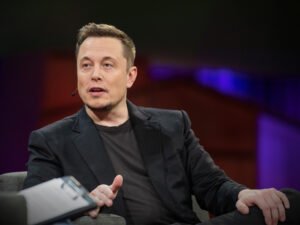
Elon Musk Signals a Political Shift
Heramba Nath
In an increasingly interconnected world, where ideas travel faster than borders can contain them and influence is no longer confined to geography, a congratulatory message from Elon Musk to newly formed political parties must not be viewed as a superficial gesture. Rather, it should be examined with the seriousness it warrants, for it touches upon deeper undercurrents—of global political realignments, technological optimism, and a quest for new moral foundations in governance.
Elon Musk—known globally as the eccentric genius behind Tesla, SpaceX, Neuralink and other ventures that seek to redefine humanity’s trajectory—is not merely a figure of entrepreneurial achievement. He is also a powerful symbol of post-national influence: a private individual whose reach into public imagination and policymaking extends well beyond the jurisdictions of any one country. When such a figure extends congratulations to emergent political formations—whether in India or elsewhere—it constitutes not just a ceremonial nod, but a signal of alignment, aspiration, and attention.
At first glance, a tech magnate’s goodwill towards a political party may appear inconsequential. Yet history is witness to the fact that the shape of politics has often been altered by voices that originated outside its formal architecture. In this particular case, Musk’s message becomes significant because it embodies an implicit endorsement of innovation within the democratic process itself. It acknowledges that new political parties—often born out of resistance to traditional stagnancy and corruption—are not only needed but are increasingly visible and relevant on the global stage.
One may argue that Elon Musk has no direct stake in Indian political realignments or the functioning of newly founded ideological platforms. But such an argument overlooks the very nature of twenty-first-century influence. As nations grow closer through technology, economy, and shared planetary challenges, the silos between public leadership and private innovation are slowly dissolving. Musk’s voice, therefore, may carry moral or intellectual encouragement, even when not politically binding.
Indeed, there is reason to believe that many values espoused by today’s nascent political parties—digital inclusion, anti-corruption, environmental sustainability, educational reform, decentralised governance—are in consonance with Musk’s broader worldview. His ventures do not merely sell products; they symbolise a philosophical stance about the future: one of self-reliance, ecological balance, scientific temperament, and a desire to break away from bureaucratic inertia. In that sense, his congratulations may represent more than words—they may reflect a shared ideological curiosity across borders.
However, this trend also brings with it critical ethical considerations. Should a private entrepreneur, however brilliant or visionary, become an influencer of political legitimacy across nations? While the modern world blurs many conventional boundaries, the sanctity of domestic democratic processes must remain paramount. Political endorsements—intentional or interpretative—from global billionaires must never override or dilute the foundational authority of public mandate and constitutional sovereignty.
Yet to view Musk’s message simply as interference would be equally myopic. It is not unusual for global thought leaders to express admiration for democratic awakenings. From philosophers to economists, writers to innovators, history has shown us that cross-national solidarity has often served as a catalyst for democratic resilience. In this light, Musk’s gesture could be interpreted not as partisan engagement but as a validation of renewal and experimentation in democratic structures—a compliment to civic courage.
Moreover, there lies a practical layer. For newly formed political parties—often struggling to gain credibility against the might of established behemoths—such symbolic gestures from internationally known figures can infuse confidence, visibility, and media attention. Especially among younger voters and technocratic minds, the idea that their chosen movement is being recognised by global leaders may energise their engagement. It lends an aura of purpose and modernity to their cause.
However, the path forward demands caution. Musk’s message should not be romanticised as a certificate of success, nor should it serve as a shortcut to public trust. Democratic credibility, especially in nations like India with complex socio-political fabrics, must be earned through transparent policies, ethical leadership, grassroots connection, and a genuine commitment to social justice. No amount of international cheerleading can substitute internal legitimacy.
Equally important is the cultural context. India’s political movements, including the newest formations, are rooted in lived realities, linguistic diversity, and historical continuities. Any attempt to import models, ideas, or endorsements without grounding them in local ethos risks alienation and superficiality. While Musk represents the apex of technological optimism, the real work of politics lies in reconciling such ideals with the everyday needs of farmers, students, labourers, and the marginalised.
Yet there is no denying that a global vocabulary of governance is emerging—one that values innovation, sustainability, data-driven accountability, and participatory governance. In this regard, Musk’s message may be read as a welcome note into a wider, global fraternity of changemakers. His words perhaps remind these parties that their responsibilities are not confined to electoral performance alone, but extend to setting moral and developmental standards for future generations.
As the world faces existential challenges—from climate change to unemployment, from digital ethics to artificial intelligence—it is increasingly clear that the old models of governance are insufficient. New political movements must step in not merely to capture power, but to reimagine it. And if Elon Musk’s message does anything, it is this: it dares these new entrants to think boldly, act ethically, and govern innovatively.
In the final reckoning, congratulations from an international icon may not decide the fate of a political party. But it does add a layer of seriousness to their aspirations. It nudges them to look beyond the next election and ask: What legacy will we leave for the world to acknowledge? Will we be remembered as just another name on a ballot, or as pioneers of a better democratic future?
The answer, as always, lies not in the applause of others but in the steadfastness of one’s own moral compass. And that is where true leadership begins.