
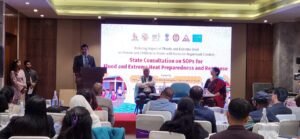
Department of Women & Child Development Organizes Two Days State-Level Consultative Workshop for Strengthening SOPs on Floods and Extreme Heat in collaboration with ASDMA and UNICEF
Guwahati, Rongili Barta: The Department of Women and Child Development (WCD), Government of Assam, in collaboration with the Assam State Disaster Management Authority (ASDMA) and UNICEF, has launched a two-day State-Level Consultative Workshop for developing Standard Operating Procedures (SOPs) on Flood and Extreme Heat for the WCD.
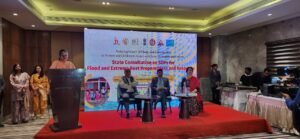
The workshop, being held in Guwahati on January 29–30, 2026, marks a critical step towards institutionalising child- and gender-responsive disaster preparedness in Assam, in alignment with the Assam DRR Roadmap 2030. The consultation brings together senior government officials, domain experts, academicians, development partners, and field practitioners to review and strengthen existing SOPs on floods and to draft a dedicated SOP on extreme heat for the WCD.
The process is anchored in evidence and field realities, focusing on safeguarding women and children, strengthening Anganwadi Centres, and integrating anticipatory and climate-informed actions within departmental systems.
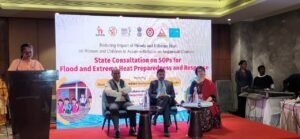
Delivering the keynote address, Mr. Mukesh Sahu, IAS, Additional Chief Secretary, Women and Child Development, Assam highlighted the urgency of reinvigorating the existing approach to preparing for, responding to and recovering from floods from the overall functional scope of Anganwadi Centres including addressing emerging concerns from extreme heat. He urged participants to deliberate extensively to improve SoPs for making them user centric, useful and build on the current and possible risk scenarios.
Shri Gauri Shankar Sarma, ACS, Director, Directorate of Women and Child Development, highlighted the role of WCD institutions particularly Anganwadi Centres as the first line of support for communities during crises. The consultation reflects the Government of Assam’s commitment to mainstream disaster risk reduction within social sector governance and to ensure that no woman or child is left behind during emergencies.
Dr. Madhulika Jonathan, Chief of Field Office, UNICEF Assam and Northeast, emphasized the importance of child-centric and gender-responsive disaster preparedness in a changing climate. Reaffirming UNICEF’s partnership, she noted that the initiative would strengthen systems to protect vulnerable groups during floods and extreme heat events.
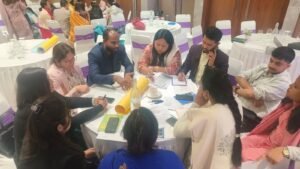
Mr. Mukta Ram Deka, from ASDMA, underscored the urgency of embedding climate and disaster risk considerations within service delivery systems for women and children. She highlighted the need for practical, field-ready SOPs that enable frontline functionaries to act decisively before, during, and after disasters.
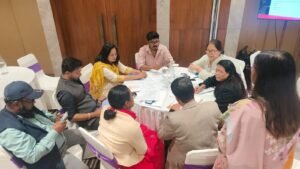
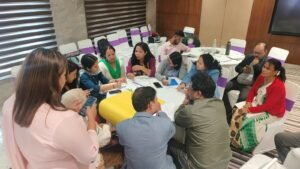
The workshop features expert sessions on flood dynamics in Assam, climate projections, nutrition and food security, resilient infrastructure for Anganwadi Centres and child care institutions, and the impact of extreme heat on early childhood development, followed by structured group work to draft and refine the SOPs. The outcomes will directly inform state policy and operational protocols for disaster preparedness and response within the WCD system.