
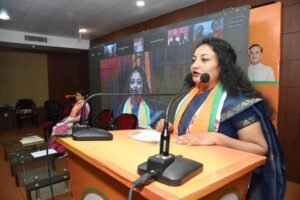
Aparajita Bhuyan interview
Cinema, leadership and regional voice: Aparajita Bhuyan on politics beyond elections
Lawyer, politician and film producer, Aparajita Bhuyan’s career spans public life, organisational leadership and cultural engagement. Currently Vice President of BJP Assam and former State President of BJP Mahila Morcha, she has also ventured into regional cinema production. In this interview, she reflects on leadership, media, culture and the evolving role of regional voices.
Q1. What leadership values guide your work in politics and public life?
A: Integrity, inclusiveness and consistency. Leadership is about building trust and working collectively toward shared goals. Whether in politics or public engagement, teamwork and accountability are essential.
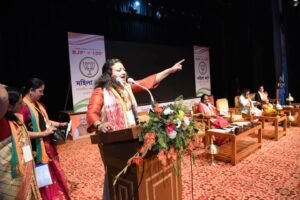
Q2. You have spoken extensively about women’s participation in public life. Do social attitudes or institutional structures pose the greater challenge?
A: Social attitudes shape institutions, so both matter. However, institutional change can accelerate shifts in social thinking. When women lead effectively, perceptions begin to change.
Q3. What advice would you offer young professionals, especially women, aspiring to leadership roles?
A: Be prepared, be patient and stay rooted. Leadership is built over time through sustained effort. Do not wait for perfect conditions to begin.
Q4. You have also worked as a film producer. What drew you to cinema?
A: Cinema is a powerful medium for storytelling. Growing up in Assam, I felt many regional voices and narratives remained under-represented. Film production allowed me to contribute to cultural dialogue while pursuing creative expression.
Q5. How do you see cinema contributing to cultural representation and social dialogue?
A: Regional cinema reflects lived realities that are often absent in mainstream narratives. It creates space for dialogue, empathy and cultural assertion, and helps regional stories reach wider audiences.
Q6. What challenges did you face while producing independent regional cinema?
A: Funding, distribution and infrastructure remain major challenges. Independent cinema also requires balancing creative integrity with practical constraints. However, audience response reaffirmed the importance of authentic storytelling.
Q7. Do you intend to continue producing films alongside your political responsibilities?
A: Yes, though selectively. Creative work and public life can complement each other, as both require
discipline and collaboration.
Q8. How has media scrutiny changed political communication?
A: Communication has become more immediate and transparent. Leaders must be clear, factual and responsible. There is little room for ambiguity in the digital age.
Q9. How do you see the role of regional leadership voices in shaping national discourse?
A: Regional voices are essential for balanced policymaking. Greater representation ensures that national decisions reflect diverse realities across the country, including the Northeast.