
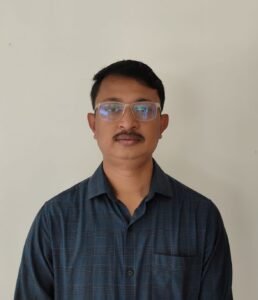
From Niz Sarabari to Global Science: The Inspiring Journey of Dr. Biswajit Sahariah
Heramba Nath
(A reflective journey of a rural mind shaped by nature, guided by humility, and elevated through science to the global stage.)
There are certain lives that do not merely pass through time but quietly absorb it, reflect upon it, and, in doing so, transform it into something meaningful. Such lives do not announce themselves with urgency, nor do they seek the fleeting comfort of recognition. Instead, they unfold slowly, almost imperceptibly, like a seed resting beneath the soil—hidden from view, yet silently gathering strength for an eventual emergence. When they finally come into the light, they do so not with noise or spectacle, but with a quiet radiance that speaks of perseverance, humility, and an inner depth shaped over years of silent effort. The journey of Dr. Biswajit Sahariah belongs to this rare and contemplative category—a journey that invites reflection rather than applause, and understanding rather than mere admiration.
To truly comprehend such a journey, one must resist the temptation to begin with its visible achievements. Achievements, though important, are only the visible peaks of a much deeper landscape. The real story often lies beneath—in the early influences, the quiet surroundings, and the formative experiences that shape a mind long before the world begins to notice it. In the case of Dr. Sahariah, this story begins in the village of Niz Sarabari in the Darrang district of Assam, where life moves with a rhythm profoundly different from the restless urgency of urban spaces.
In rural landscapes, there exists a stillness that is not empty but deeply expressive. It is a stillness that allows one to pause without distraction, to observe without interruption, and to think without haste. Unlike the city, where time often feels compressed and fragmented, the countryside offers a sense of continuity—a flow that is gentle yet persistent. Within such an environment, a child does not merely grow; he absorbs. He learns not only through instruction but through observation, through silence, and through an unspoken dialogue with the world around him.
The countryside is often misunderstood as a space of limitation, as though opportunity resides only where infrastructure is visible and resources are abundant. This perception, however, overlooks a fundamental truth. For a mind inclined towards curiosity, the absence of excess can become a source of clarity. The countryside offers something that is increasingly rare in modern life—time to think, space to reflect, and a closeness to nature that awakens questions rather than suppressing them.
Nature, in its quiet presence, is never devoid of meaning. It carries within it patterns, rhythms, and mysteries that reveal themselves only to those willing to observe patiently. The gradual shift of seasons, the subtle variations in the sky’s colour, the silent growth of plants, and the gentle flow of water—all these phenomena carry questions that do not demand immediate answers but invite contemplation. To a curious mind, such observations are not trivial; they are foundational.
For Dr. Sahariah, the countryside was not merely a geographical setting; it was a formative influence—a silent teacher that shaped his earliest ways of seeing and thinking. From a young age, he developed a deep fondness for nature, not as an abstract concept but as a living presence. The fields stretching beyond the horizon, the changing textures of the sky, and the quiet persistence of life around him became sources of an unarticulated yet powerful curiosity.
A child growing up in such surroundings does not simply witness the world; he begins to question it. Why do seasons change with such precision? What governs the colours of the sky at dawn and dusk? How does life sustain itself in such varied forms? These questions, though simple in expression, carry within them the seeds of scientific inquiry. Long before formal education introduces the language and structure of science, the mind begins to engage with its essence.
It is often assumed that science begins in laboratories or classrooms. In reality, it begins much earlier—in moments of wonder, in acts of observation, and in the quiet persistence of questioning. In Dr. Sahariah’s case, this early engagement with nature did not provide immediate answers, but it cultivated something far more important—a habit of curiosity. And it is this habit, more than any formal training, that forms the foundation of a scientific mind.
His upbringing within a family rooted in dignity and discipline further strengthened this quiet formation of character. His father, Mr. Munindra Sahariah, served as a Gram Sevak in the Panchayat and Rural Development Department of the Government of Assam, dedicating his professional life to grassroots development before retiring from service. The work of a Gram Sevak, though often understated in public discourse, carries profound significance. It involves direct engagement with rural communities, addressing their challenges, and contributing to the improvement of livelihoods at the most fundamental level of governance.
Through his father’s work, there existed an indirect yet deeply influential exposure to the idea that knowledge must extend beyond personal advancement and contribute to collective well-being. Service, in its truest sense, is not measured by visibility but by impact. It operates quietly, often without recognition, yet leaves lasting impressions on the lives it touches. Even if such ideas were not consciously articulated during his childhood, they formed part of the environment in which he grew—a background that subtly shaped his understanding of purpose and responsibility.
His mother, Mrs. Debeswari Sahariah, a homemaker, provided the emotional and moral foundation upon which this environment rested. In countless households, it is the mother who creates the atmosphere within which values take root. Through patience, resilience, and quiet strength, she nurtured a sense of stability that allowed intellectual curiosity to flourish without fear or pressure. Her presence ensured that discipline was accompanied by compassion, and that ambition remained grounded in humility.
Together, his parents created a home where values were not imposed but lived. Discipline emerged not as restriction but as a natural way of being. Simplicity was not seen as a limitation but as a form of clarity. Such an upbringing does not produce immediate brilliance; rather, it cultivates a steady and grounded personality—one capable of enduring challenges without losing direction.
Being the youngest among three siblings, with two elder sisters, Dr. Sahariah grew up in an environment marked by affection, observation, and quiet learning. In such a setting, one often learns more by watching than by being instructed. The presence of elder siblings creates a space where aspiration develops organically—not as pressure, but as an internal desire to grow, to understand, and to contribute.
His early education at Don Bosco High School in Mangaldai and Sarabari Higher Secondary School marked the beginning of his formal academic journey. These institutions, though modest in terms of infrastructure, provided something far more essential—a disciplined environment where effort was valued and consistency encouraged. It is often in such settings that resilience takes root, quietly and without attention.
Education, in its truest form, is not determined by the scale of facilities but by the depth of engagement. A curious mind can transform even the simplest classroom into a space of discovery. For Dr. Sahariah, these formative years were not defined by immediate distinction but by the gradual development of habits—focus, patience, and perseverance. These qualities, though often overlooked in the early stages, become the pillars upon which later achievements are built.
A significant turning point arrived with his transition to Jawahar Navodaya Vidyalaya, Kalaigaon. Entering a residential academic environment required not only intellectual readiness but emotional adaptability. For a student coming from a rural background, such a shift can be both challenging and transformative. It demands independence, resilience, and the ability to navigate unfamiliar surroundings while maintaining focus.
The Navodaya system is founded on a powerful belief—that talent exists in every corner of the country, even in places where opportunity may appear limited. By providing structured education and exposure to rural students, it creates pathways that might otherwise remain inaccessible. For Dr. Sahariah, this phase represented not merely a change in institution, but an expansion of perspective.
Within this environment, his interest in science began to take clearer shape. Science, in its essence, is not a departure from curiosity but its disciplined continuation. It does not eliminate wonder; it refines and deepens it. The questions that once arose from observing nature began to find expression through scientific frameworks and principles.
Yet, this transformation was neither immediate nor dramatic. It unfolded gradually, shaped by effort, reflection, and sustained engagement. The journey from curiosity to clarity is not a sudden leap; it is a process that demands patience and persistence.
As his academic path progressed, the transition to higher education marked another significant phase. Entering B. Borooah College in Guwahati, he stepped into an environment that required a greater degree of independence and intellectual engagement. The shift from rural familiarity to urban dynamism introduced new challenges and opportunities.
Guwahati, with its vibrant academic and cultural landscape, offered exposure to diverse ideas and perspectives. Yet, amid this transition, Dr. Sahariah remained grounded in the simplicity and discipline that had shaped his early life. His engagement with chemistry deepened during this period, gradually evolving from academic requirement into genuine intellectual fascination.
There comes a moment in every learner’s journey when knowledge transforms into understanding. For Dr. Sahariah, this moment emerged during his undergraduate years. Chemistry ceased to be a subject defined by formulas and reactions; it became a language—a means of interpreting the underlying order of the natural world. The interactions of atoms and molecules, the logic governing chemical transformations, and the elegance of molecular structures began to reveal a deeper coherence within nature.
The laboratory, often perceived as a place of routine experimentation, became for him a space of discovery. Each experiment represented not merely an exercise in procedure, but an engagement with unseen principles. Successes and failures alike contributed to a growing awareness that science is not about certainty, but about exploration.
The movement from foundational understanding to specialised knowledge often marks a defining phase in the intellectual journey of a student. For Dr. Biswajit Sahariah, this transition unfolded with quiet determination as he entered Tezpur University to pursue his Master’s degree in Nanoscience and Technology. If his earlier academic experiences had nurtured curiosity and discipline, this phase introduced him to the vast and intricate world of interdisciplinary science, where the boundaries between subjects begin to dissolve and knowledge assumes a more integrated form.
At Tezpur, the study of science no longer remained confined within the traditional divisions of chemistry, physics, or biology. Instead, it revealed itself as an interconnected framework where each discipline informed and enriched the other. Nanoscience, by its very nature, operates at the intersection of these domains, exploring phenomena at scales so minute that they challenge conventional understanding. It is a field that demands not only technical precision but also conceptual flexibility—the ability to think across boundaries and to engage with complexity without losing clarity.
For Dr. Sahariah, this environment proved both challenging and transformative. The idea that matter behaves differently at the nanoscale introduced him to a deeper level of scientific thinking, where small changes could lead to significant outcomes. This realisation carries philosophical weight as well—it reflects how subtle interactions, often invisible to the naked eye, can influence larger systems in profound ways. Such insights do not merely expand knowledge; they reshape perception.
It was during this period that his inclination towards research began to take a more defined form. Research, unlike structured coursework, does not offer clear pathways or predetermined answers. It is a journey into the unknown, guided by questions that often resist immediate resolution. To choose this path requires not only intellectual curiosity but also emotional resilience—the capacity to persist through uncertainty, to embrace failure as part of learning, and to remain committed to inquiry even when progress appears slow.
This commitment found its most rigorous expression in his doctoral studies at Shiv Nadar University in the Delhi-NCR region, under the mentorship of Professor Bani Kanta Sarma. Entering the world of doctoral research marked a profound shift—from learning what is known to exploring what is not yet understood. Here, instruction gives way to inquiry, and certainty is replaced by exploration.
His research on non-covalent interactions in proteins and peptides placed him at the intersection of chemistry and biology—an area that demands both analytical precision and imaginative insight. Non-covalent interactions, though subtle and often overlooked, are fundamental to the structure and function of biological systems. They govern how proteins fold, how molecules recognise one another, and how biological processes sustain life. To study such interactions is to engage with a level of detail that requires patience, clarity, and sustained focus.
The doctoral journey is rarely linear. It is marked by moments of clarity as well as periods of doubt. Experiments may not yield expected results; hypotheses must often be revised; progress can be slow and, at times, uncertain. Yet, it is precisely within this process that the essence of research reveals itself. Science advances not only through success but through persistence—the willingness to continue despite setbacks, to question assumptions, and to refine understanding over time.
For Dr. Sahariah, this phase became a period of deep intellectual and personal growth. Supported by a competitive fellowship, he demonstrated consistency and dedication, gradually building a body of work that reflected both rigour and insight. Each challenge encountered during this time contributed to the strengthening of his analytical abilities and the sharpening of his scientific perspective.
Upon completing his doctoral studies, he entered the next phase of his journey—postdoctoral research. This stage represents a period of expansion, where a researcher moves beyond the confines of a single project and engages with new ideas, methodologies, and collaborative environments. His initial postdoctoral work at the Jawaharlal Nehru Centre for Advanced Scientific Research (JNCASR) in Bengaluru once again brought him under the mentorship of Professor Bani Kanta Sarma.
At JNCASR, his work in the field of peptidomimetics within physical organic chemistry allowed him to deepen his engagement with molecular design and structural analysis. Peptidomimetics, which involve the design of molecules that mimic the structure and function of peptides, represent an area of significant scientific and medical relevance. It requires an understanding of both chemical principles and biological systems—a balance that demands precision as well as creativity.
This phase also reflected an important aspect of his journey—the value of continuity in mentorship. Working again under a familiar guide provided both intellectual direction and a sense of stability, allowing him to refine his expertise while exploring new dimensions of research.
Yet, the trajectory of his journey extended beyond national boundaries. His move to Academia Sinica in Taipei, Taiwan, marked a significant step into the global scientific community. Entering an international research environment brings with it a new set of challenges. It requires adaptation to different academic cultures, engagement with diverse perspectives, and the ability to collaborate across linguistic and cultural boundaries.
At Academia Sinica, his work expanded into the domains of computational chemistry, artificial intelligence, and machine learning. These fields represent the evolving frontier of modern science, where traditional experimental approaches are complemented by computational modelling and data-driven insights. The integration of artificial intelligence into chemical research reflects a broader transformation within science—one where complexity is addressed through interdisciplinary innovation.
Dr. Sahariah’s engagement with these emerging areas demonstrates a defining quality of his intellectual character—his willingness to evolve. Science is not static; it is a continuously shifting landscape. To remain relevant within it requires openness, adaptability, and a commitment to lifelong learning. His transition into computational approaches reflects not a departure from his earlier work, but an expansion of it—an effort to integrate new tools into an already strong foundation of knowledge.
His subsequent research at the Indian Institute of Technology (IIT) Bhilai under the guidance of Dr. Hemanta Kumar Kisan further enriched this evolving profile. Working on computational asymmetric catalysis, he explored the relationship between theoretical modelling and chemical reactivity, engaging with problems that require both mathematical precision and chemical intuition. Each phase of his postdoctoral journey added a new layer to his understanding, shaping him into a researcher capable of navigating multiple dimensions of scientific inquiry.
Yet, beyond the realm of academic achievement and research contributions, there exists a quieter dimension that defines his presence—his personality. In a world increasingly characterised by visibility and self-assertion, his calm and composed nature offers a striking contrast. There is a subtle resonance in his simplicity, humility, and clarity of purpose that evokes the spirit of Dr. A. P. J. Abdul Kalam—not in terms of comparison, but in the quiet integrity of his approach to life and work.
He is known for his polite and amiable behaviour, his soft and measured speech, and his composed presence. A man of few words, he communicates with sincerity rather than volume. His voice carries a gentle tone that reflects both humility and confidence. There is a certain depth in his gaze—an attentiveness that conveys thoughtfulness and presence. His warm and unassuming smile creates an immediate sense of ease, making his interactions both genuine and memorable.
His body language reflects quiet discipline. There is a natural grace in the way he carries himself, a composed manner of walking, and an ease in interaction that does not seek attention but naturally earns respect. In a time where external display often overshadows inner substance, such qualities stand out not through assertion but through authenticity.
Among students, these qualities assume even greater significance. He is not merely an educator in the conventional sense; he becomes a mentor—someone who guides not only through instruction but through example. His curiosity extends beyond academic questions into the intellectual and personal growth of his students. He listens with patience, encourages with sincerity, and fosters an environment where learning becomes a shared journey rather than a hierarchical process.
His involvement in sports during his student years further reflects a balanced personality. Leading a march past team, representing his institution in volleyball, and participating in regional-level activities demonstrate a commitment to physical discipline alongside intellectual pursuit. Such experiences contribute to resilience, teamwork, and a broader sense of perspective—qualities that complement academic excellence.
His international exposure, including visits to Spain and Portugal, along with his academic engagement in Taiwan, has broadened his worldview. Exposure to different cultures does not merely expand knowledge; it deepens understanding. It fosters an appreciation for diversity and cultivates a more inclusive perspective on both life and science. Yet, despite these global experiences, he remains deeply connected to his roots. The simplicity, values, and sensibilities shaped in his early life continue to guide his choices and define his outlook.
Currently serving as Director (Science) and a faculty member at Jnan Vikash Academy, Dr. Sahariah has entered a phase where his role extends beyond personal achievement into collective contribution. In this capacity, he brings his rich research experience into the field of education, encouraging students to think critically, question deeply, and explore beyond conventional boundaries.
This transition from researcher to educator reflects a meaningful evolution. It represents a shift from the pursuit of knowledge to its dissemination, from individual growth to societal contribution. Education, in this sense, becomes not merely a profession but a responsibility—a means of shaping future minds and nurturing the next generation of thinkers and innovators.
His journey, when viewed in its entirety, unfolds as a narrative of quiet transformation. It illustrates how a child from a small village can traverse the path to global scientific engagement without losing the essence of his origins. It demonstrates that simplicity and sophistication are not opposites but can coexist harmoniously within the same individual.
As his journey continues to unfold, there remains a sense of possibility—an openness to further exploration, deeper contribution, and wider influence. His path stands as a reminder that true progress is not measured solely by position or recognition, but by the depth of understanding and the sincerity of purpose that one brings to one’s work.
There is every reason to believe that his contributions will continue to enrich the field of science, and that his presence will inspire those who seek meaning in knowledge and purpose in learning. His life reflects a quiet truth—that dedication, humility, and curiosity possess the power to transcend boundaries.
May his journey ahead be guided by clarity of thought, strength of purpose, and an enduring commitment to discovery. May the same sense of wonder that once took root in the quiet fields of Niz Sarabari continue to illuminate his path as he moves across the expanding horizons of science. And may his life remain a source of inspiration for those who dare to dream beyond their circumstances, finding in his journey not just admiration, but reflection.