
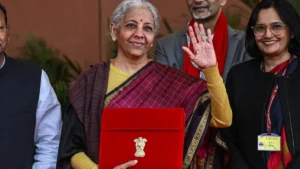
Union Budget 2026: Steering growth with restraint in a fractured global order
Heramba Nath
The Union Budget of India 2026 has been presented at a moment when economic certainty has become increasingly fragile across the world. Major economies are struggling to reconcile inflation control with growth revival, global trade remains disrupted by geopolitical tensions, and climate-related shocks are exerting unprecedented pressure on public finances. For a developing economy like India, these external headwinds intersect with internal challenges of employment generation, inequality, fiscal discipline, and structural transformation. It is within this complex and demanding context that the Union Budget 2026 must be assessed.
Unlike budgets that rely on dramatic announcements or politically attractive giveaways, the 2026 budget adopts a notably restrained tone. It signals continuity rather than disruption, caution rather than exuberance. This approach reflects a governing philosophy that places greater faith in long-term structural stability than in short-term political dividends. The budget does not attempt to project economic triumphalism; instead, it seeks to reassure markets, institutions, and citizens that India’s growth trajectory remains steady, credible, and grounded in fiscal realism.
At the core of the budget lies a reaffirmation of public capital expenditure as the principal driver of economic expansion. For several years, the Indian state has assumed a proactive role in sustaining demand, particularly at a time when private investment has been moderated by global uncertainty. The 2026 budget continues this strategy, allocating substantial resources to infrastructure development across transport, logistics, energy, and urban systems. This commitment reflects a belief that infrastructure is not merely a facilitator of growth but an active generator of economic momentum.
Infrastructure investment shapes the spatial and social contours of growth. In a country where regional disparities remain stark, connectivity determines access to opportunity. Roads, railways, ports, and digital networks influence where industries locate, where labour migrates, and how markets function. By prioritising large-scale infrastructure creation, the budget aims to reduce structural bottlenecks that have historically constrained productivity and regional integration.
Transport infrastructure receives particular emphasis, with railways continuing to occupy a central position in the government’s development vision. Investment in railway modernisation, network expansion, safety enhancement, and freight corridors reflects an understanding that efficient logistics are essential to competitiveness. Railways are not only economic arteries but also instruments of social cohesion, connecting remote regions to national markets and services.
The focus on rail transport also carries environmental significance. As climate concerns intensify, the relative energy efficiency of rail-based freight and passenger movement becomes increasingly important. While the budget does not explicitly frame railway investment as a climate strategy, the alignment between economic efficiency and environmental sustainability is evident. This convergence highlights the potential for infrastructure policy to address multiple objectives simultaneously.
Road infrastructure remains another major area of investment. Expanded highway networks, rural road connectivity, and urban transport systems are intended to improve mobility, reduce transaction costs, and stimulate economic activity. For rural areas, improved road access can transform agricultural marketing, enable non-farm employment, and enhance access to education and healthcare. The budget’s infrastructure thrust therefore carries significant implications for inclusive development.
Energy infrastructure also features prominently. Investments in power generation, transmission, and renewable energy aim to ensure energy security while supporting India’s transition towards cleaner sources. The emphasis on renewable energy reflects growing recognition that future growth must be decoupled from carbon-intensive pathways. However, the scale of investment required for a comprehensive energy transition remains far greater than current allocations, underscoring the long-term nature of this challenge.
Manufacturing emerges as the second major pillar of the budget’s growth strategy. In an increasingly fragmented global economy, the emphasis on domestic manufacturing reflects both economic pragmatism and strategic necessity. Supply chain disruptions, trade realignments, and geopolitical uncertainties have underscored the risks of excessive import dependence. The budget therefore continues to promote manufacturing capacity across selected sectors where India seeks to build competitive advantage.
Rather than broad-based protectionism, the approach remains targeted and incentive-driven. Sector-specific measures for electronics, renewable energy equipment, defence production, chemicals, and advanced materials aim to attract investment, encourage scale, and integrate domestic firms into global value chains. This strategy recognises that competitiveness arises not from isolation but from strategic engagement with international markets.
The manufacturing push is also intended to generate employment, particularly for semi-skilled and skilled workers. However, the relationship between manufacturing growth and job creation is not straightforward. Capital-intensive industries may boost output without proportionate employment gains. The budget implicitly assumes that manufacturing expansion will create indirect employment through supply chains and ancillary services, but this outcome depends heavily on the nature of industrial development.
Fiscal discipline remains a defining feature of the budget. At a time when global public debt levels are rising, the government reiterates its commitment to fiscal consolidation. The emphasis on deficit reduction and debt sustainability reflects an understanding that macroeconomic stability is essential for long-term growth. By avoiding excessive borrowing, the budget seeks to preserve fiscal space for future contingencies.
This commitment to discipline also serves a signalling function. For investors and international institutions, fiscal prudence enhances credibility and reduces risk perceptions. In an environment of volatile capital flows, such credibility can help stabilise the currency and contain borrowing costs. The budget’s restraint therefore reflects both domestic priorities and external considerations.
However, fiscal discipline inevitably raises questions about social spending. While allocations for welfare programmes, food security, healthcare, and education continue, their growth remains measured. The budget attempts to balance social responsibility with fiscal realism, relying on targeted delivery mechanisms and efficiency gains to maximise impact. Whether this approach adequately addresses deep-rooted inequalities remains a matter of debate.
Employment generation remains one of the most pressing yet complex challenges confronting the Indian economy. While the budget does not present a distinct employment policy, its emphasis on infrastructure and manufacturing is intended to stimulate job creation. Yet, structural changes in technology, productivity, and labour markets complicate this objective. Automation and digitisation, while enhancing efficiency, may limit employment growth in certain sectors.
The budget acknowledges the role of technology as a driver of economic transformation. Continued investment in digital public infrastructure reflects confidence in technology’s ability to improve governance, expand inclusion, and enhance productivity. Digital platforms have already reshaped service delivery and financial inclusion, reducing leakages and transaction costs.
At the same time, the expansion of digital governance introduces new challenges. Issues of data privacy, digital exclusion, and algorithmic accountability require careful management. As technology becomes central to state capacity, the need for robust regulatory frameworks becomes increasingly urgent. The budget gestures towards innovation but leaves many governance questions open.
Tax policy in the budget prioritises stability and predictability. By avoiding major changes in tax rates or structures, the government signals continuity to businesses and investors. This approach may disappoint sections of the middle class seeking immediate relief, particularly in the context of rising living costs. However, the budget’s implicit argument is that sustained growth and infrastructure investment will yield long-term benefits.
Small and medium enterprises continue to play a critical role in the economy, particularly in employment generation. The budget acknowledges their importance through measures aimed at improving credit access and reducing compliance burdens. However, many small enterprises remain vulnerable to market volatility, rising input costs, and limited bargaining power. Addressing these challenges requires sustained policy attention beyond fiscal measures alone.
From a federal perspective, the budget reflects a delicate balance between central initiatives and state responsibilities. While centrally sponsored schemes dominate, the success of infrastructure projects and welfare programmes depends heavily on state-level implementation. Effective coordination between the centre and states therefore remains essential.
Regional disparities continue to pose a significant challenge. National growth figures often conceal uneven development across regions. Infrastructure investment has the potential to reduce these imbalances, but only if aligned with local needs and capacities. Connectivity must be complemented by investments in human capital and institutional strength.
Environmental sustainability receives cautious recognition in the budget. Investments in renewable energy, electric mobility, and green infrastructure indicate awareness of climate challenges. However, the scale of these investments remains modest relative to the magnitude of environmental risks facing the country. Balancing development and ecological protection remains an unresolved policy dilemma.
The budget’s overall tone reflects institutional continuity rather than radical reform. By avoiding abrupt policy shifts, the government signals confidence in its economic framework. Critics may view this as a lack of ambition, while supporters may see it as prudent governance in uncertain times. Both interpretations reflect the inherent tension between transformation and stability.
The Union Budget 2026 thus presents itself as a document of measured intent rather than dramatic change. It acknowledges constraints, prioritises credibility, and seeks to steer growth through investment and discipline.
The effectiveness of the Union Budget 2026 will ultimately be determined not by its numerical allocations but by the quality of governance that follows. Infrastructure outlays must translate into timely completion rather than prolonged delays, manufacturing incentives must result in tangible production rather than policy paperwork, and fiscal discipline must coexist with sensitivity towards social realities. History has repeatedly shown that budgets acquire meaning only when policy intent is converted into lived economic experience.
The government’s reliance on public investment as a stabilising force reflects an understanding of the current global environment. With private capital remaining cautious due to volatile international conditions, the state has chosen to act as a counter-cyclical anchor. This approach assumes that sustained public investment will eventually crowd in private participation by improving confidence, reducing costs, and creating demand. While this logic is sound, it remains vulnerable to implementation bottlenecks and external shocks beyond domestic control.
Private investment decisions are shaped by a range of factors, including global interest rates, geopolitical risks, and external demand conditions. While the budget can influence domestic variables, it cannot fully insulate the economy from international turbulence. This reality underscores the importance of policy flexibility and institutional resilience, qualities that cannot be legislated through budgets alone.
The manufacturing strategy outlined in the budget also raises important questions about inclusivity. Large-scale industrial growth often benefits specific regions and skilled segments of the workforce, potentially widening spatial and social disparities. Without parallel support for labour-intensive sectors, rural enterprises, and micro-industries, manufacturing-led growth risks becoming uneven. The budget acknowledges manufacturing as a pillar of growth but stops short of addressing its distributive consequences in detail.
Human capital development remains a critical yet under-emphasised element of the budget. Education and healthcare are foundational to long-term productivity, social mobility, and economic resilience. While allocations continue, the absence of transformative investment suggests a reliance on gradual improvement rather than structural reform. In an economy undergoing technological change, this cautious approach may limit the workforce’s ability to adapt to emerging demands.
The growing role of technology in governance represents both opportunity and risk. Digital platforms have enhanced efficiency, transparency, and inclusion, but they have also introduced new vulnerabilities. Errors in data systems, exclusion due to lack of access, and concerns about privacy and surveillance pose challenges that require careful regulation. As governance becomes increasingly data-driven, the need for accountability mechanisms becomes more pressing.
For India’s youth, the budget presents a complex picture. On one hand, investments in infrastructure, manufacturing, and digital systems signal long-term opportunity. On the other, the absence of a clear employment narrative reflects the uncertainty facing young entrants to the labour market. Aspirations shaped by education and exposure increasingly collide with limited job security and evolving skill requirements.
Agriculture, though no longer the central focus of economic policy, continues to sustain a large proportion of the population. The budget maintains stability through support mechanisms, but deeper structural challenges persist. Climate variability, market volatility, and fragmented landholdings continue to constrain agricultural incomes. Incremental measures may offer short-term relief, but long-term resilience requires sustained reform.
The budget’s emphasis on fiscal prudence carries intergenerational significance. By avoiding excessive borrowing, the government seeks to limit the burden passed on to future citizens. This long-term perspective reflects responsible governance, but it also demands difficult trade-offs in the present. Balancing current needs with future stability remains one of the most challenging aspects of public finance.
On the international stage, the Union Budget 2026 reinforces India’s image as a stable and credible economic actor. In a fragmented global order, predictability and policy coherence enhance diplomatic and economic standing. While the budget may not attract global headlines, its restraint signals maturity and reliability, qualities increasingly valued in uncertain times.
The absence of dramatic reform may invite criticism, but it also reflects a recognition of implementation fatigue and institutional limits. Transformative policies require not only vision but also administrative capacity, social consensus, and political durability. The budget appears to prioritise consolidation over experimentation, suggesting that the government views stability as a prerequisite for future reform.
Ultimately, the Union Budget of India 2026 is not a document of spectacle or sweeping promises. It does not claim to resolve all economic challenges, nor does it offer easy solutions. Instead, it presents a measured response to a complex moment, grounded in investment, discipline, and continuity.
Its success will depend on whether steady intent can produce meaningful outcomes. Infrastructure must improve access and opportunity, manufacturing must generate employment beyond statistics, fiscal discipline must coexist with social compassion, and technological progress must remain inclusive.
In choosing restraint over populism and continuity over disruption, the budget places its faith in gradual progress. Whether this faith is rewarded will depend on governance beyond the budget speech—on execution, accountability, and responsiveness to change. In an era defined by uncertainty, these qualities may ultimately matter more than ambition alone.