National Voters’ Day: The Power That Shapes India’s Democracy
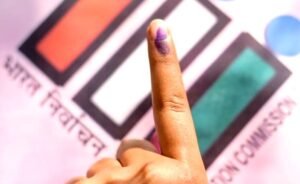
Every year on January 25, India observes National Voters’ Day, a quiet but powerful reminder that the strength of the world’s largest democracy rests not only in its institutions, but in the hands of its citizens. The day marks the foundation of the Election Commission of India in 1950 and celebrates the right to vote as both a privilege and a responsibility. In an age of political noise and shrinking public trust across democracies worldwide, National Voters’ Day offers an opportunity to reflect on how India arrived at universal franchise and why voter participation remains central to the republic’s future.
The roots of National Voters’ Day lie in India’s long struggle for self-rule. Under British colonial administration, Indians had little say in governance. Early legislative councils and reforms allowed only a small, elite section to vote, often based on property, income or education. These limited measures failed to satisfy a growing demand for self-governance. As the freedom movement gathered momentum in the late 19th and early 20th centuries, political participation became a central aspiration, not just for leaders but for ordinary citizens.
The demand for representative government gained clarity with the rise of mass movements under leaders like Mahatma Gandhi. Non-cooperation, civil disobedience and the Quit India movement mobilised millions, creating a political consciousness that cut across class and region. By the time independence arrived in 1947, it was evident that India could not afford a democracy restricted to a few. A country that had mobilised its masses for freedom had to trust them with political power.
This belief found its strongest expression in the framing of the Constitution. The Constituent Assembly, formed in 1946, debated the nature of India’s democracy in great detail. One of its most radical and visionary decisions was to grant universal adult franchise — the right to vote to every adult citizen, irrespective of caste, gender, wealth or education. At a time when many developed countries still limited voting rights, India chose inclusion over caution. This decision reflected deep faith in the political maturity of the people.
To translate this constitutional promise into practice, a robust and independent institution was required. The Election Commission of India was established on January 25, 1950, a day before the Constitution came into force. Tasked with conducting free and fair elections, the Commission became the guardian of India’s electoral democracy. Its creation laid the groundwork for one of the largest democratic exercises in human history — the first general elections of 1951–52, in which millions voted, many for the first time.
National Voters’ Day was instituted in 2011 to commemorate the Election Commission’s role and to encourage greater participation, particularly among young and first-time voters. Its focus is not celebration alone, but awareness — of electoral rights, ethical voting and the importance of informed choice. In a democracy as large and complex as India, voting is the most direct link between citizens and governance.
The significance of National Voters’ Day goes beyond turnout statistics. Voting is an act of equality. When a daily wage worker and a corporate executive cast their votes, their voices carry the same weight. This simple act reinforces the idea that sovereignty lies with the people, not with institutions or individuals. In societies marked by inequality, this principle is both empowering and corrective.
Over the decades, India’s electoral system has evolved to address logistical and social challenges. From paper ballots to electronic voting machines, from limited polling stations to near-universal coverage, the effort has been to make voting accessible to all. Special measures for persons with disabilities, senior citizens, migrant workers and remote communities reflect the belief that democracy must reach every doorstep. National Voters’ Day highlights these efforts and the constant work required to keep elections credible.
Yet, the day also invites honest introspection. Voter apathy, misinformation and polarisation threaten the quality of democratic participation. While India’s voter turnout compares favourably with many democracies, urban disengagement and youth cynicism remain concerns. National Voters’ Day is a reminder that democracy weakens not when people disagree, but when they disengage.
The relevance of the day is especially strong for young citizens. Voting is often seen as a right to be exercised occasionally, rather than a duty tied to everyday civic awareness. National Voters’ Day seeks to change that mindset by linking voting with broader democratic values — dialogue, accountability and respect for institutions. A vote is not an endorsement of perfection, but a choice made in hope of better governance.
In a global context where democratic processes are increasingly questioned, India’s commitment to regular, competitive elections stands out. The peaceful transfer of power through the ballot remains one of the republic’s greatest achievements. This tradition owes much to the Election Commission’s independence and to citizens who continue to believe in the power of the vote.
National Voters’ Day, therefore, is not just about enrolling new voters or increasing turnout. It is about renewing faith in democracy itself. It reminds citizens that while governments may change, the right to choose them is constant. As India moves forward amid rapid social and economic change, the vote remains the most powerful tool citizens possess to shape the nation’s direction. Protecting its sanctity and exercising it responsibly is the true spirit of National Voters’ Day.