
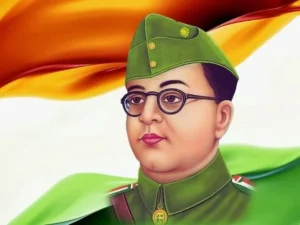
National Parakram Divas: Courage as the Soul of a Nation
Heramba Nath
National Parakram Divas, observed every year on 23 January, is not merely a date on the national calendar but a profound reminder of the moral courage that shaped India’s destiny. Marking the birth anniversary of Netaji Subhas Chandra Bose, the day invites the nation to engage not only with history but with conscience. In remembering Bose, India confronts uncomfortable questions about bravery, sacrifice, dissent, discipline, and responsibility—questions that remain as relevant today as they were during the darkest years of colonial subjugation.
The idea of parakram goes far beyond physical bravery or battlefield heroism. It signifies a deeper, sustained courage—the strength to resist injustice even when resistance invites isolation, suffering, or misunderstanding. Subhas Chandra Bose embodied this courage in its fullest sense. His life was not defined by safe choices or popular approval. It was shaped by relentless self-examination, unwavering conviction, and a refusal to accept the inevitability of oppression. National Parakram Divas therefore demands more than ceremonial homage; it demands reflection on whether the nation still recognises courage as a moral duty rather than a symbolic gesture.
Born into privilege and educated in some of the finest institutions of his time, Bose could have led a life of comfort and prestige under the British system. His success in the Indian Civil Service examination was not merely a personal achievement but a testament to his intellectual brilliance. Yet, at the very threshold of imperial authority, Bose chose renunciation over recognition. His resignation from the civil service was an act of profound defiance, signalling his belief that serving a colonial administration, however honourable the position, was incompatible with self-respect and national dignity. This decision alone reflects the essence of parakram—not impulsive rebellion, but deliberate moral clarity.
The political journey of Subhas Chandra Bose unfolded at a time when the Indian freedom movement was evolving, negotiating between idealism and pragmatism. While non-violent resistance had galvanised the masses and exposed the moral bankruptcy of colonial rule, Bose questioned whether moral appeal alone could dismantle an empire sustained by force. His divergence from the dominant leadership of the Indian National Congress was not an act of arrogance but an expression of urgency. He believed that history demanded decisive action and that prolonged subjugation risked eroding the spirit of resistance itself.
National Parakram Divas brings into focus this tension within the freedom struggle—a tension that reveals the richness of India’s path to independence. Bose’s vision did not negate non-violence as a moral force, but he doubted its sufficiency against an unyielding imperial power. His belief in organised resistance through the Indian National Army arose from his understanding of colonial psychology. He sought to dismantle not only British control over territory but British control over Indian minds. By demonstrating that Indians could command, organise, and fight as equals, Bose aimed to restore a sense of agency to a colonised people.
The formation of the Indian National Army was one of the most audacious experiments in India’s freedom struggle. It was not merely a military force but a political statement, asserting the existence of an alternative Indian authority. Bose’s declaration of the Provisional Government of Free India, recognised by several foreign powers, challenged the legitimacy of British rule on the global stage. This act alone reflects a rare kind of courage—the courage to imagine sovereignty before it exists, and to act as if freedom is already a right rather than a distant aspiration.
Yet, Bose’s courage was never reckless. He was acutely aware of the moral ambiguities and strategic risks involved in seeking international alliances during a global war. His choices continue to provoke debate, but it is precisely this complexity that makes National Parakram Divas meaningful. Bose was not a leader who sought comfort in moral absolutism. He operated within a world fractured by competing powers, choosing paths that he believed would hasten India’s liberation. His courage lay in accepting the burden of decision-making without the assurance of universal approval.
Beyond politics and warfare, Subhas Chandra Bose was deeply concerned with the moral and social future of India. He believed that political freedom without social discipline would leave the nation vulnerable to internal decay. Bose spoke often about character-building, national unity, and collective responsibility. He feared that independence might breed complacency rather than renewal, that the end of colonial rule could expose new forms of inequality, corruption, and moral indifference. National Parakram Divas therefore serves as a reminder that freedom is not an endpoint but a beginning fraught with responsibility.
Bose’s nationalism was inclusive and forward-looking. At a time when colonial policy thrived on division, he emphasised unity across religious, linguistic, and regional lines. The Indian National Army reflected this ethos, bringing together Hindus, Muslims, Sikhs, and Christians under a single banner. Bose understood that a nation fractured by internal discord could never sustain its freedom. His vision of India was secular not merely in principle but in practice—a shared civic identity rooted in common purpose rather than inherited divisions.
The relevance of National Parakram Divas in contemporary India lies in its challenge to superficial patriotism. In an age dominated by spectacle, slogans, and social media declarations, courage is often reduced to performative gestures. Bose’s life stands in stark contrast to such displays. His patriotism was quiet, disciplined, and uncompromising. He did not seek applause; he sought transformation. His courage was evident in solitude as much as in mobilisation, in introspection as much as in action.
For the youth of India, Bose’s life offers lessons that extend beyond admiration. He believed deeply in the power of young people to shape history, but he also emphasised discipline, education, and ethical grounding. Bose was impatient with apathy and opportunism. He believed that youth must shoulder responsibility rather than seek entitlement. In a time when many young Indians confront uncertainty and disillusionment, National Parakram Divas offers a reminder that courage begins with purpose and is sustained through perseverance.
The observance of National Parakram Divas also raises important questions about leadership in a democracy. Bose’s life reminds us that leadership is not synonymous with consensus. At times, it requires standing alone, challenging prevailing wisdom, and accepting the consequences of dissent. His disagreements with contemporaries did not diminish his respect for them, nor did they dilute his commitment to the larger cause. This capacity to disagree without delegitimising others is a form of courage that modern public discourse sorely lacks.
Subhas Chandra Bose remains a figure who resists simplification. His legacy cannot be reduced to slogans, statues, or anniversaries. National Parakram Divas acquires meaning only when it provokes honest engagement with his ideas, doubts, and aspirations. It asks whether the nation still values courage that is thoughtful rather than theatrical, principled rather than convenient. It challenges institutions to reflect on whether they nurture independent thinking or reward conformity.
As India commemorates National Parakram Divas, the day stands as a moral mirror. It reflects both the heights of courage that shaped the republic and the gaps between ideal and practice that persist today. Bose’s life reminds the nation that freedom was earned through sacrifice, disagreement, and relentless commitment. Remembering him is not an act of nostalgia but a call to conscience. Parakram, as Bose lived it, was not an extraordinary quality reserved for exceptional moments; it was a daily discipline rooted in truth, responsibility, and unwavering love for the nation.
The enduring significance of National Parakram Divas also lies in its capacity to challenge how history itself is remembered and narrated. Subhas Chandra Bose has often existed on the margins of officially curated memory, acknowledged yet not fully embraced, celebrated yet not always understood. His life unsettles neat narratives because it refuses to fit comfortably within a single ideological frame. Bose was neither a romantic rebel without discipline nor a militarist without moral concern. He was a deeply thoughtful nationalist who believed that freedom demanded not only emotional fervour but institutional preparedness and moral seriousness.
Bose’s understanding of colonialism was psychological as much as political. He recognised that prolonged subjugation does not merely impoverish a nation materially; it erodes self-belief, normalises dependence, and conditions people to accept limitations as destiny. His insistence on action stemmed from a desire to reverse this internal damage. The Indian National Army, irrespective of its ultimate military outcome, achieved something of immense psychological importance. It shattered the myth of British invincibility and restored to Indians the idea that they could command their own destiny. This psychological liberation, Bose believed, was a prerequisite for political freedom.
National Parakram Divas therefore compels reflection on how courage operates in invisible ways. Courage is not always victorious in immediate terms. It does not always result in clear triumphs or measurable success. Sometimes, its greatest impact lies in changing perceptions, in altering the emotional climate of a people. Bose understood that revolutions are not only fought on battlefields but within the minds of those who have been taught to accept inferiority. His courage was directed as much towards awakening self-respect as towards confronting external power.
The controversies surrounding Bose’s alliances during the Second World War are often discussed in isolation, stripped of historical context. Yet, to judge his decisions without acknowledging the desperation of the time is to misunderstand the nature of colonial oppression. Bose operated in a world where moral purity did not guarantee freedom, and where delay threatened permanent subjugation. His choices were shaped by the urgency of liberation rather than the comfort of hindsight. National Parakram Divas does not ask for uncritical admiration, but for honest engagement with the difficult choices that history sometimes imposes upon those who dare to act.
Bose’s political thought extended beyond the moment of independence. He spoke of economic planning, industrial development, and the role of the state in ensuring social justice. He was deeply concerned about inequality and believed that political freedom must translate into material dignity for ordinary citizens. In this sense, his vision anticipated many of the debates that would later dominate post-independence India. Bose feared that without economic self-reliance and social cohesion, freedom would remain fragile and incomplete.
National Parakram Divas invites contemporary India to revisit these unfinished questions. Economic growth, technological advancement, and global visibility have transformed the nation, yet inequalities persist, and social fractures remain. Bose’s insistence on discipline and collective responsibility offers a counterpoint to a culture increasingly driven by individual gain. His life reminds the nation that freedom cannot survive in an environment of indifference, and that courage is required not only to oppose injustice but to resist apathy.
The relationship between courage and dissent is another theme that National Parakram Divas brings into sharp focus. Bose was a dissenter within the nationalist movement itself, yet his dissent was rooted in commitment rather than disruption. He did not reject the freedom movement; he sought to intensify it. His disagreements were principled, articulated through debate rather than bitterness. In a democratic society, such dissent is not a threat but a necessity. Bose’s life demonstrates that courage includes the willingness to question prevailing assumptions, even when those assumptions are held by revered leaders.
In contemporary public life, dissent is often misinterpreted as disloyalty. National Parakram Divas challenges this misunderstanding. Bose’s patriotism was unquestionable, yet he spent much of his political life in disagreement with dominant strategies. His example suggests that love for the nation does not require silence, and that obedience is not synonymous with loyalty. Courage, in a democracy, involves the capacity to speak uncomfortable truths without abandoning collective purpose.
Bose’s emphasis on unity was never superficial. He recognised that unity could not be enforced through slogans alone; it required fairness, mutual respect, and a shared sense of destiny. The Indian National Army’s inclusive composition was a practical demonstration of this belief. By placing individuals of different faiths and regions under a single command, Bose sought to embody the India he envisioned. National Parakram Divas reminds the nation that unity is not inherited automatically; it is constructed through conscious effort and ethical leadership.
The mystery surrounding Bose’s disappearance has often overshadowed the substance of his life. While unanswered questions continue to evoke public curiosity, National Parakram Divas encourages a shift of focus from speculation to substance. The true legacy of Bose lies not in the circumstances of his end but in the courage with which he lived. His ideas, actions, and moral questions remain accessible, relevant, and demanding. Obsession with unresolved details must not distract from the responsibilities his life imposes upon the present.
For institutions of education, National Parakram Divas offers an opportunity to re-engage with Bose as a thinker rather than merely a symbol. His speeches and writings reveal a leader deeply engaged with philosophy, history, and political theory. Introducing young minds to this intellectual depth would honour his legacy far more meaningfully than ritual observances. Bose believed that education should cultivate character and critical thinking, not merely professional competence. His vision challenges contemporary education systems to look beyond employability towards ethical citizenship.
The media, too, carries a responsibility on National Parakram Divas. Bose’s life exemplifies the courage to speak against dominant narratives and to resist comfortable silences. Journalism that merely echoes power cannot claim to honour his legacy. Courageous journalism, rooted in truth and public interest, aligns far more closely with the spirit of parakram that Bose embodied. His life reminds communicators that neutrality without integrity is a form of surrender.
As India continues to evolve as a republic, National Parakram Divas serves as a reminder that courage must adapt to changing contexts. The challenges of the present may not resemble those of colonial rule, yet they demand similar moral resolve. Inequality, environmental degradation, social polarisation, and erosion of trust in institutions require courage of a different kind—the courage to reform, to listen, and to act responsibly. Bose’s life suggests that courage is not defined by its form but by its intent: the pursuit of justice, dignity, and collective well-being.
Remembering Subhas Chandra Bose through National Parakram Divas is ultimately an exercise in national self-examination. It asks whether the nation still values integrity over convenience, service over self-interest, and responsibility over rhetoric. Bose’s life was a continuous challenge to mediocrity. He demanded more from himself than circumstances required, and more from the nation than habit allowed. His courage was not comfortable, and it was never complacent.
National Parakram Divas therefore must not become a predictable ritual. Its true purpose lies in discomfort—in questioning whether the courage that once animated the freedom struggle continues to inform the republic’s moral choices. Bose did not fight for a nation content with symbolic freedom. He fought for a nation capable of self-discipline, unity, and ethical strength. To honour him is to recognise that courage is not a relic of the past but a responsibility of the present.
The idea of courage that National Parakram Divas seeks to honour is inseparable from responsibility. Subhas Chandra Bose never viewed bravery as an emotional outburst or a momentary surge of passion. For him, courage was a sustained discipline, a conscious choice renewed daily despite fatigue, disappointment, and uncertainty. His life demonstrates that true parakram is not loud or theatrical; it is often quiet, inward, and lonely. It involves making decisions that may never receive immediate validation, yet are guided by an unwavering sense of duty to a larger cause.
Bose’s exile was not merely geographical; it was deeply emotional and intellectual. Cut off from his homeland, separated from familiar cultural and political spaces, he carried the burden of representing an enslaved nation in an indifferent or hostile world. His travels across Europe and Asia were marked by constant negotiation, persuasion, and strategic calculation. In these journeys, Bose encountered the limits of idealism. He understood that international politics was driven by interests rather than morality, yet he persisted, believing that even limited support could tilt the balance in India’s favour. National Parakram Divas reminds us that courage often involves operating within imperfect conditions without surrendering one’s ethical compass.
One of the most striking aspects of Bose’s personality was his insistence on self-discipline. He believed that personal discipline was the foundation of national strength. Without it, freedom would degenerate into chaos, and rights would be detached from responsibilities. This emphasis on discipline was not authoritarian in spirit but ethical in intent. Bose feared that a nation emerging from colonial rule might mistake freedom for license and authority for entitlement. His warnings resonate in contemporary times, when democratic freedoms are sometimes exercised without corresponding regard for social harmony and institutional integrity.
National Parakram Divas thus offers an opportunity to reconsider the relationship between freedom and restraint. Bose’s vision suggests that liberty achieves its highest form when exercised with conscience. He believed that courage involved resisting not only external domination but internal weaknesses—complacency, corruption, and moral compromise. In this sense, his struggle did not end with independence. It extended into an imagined future where citizens would need courage to uphold ethical standards even in the absence of an external oppressor.
The question of leadership occupies a central place in Bose’s legacy. He did not believe in charismatic authority detached from accountability. His leadership style was demanding, often austere, and rooted in example rather than rhetoric. Bose expected from others what he demanded of himself—sacrifice, discipline, and clarity of purpose. National Parakram Divas challenges contemporary leaders to reflect on whether authority is exercised as service or privilege, as responsibility or entitlement. Bose’s life suggests that leadership devoid of sacrifice cannot inspire enduring loyalty or trust.
The Indian National Army, despite its eventual defeat, remains one of the most significant symbols of Bose’s courage-driven vision. Its importance lies not in military outcomes alone but in its challenge to colonial assumptions. The INA trials in post-war India ignited widespread public sympathy and unrest, forcing the colonial administration to confront the erosion of its authority. In this indirect yet profound way, Bose’s strategy contributed to accelerating the end of British rule. National Parakram Divas acknowledges that history is shaped not only by visible victories but by cumulative moral pressure.
Bose’s engagement with ordinary soldiers and civilians reflected his belief in shared sacrifice. He rejected hierarchical distance and sought emotional connection with those who followed him. His speeches were not crafted for elegance alone; they were designed to awaken self-belief and collective resolve. The famous exhortations attributed to him resonated because they emerged from lived conviction rather than rhetorical flourish. National Parakram Divas invites reflection on the power of words when they are backed by action and integrity.
In post-independence India, the complexity of Bose’s legacy has sometimes been overshadowed by selective remembrance. While his image is widely revered, his ideas are less frequently debated with seriousness. This selective engagement risks reducing him to a symbol devoid of challenge. National Parakram Divas must resist this tendency. Bose’s life was not meant to comfort future generations but to provoke them. His questions about discipline, unity, and responsibility remain unanswered in many respects, demanding renewed engagement rather than ceremonial reverence.
The mystery surrounding Bose’s disappearance has added an element of unresolved longing to his story. Yet, this uncertainty should not distract from the clarity of his principles. Bose’s legacy does not depend on closure; it depends on continuity. His absence from the post-independence years deprived the nation of a voice that might have challenged emerging orthodoxies and complacencies. National Parakram Divas invites reflection on the voices that remain unheard or marginalised in contemporary discourse, and whether courage today includes the willingness to listen to inconvenient perspectives.
Bose’s understanding of nationalism was rooted in ethical universalism. He believed that India’s freedom was part of a larger human struggle against domination and injustice. His interactions with other anti-colonial movements reflected this internationalist outlook. Bose did not view nationalism as insular or exclusionary; he saw it as a means of restoring dignity to a people so that they could participate equally in the global community. National Parakram Divas reminds us that genuine patriotism does not require hostility towards the world but confidence within it.
The relevance of Bose’s thought extends into questions of governance and public morality. He believed that institutions must be built on competence and integrity rather than patronage. His concern about corruption was not abstract; he feared that misuse of power would erode public trust and weaken national cohesion. In contemporary India, where trust in institutions is frequently tested, National Parakram Divas serves as a reminder that courage includes the willingness to enforce accountability, even when it disrupts established interests.
For civil society, Bose’s life underscores the importance of engagement rather than withdrawal. He did not retreat into moral isolation or intellectual detachment. Even in exile, he sought connection, mobilisation, and action. His courage was relational—it depended on collective participation and shared responsibility. National Parakram Divas challenges citizens to reconsider the role of participation in democracy. Silence, Bose would argue, is not neutrality but abdication.
As the republic matures, the nature of its challenges evolves, yet the need for courage remains constant. Bose’s life suggests that courage must be reinterpreted for each generation. It may no longer require armed struggle, but it demands ethical clarity, civic engagement, and resistance to injustice in all its forms. National Parakram Divas is thus not bound to a specific historical moment; it is a living reminder that freedom demands vigilance.
The endurance of Bose’s appeal lies in his refusal to accept inevitability. He rejected the idea that colonial rule was permanent, that Indians were unprepared for self-governance, or that freedom could only arrive through benevolence. This rejection of inevitability is perhaps his most enduring lesson. National Parakram Divas encourages the nation to question contemporary inevitabilities—inequality, division, environmental degradation—and to recognise that courage begins with refusing to accept injustice as normal.
In remembering Subhas Chandra Bose, the nation confronts the uncomfortable truth that courage is demanding. It disrupts comfort, challenges conformity, and exposes contradictions. Bose’s life was not a smooth ascent but a series of confrontations—with empire, with ideology, and with circumstance. National Parakram Divas honours this restless courage, reminding India that the price of freedom is not paid once but continually, through ethical choices and collective responsibility.
The true tribute to Bose lies not in monuments or anniversaries but in action aligned with conscience. National Parakram Divas asks whether the nation is willing to inherit not only the pride of freedom but the burden of courage that sustains it. Bose did not seek a nation that merely remembered its heroes; he envisioned a nation capable of producing them in every generation. To remember him is to accept that challenge, recognising that parakram is not a relic of the past but the moral energy of the present.
In the final reckoning, National Parakram Divas is not about glorifying the past but about interrogating the present. Subhas Chandra Bose does not belong to history alone; he belongs to every moment when courage is tested by convenience, when principle is weighed against profit, and when silence appears safer than truth. His life reminds the republic that freedom survives not through memory but through moral action. If Parakram Divas carries any enduring meaning, it lies in this quiet demand—that the courage which once liberated a nation must continue to guide its conscience.