
Silpi Diwas: Remembering the Artist Who Taught Assam to Dream
Siddharth Roy
Civil Engineer, Writer and Columnist
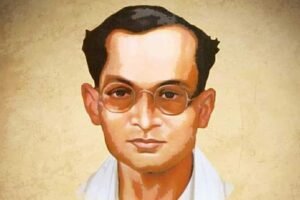
Every year on January 17, Assam observes Silpi Diwas, a day dedicated to remembering Jyoti Prasad Agarwala, one of the most remarkable cultural figures the state has produced. Known lovingly as Rupkonwar, he was not just an artist but a visionary who believed that art could shape society, awaken people, and give a voice to a nation finding its self-respect. Silpi Diwas is not merely a tribute to one individual; it is a reminder of the power of creativity, courage, and commitment to the collective good.
Jyoti Prasad Agarwala lived a short life, but its impact was deep and lasting. At a time when Assam was still under colonial rule and struggling to define its cultural identity, he dared to imagine a society rooted in its own language, music, stories, and values. He was a poet, playwright, filmmaker, composer, writer, freedom fighter, and social thinker rolled into one. More importantly, he was someone who saw art not as a luxury but as a responsibility.
Silpi Diwas invites us to reflect on this idea. In today’s world, art is often seen as entertainment or personal expression. Agarwala’s life reminds us that art can also be a tool for social change. His songs carried messages of freedom and self-belief. His plays questioned injustice and blind tradition. His films tried to show Assamese life on its own terms, long before regional cinema became a recognised space in India.
His most famous film, Joymoti, was not a commercial success when it was released, but it became a cultural milestone. It told the story of sacrifice, courage, and dignity through a woman’s strength, something far ahead of its time. Agarwala invested his own resources and faced heavy losses, but he never regretted the effort. For him, creating something meaningful for society mattered more than profit. That spirit feels especially relevant today, when success is often measured only in numbers.
Silpi Diwas also asks an uncomfortable question: how well do we value our artists while they are alive? Agarwala died young, in poverty and illness, largely unrecognised for the scale of his contribution. This is not just a story of the past. Even today, many artists struggle for support, space, and dignity. We celebrate creativity in words, but our systems often fail to nurture it in practice.
In Assam, Silpi Diwas is marked by cultural programmes, songs, plays, and discussions. These celebrations are important, but they should go beyond ritual. Remembering Jyoti Prasad Agarwala should also mean renewing our commitment to the ideals he stood for — cultural self-confidence, social responsibility, and fearless thinking. It should encourage institutions, governments, and society to invest more seriously in arts education, local languages, and independent creative voices.
There is also a larger national lesson here. India’s cultural strength lies in its diversity. Figures like Agarwala remind us that regional cultures are not peripheral; they are central to the idea of India. When local art forms are weakened or ignored, the national cultural fabric becomes poorer. Silpi Diwas, therefore, is not only an Assamese occasion but part of a broader conversation about preserving and respecting cultural roots in a rapidly globalising world.
For the younger generation, Silpi Diwas can be an invitation rather than a memory. Agarwala’s life shows that it is possible to be modern without losing one’s roots, to engage with the world while staying grounded in local reality. He studied abroad, absorbed global ideas, but returned to work for his people. In an age of quick fame and digital noise, his patience, discipline, and sense of purpose offer a different model of success.
As Assam observes Silpi Diwas, the challenge is to keep the day alive in spirit, not just in calendar form. This means supporting artists not only on anniversaries but through sustained policies, platforms, and public respect. It means encouraging schools and colleges to teach cultural history not as dry facts but as living inspiration. It also means asking ourselves how art can once again speak to social concerns, rather than remain confined to stages and screens.
Jyoti Prasad Agarwala believed that a society without art loses its soul. Silpi Diwas is a reminder of that belief. In remembering the artist, we are also reminded of our responsibility — to listen, to support, and to create a cultural space where imagination and conscience can thrive together.