
Karbi Anglong’s Cry for Peace: Why Assam Rejects Violence and Seeks Immediate Harmony
Heramba Nath
The repeated outbreaks of tension and conflict in Karbi Anglong have deeply disturbed the collective conscience of Assam. Beyond news headlines and political statements lies a profound human yearning that unites people across communities, languages and regions of the state—the urgent desire for peace. Ordinary Assamese people, including the residents of Karbi Anglong themselves, do not want violence, division or fear. They want stability, dialogue and a future where coexistence replaces confrontation.
Karbi Anglong, by its very nature, is a land of diversity. Hills, forests and rivers shape not only its geography but also its social fabric. Karbis, Dimasas, Kukis, Hmars, Assamese-speaking communities and many others have lived in this region for generations. Their histories are intertwined through shared markets, festivals, labour and everyday interactions. Violence, therefore, is not an expression of people’s culture or values; it is a disruption imposed upon a society that has long practised coexistence despite differences.
The conflicts that periodically erupt in Karbi Anglong are often portrayed as ethnic or communal in nature. However, for the common people of Assam, such explanations feel incomplete and inadequate. They know that most residents do not wake up with hatred in their hearts. The roots of unrest lie elsewhere—in prolonged neglect, unfulfilled promises, economic deprivation, land insecurity, administrative failures and political miscalculations. When these issues remain unresolved for decades, frustration accumulates. Yet the people are increasingly conscious that violence only multiplies suffering rather than solving these problems.
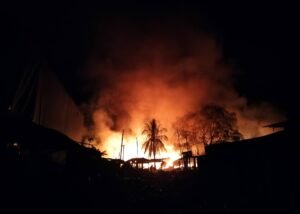
One of the strongest reasons Assamese society demands peace quickly is the lived memory of loss. Every conflict leaves behind burnt homes, displaced families, traumatised children and broken livelihoods. Farmers cannot cultivate their land, daily wage earners lose income, students miss classes and healthcare becomes inaccessible. These consequences do not discriminate by ethnicity or religion. Pain spreads across communities, reinforcing the understanding that violence punishes the innocent far more than it addresses grievances.
Across Assam, there is a growing moral consensus that ethnic violence benefits no one except those who exploit instability for power or profit. The ordinary citizen sees that whenever peace breaks down, development stalls. Roads remain unfinished, schools suffer, hospitals remain understaffed and investment retreats. Karbi Anglong, despite its rich natural resources and cultural heritage, continues to lag behind because instability discourages long-term planning and inclusive growth. People understand that without peace, even the best policies remain ineffective.
The youth of Assam are among the strongest voices against violence. Young people in Karbi Anglong and beyond aspire for education, employment and dignity. They are connected to the wider world and aware that progress today depends on skills, innovation and cooperation. Guns and blockades do not create jobs or opportunities. Many young Assamese openly reject violent ideologies and demand dialogue-driven solutions. They want to inherit a future defined by possibility, not perpetual unrest.
Women’s experiences add another powerful dimension to the demand for peace. During conflicts, women bear invisible but enduring burdens. They manage households in displacement camps, protect children from trauma, struggle to access food and healthcare, and live with constant insecurity. Their suffering rarely makes headlines, yet it shapes the social cost of violence. Women across communities in Karbi Anglong have repeatedly appealed for calm, understanding and reconciliation. Their voices remind society that peace is not a political luxury but a humanitarian necessity.
Civil society in Assam—comprising writers, journalists, teachers, artists, student organisations and social activists—has consistently appealed for restraint during periods of tension. These voices reflect Assam’s long intellectual tradition of dialogue and reason. From the days of social reform movements to cultural renaissances, Assamese society has valued conversation over coercion. The rejection of violence in Karbi Anglong aligns with this broader cultural ethos.
Religious and community leaders have also played a crucial role in urging peace. Their appeals emphasise shared human values rather than divisive identities. In moments of crisis, these voices often become the moral anchors that prevent further escalation. They reinforce the belief that differences can be addressed through conversation, not confrontation.
The demand for peace is also a call for responsible leadership. People expect political leaders to act as healers, not agitators. They want leaders who listen carefully to grievances, communicate honestly and avoid inflammatory rhetoric. When political competition fuels fear or suspicion, it erodes public trust. Assamese society increasingly expects its representatives to prioritise long-term harmony over short-term electoral gains.
Administration and governance play an equally decisive role. People do not oppose law and order measures when lives are at risk, but they insist that security responses must be accompanied by sensitivity, fairness and accountability. Heavy-handed approaches that ignore local concerns can deepen alienation. Trust is built when authorities engage respectfully with communities, provide timely relief, ensure justice and demonstrate transparency in decision-making.
Importantly, the people of Assam do not equate peace with silence. They recognise that genuine grievances exist in Karbi Anglong, particularly regarding land rights, development, employment and cultural protection. Wanting peace does not mean suppressing these concerns. On the contrary, peace is possible only when issues are addressed openly through democratic and constitutional means. Dialogue platforms, inclusive consultations and participatory governance are essential to resolving tensions sustainably.
The Sixth Schedule framework, autonomous institutions and development programmes must function not merely on paper but in practice. When autonomy delivers tangible benefits, faith in peaceful processes strengthens. When governance becomes inclusive and efficient, the attraction of violence diminishes. Assamese people understand that peace requires structural change, not just appeals for calm.
Another reason for the strong demand for peace is the shared identity of Assam as a plural society. Diversity has always been its defining strength. Languages, cultures and traditions coexist not despite differences but because of mutual respect developed over centuries. Violence threatens this delicate balance. Every conflict weakens the idea of Assam as a collective home for many identities. Peace, therefore, is seen as essential for preserving the state’s social and cultural fabric.
Today, the message from Assam regarding Karbi Anglong is clear and heartfelt. People want roads instead of roadblocks, classrooms instead of camps, employment instead of extortion, and conversations instead of confrontations. They want children to grow up learning stories of cooperation rather than inheriting memories of fear. They want Karbi Anglong to be known for its hills, culture and potential, not for recurring unrest.
The call for peace is not naïve or passive. It is rooted in experience, suffering and wisdom. It reflects the understanding that violence has already taken too much and given nothing in return. Peace is not the absence of disagreement but the presence of dignity, justice and mutual respect.
Karbi Anglong’s future, like Assam’s future, depends on how sincerely this call is heard. Peace must be treated not as a temporary pause between conflicts but as a continuous commitment by the state, communities and individuals alike. Only then can the hills breathe freely again, and only then can Assam move forward together—stronger, calmer and more united.