
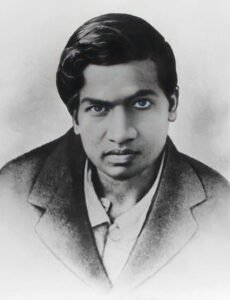
National Mathematics Day: Celebrating the Legacy of Srinivasa Ramanujan and the Infinite Beauty of Numbers
Heramba Nath
Numbers have always been more than mere symbols on paper. They are the silent architects of civilisation, guiding human understanding from the earliest trade ledgers of Mesopotamia to the complex algorithms powering artificial intelligence today. Mathematics is at once universal and timeless, a discipline that bridges cultures, eras, and geographies. Yet, paradoxically, it has often been regarded with trepidation, as a domain too abstract or too complex for the average learner. In India, however, mathematics is celebrated not just as a subject, but as a gateway to intellectual curiosity, a celebration of human ingenuity, and an exploration of the universe’s hidden harmonies. It is in this spirit that National Mathematics Day is observed each year on 22 December, marking the birth anniversary of the prodigious mathematician Srinivasa Ramanujan.
Born in 1887 in the modest town of Erode, Tamil Nadu, Ramanujan’s life is a story of extraordinary talent, relentless curiosity, and profound intuition. Despite growing up in a family of limited means and receiving minimal formal training in mathematics, he displayed an uncanny ability to perceive complex numerical patterns and relationships. His notebooks, filled with thousands of formulas, many without proofs, continue to baffle and inspire mathematicians worldwide. They are a testament to the human capacity to explore, to question, and to discover truths that exist beyond conventional understanding. National Mathematics Day, therefore, is not simply a commemoration of an individual; it is an invitation to reflect on the transformative power of curiosity, creativity, and intellectual perseverance.
Ramanujan’s contributions to mathematics are profound, yet their elegance lies in their intuitive nature. He made breakthroughs in number theory, infinite series, modular forms, and continued fractions—areas that even the most seasoned mathematicians found challenging. While formal proofs were often absent in his work, the results themselves were remarkable in their depth and applicability. To this day, his insights continue to influence modern mathematics, from pure theoretical research to practical applications in physics, cryptography, and computer science. His genius demonstrates that mathematics is not merely about memorising formulas but about perceiving hidden patterns, embracing abstraction, and trusting the mind’s capacity to connect seemingly unrelated ideas.
Observing National Mathematics Day allows India to celebrate this unique legacy. But the significance of the day extends beyond Ramanujan alone. It is an occasion to reflect on mathematics as the cornerstone of human civilisation. Mathematics informs every facet of modern life—from the architectural wonders of history to the spacecraft that explore distant planets, from economic models that guide national policy to the algorithms shaping the digital world. In a nation like India, striving to become a global hub for innovation and research, fostering mathematical literacy is critical. The day reminds educators, policymakers, and society at large of the urgent need to cultivate analytical thinking, problem-solving abilities, and the spirit of inquiry among young learners.
Across India, National Mathematics Day is marked by seminars, workshops, quizzes, exhibitions, and competitions in schools, colleges, and universities. Students are encouraged to approach mathematics not as a set of rigid procedures, but as an art form, a narrative of discovery, and a medium for creativity. By exploring patterns in prime numbers, the elegance of mathematical identities, or the logic underlying geometric symmetry, learners develop not only proficiency but also a sense of wonder. This aesthetic appreciation fosters critical thinking and confidence, equipping students to face challenges in academics, research, and life beyond the classroom.
National Mathematics Day also provides an opportunity to revisit the rich historical heritage of mathematics in India. The Indian subcontinent has long been a crucible of mathematical innovation. Aryabhata’s pioneering astronomical calculations, the development of the decimal system, and the concept of zero transformed mathematics globally. Mathematicians of the Kerala School made remarkable contributions to calculus centuries before Newton and Leibniz, demonstrating India’s longstanding engagement with abstract and applied mathematical thought. Recognising this heritage cultivates a sense of pride, connects contemporary learners with centuries of intellectual achievement, and affirms that mathematics is a shared human endeavour transcending culture and geography.
The celebration of mathematics is not confined to classrooms or historical reflection. In recent years, it has expanded into public outreach and media engagement. Science communication initiatives highlight mathematics in everyday life—from managing finances and analysing data to optimising travel routes and understanding medical statistics. Such initiatives demystify mathematics, counter misconceptions of its inaccessibility, and encourage learners from diverse backgrounds to embrace the subject. In India, where educational inequalities persist, this inclusive approach ensures that National Mathematics Day is not merely ceremonial but transformative.
Beyond its practical utility, mathematics holds profound philosophical and ethical significance. It cultivates habits of mind—precision, patience, logical reasoning, and critical evaluation. It teaches humility, as each discovery often uncovers further questions, and each solution reveals the vastness of the unknown. It fosters ethical reasoning, encouraging integrity, honesty, and diligence in problem-solving. Observing National Mathematics Day thus celebrates not only intellectual achievement but the moral and philosophical virtues that underpin the discipline. Mathematics becomes, in this sense, a means of cultivating both the mind and character.
Ramanujan’s life offers enduring lessons in this regard. He combined brilliance with humility, curiosity with devotion, and creativity with discipline. Despite his health challenges, financial difficulties, and relative isolation, he pursued mathematics relentlessly, often working in conditions that would have daunted even the most determined scholar. His journey teaches that genuine mathematical engagement is an act of devotion—a dialogue between the mind and the universe. By commemorating Ramanujan, India inspires learners not merely to memorise formulas but to cultivate the virtues of persistence, curiosity, and intellectual courage.
The relevance of mathematics is increasingly evident in today’s technological landscape. Fields such as artificial intelligence, machine learning, data science, cryptography, and quantum computing rely fundamentally on mathematical principles. Algorithms that drive digital economies, predictive models guiding public health interventions, and simulations exploring climate change are all rooted in complex mathematical structures. Preparing young minds to navigate this landscape is critical. National Mathematics Day serves as a catalyst for inspiring students to pursue careers in STEM, nurturing innovators, problem-solvers, and critical thinkers capable of shaping India’s future.
Moreover, mathematics is a universal language. Theorems and proofs transcend borders, connecting scholars across cultures and eras. Ramanujan’s collaboration with the British mathematician G. H. Hardy exemplifies this universality. Despite differences in upbringing, culture, and formal training, their partnership produced groundbreaking results, illustrating that mathematical thought is a shared human pursuit, unbounded by nationality or context. National Mathematics Day encourages similar global engagement, fostering cross-cultural collaboration and positioning India as a custodian of a rich mathematical legacy.
Educationally, the day encourages reflection on pedagogy. Too often, mathematics is taught as a rigid, procedural subject. National Mathematics Day invites educators to present it as a living, dynamic discipline—a story of exploration, challenge, and revelation. By integrating history, philosophy, applications, and puzzles, teachers can inspire curiosity and engagement. Students learn that errors are not failures but opportunities for learning, that abstraction can be beautiful, and that mathematical thinking cultivates resilience, creativity, and disciplined reasoning.
The celebration also highlights contributions of other Indian mathematicians, such as Brahmagupta, Bhaskara II, Ramachandra Rao, and modern figures like Manjul Bhargava. Each contributed uniquely to the understanding of numbers, algebra, geometry, and combinatorics, reinforcing the continuity of intellectual achievement across centuries. These narratives enrich National Mathematics Day, illustrating that genius emerges in diverse contexts and that mathematical inquiry is a collective, cumulative human endeavour.
National Mathematics Day further encourages societal engagement with mathematics beyond academia. Public lectures, media features, and interactive workshops demonstrate how mathematics underlies everyday decisions—from budgeting and resource allocation to voting systems and environmental modelling. By showcasing its practical relevance alongside its aesthetic and intellectual appeal, society is reminded that mathematics is both a tool for progress and a medium for understanding the world.
Finally, National Mathematics Day is a celebration of the infinite. Numbers, patterns, and relationships are boundless; the process of discovery is continuous. The day invites citizens to embrace inquiry, cultivate curiosity, and marvel at the elegance and profundity of the universe expressed mathematically. It is a reminder that human intellect, guided by passion, perseverance, and imagination, can uncover truths that endure across generations.
Srinivasa Ramanujan’s legacy, therefore, is both specific and universal. He exemplifies the extraordinary potential of human thought and intuition, while symbolising the broader values of curiosity, discipline, and humility that mathematics cultivates. By observing National Mathematics Day, India honours his memory, celebrates its mathematical heritage, inspires young minds, and reaffirms the enduring value of knowledge, creativity, and discovery.
In an age defined by rapid technological transformation, environmental challenges, and global interconnectivity, the lessons of National Mathematics Day resonate more than ever. Mathematics equips individuals and societies with the tools to analyse, innovate, and understand. It fosters intellectual independence, ethical reasoning, and a lifelong commitment to learning. By engaging with mathematics, we not only solve problems but also nurture wonder, imagination, and the deep human desire to explore the unknown.
National Mathematics Day thus is far more than a symbolic observance. It is a call to action, a celebration of intellect, and an affirmation of India’s contribution to the global heritage of knowledge. It honours Srinivasa Ramanujan’s genius, highlights the timeless relevance of mathematical thought, and inspires generations to come to seek truth, beauty, and insight through numbers. It reminds us that mathematics is both a practical necessity and a profound expression of human creativity—an infinite, ever-unfolding journey in which every learner can participate, discover, and contribute.
As India celebrates this day annually, it does so with reverence, pride, and aspiration. National Mathematics Day is a tribute to the mind’s capacity for insight, the spirit’s capacity for perseverance, and the universe’s capacity for wonder. It invites all citizens to reflect on the elegance of numbers, the power of reasoning, and the endless possibilities that emerge when curiosity meets dedication. Through this celebration, mathematics becomes not merely an academic subject but a medium through which humanity engages with the infinite, explores the unknown, and realises the profound potential of intellect, imagination, and creativity.