
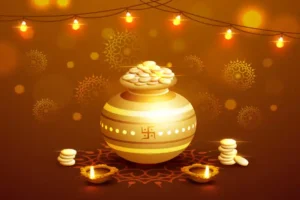
Dhanteras: A Festival of Prosperity, Purity, and the Light of Inner Wealth
Heramba Nath
The gentle arrival of autumn in India carries a fragrance that feels sacred. The air cools, the sky brightens with a golden hue, and a sense of anticipation sweeps through homes and markets alike. Amidst this changing rhythm of nature arrives one of the most auspicious festivals in the Hindu calendar—Dhanteras, the prelude to Diwali, the festival of lights. Across the subcontinent, this day is cherished not merely as a time for material prosperity, but as a celebration of divine grace, spiritual wealth, and the eternal connection between health and happiness.
The word Dhanteras comes from two Sanskrit roots—Dhan, meaning wealth, and Teras, meaning the thirteenth day. It falls on the thirteenth lunar day of Krishna Paksha in the month of Kartik, generally occurring in October or November. Dhanteras marks the first day of the grand Diwali celebrations that continue for five days. It is believed that on this day, Lord Dhanvantari, the celestial physician and the incarnation of Lord Vishnu, emerged from the churning of the ocean (Samudra Manthan) carrying the Amrit Kalash—the pot of divine nectar. His emergence symbolises the eternal truth that health is the greatest wealth, and that divinity resides in the balance of body, mind, and soul.
In Hindu tradition, Dhanteras is celebrated with prayers, cleanliness, and illumination. Homes are swept, decorated, and adorned with rangoli, symbolising the removal of darkness and the welcoming of purity and positivity. Lamps (diyas) are lit at entrances and windows, signifying the triumph of light over darkness, knowledge over ignorance, and purity over pollution of the spirit. The glow of these lamps represents not only material brightness but the illumination of human consciousness. Every diya burning in the dusk carries a silent prayer for prosperity, peace, and protection.
The day also carries the deep devotion to Goddess Lakshmi, the goddess of wealth and fortune. People believe that she visits clean, well-lit homes and blesses them with prosperity. Therefore, the ritual of cleaning one’s house is not merely physical—it is symbolic of purifying one’s thoughts, words, and deeds. The shining utensils and newly bought gold ornaments are not just displays of wealth; they are reflections of the inner light of gratitude. The fragrance of incense and the rhythmic chants of Lakshmi Puja in countless homes across India create an atmosphere where spirituality and festivity merge beautifully.
The traditional custom of buying gold, silver, or utensils on Dhanteras has a profound meaning beyond its economic value. It signifies an invitation to abundance and a renewal of faith in fortune. The purchase of metal items—whether a small silver coin or a golden ornament—is seen as a gesture of gratitude to the divine for past blessings and a hopeful prayer for future stability. Even those who cannot afford gold participate by buying small utensils or even clay lamps, for the spirit of Dhanteras does not lie in the price of the object but in the purity of intention. In rural India, farmers buy new agricultural tools or cattle; in cities, people may buy gadgets or vehicles. Yet, beneath every act of purchase, there lies a common wish—to start anew with the blessings of health, harmony, and happiness.
Dhanteras also holds a special place in the field of Ayurveda, as it marks the birth anniversary of Lord Dhanvantari, the divine founder of this ancient system of medicine. In his hands, the Amrit Kalash symbolises the nectar of eternal health, which reminds humankind that true prosperity is impossible without physical and mental well-being. It is for this reason that Dhanteras is observed as National Ayurveda Day in India. On this day, Ayurvedic practitioners, students, and scholars pay tribute to the timeless wisdom of healing that teaches not only how to cure disease but how to live in harmony with nature. It highlights the principle that health is the first wealth—the foundation upon which all success and happiness depend.
The worship of Lord Dhanvantari on Dhanteras serves as a reminder that prosperity is incomplete without good health. In an age when the world is burdened with lifestyle diseases, mental stress, and environmental pollution, the message of Dhanteras is more relevant than ever. The festival teaches that wealth earned at the cost of health is hollow, and progress achieved without compassion is meaningless. To live in true abundance is to maintain balance—to nourish the body with discipline, the mind with peace, and the soul with gratitude.
As twilight descends on Dhanteras evening, families across India gather for the Dhanteras Puja. Lamps are placed at every doorway and window, and prayers are offered to Goddess Lakshmi and Lord Kuber, the god of treasures. The atmosphere fills with the sound of bells, conch shells, and devotional songs. Women draw intricate rangoli designs at the thresholds, inviting prosperity into their homes. Children run about excitedly, lighting sparklers and distributing sweets. There is joy in every heart and light in every eye.
Yet, Dhanteras is not only a festival of external celebrations; it is an inner awakening. It encourages self-reflection. The cleaning of the house mirrors the cleansing of the mind; the lighting of lamps symbolises the illumination of wisdom. The buying of gold reminds people to invest not only in material wealth but in moral and spiritual values. The entire ritual becomes a metaphor for renewal—of home, heart, and hope.
The festival also carries a story of faith and divine intervention. According to legend, there once lived a young prince named Hima whose horoscope predicted that he would die from a snake bite on the fourth night of his marriage. His wife, deeply devoted, refused to surrender to fate. On that night, she lit numerous lamps around their room and scattered her gold and silver ornaments across the floor. She kept her husband awake with songs and stories. When the god of death, Yama, came disguised as a serpent, the brilliance of the lamps and the glitter of gold blinded him. Unable to enter, he silently returned. Thus, the prince’s life was spared, and from that day onwards, lighting lamps and keeping wealth shining on Dhanteras became a symbol of protection against untimely death and misfortune. This tale continues to remind devotees that light, devotion, and love are stronger than destiny itself.
Beyond myths and rituals, Dhanteras holds a universal message of gratitude and generosity. It invites people to share their prosperity with those who have less. Acts of charity, donations, and community service are integral parts of the day’s observance. Many people distribute food, clothing, or money to the poor, understanding that true wealth multiplies when shared. In that sense, Dhanteras transcends caste, class, and religion—it becomes a festival of humanity, where compassion becomes the currency of the heart.
In the modern era, Dhanteras has evolved in its outward expressions, yet its inner meaning remains timeless. While urban families may celebrate with online shopping, luxury gifts, or decorative lights, the essence of the day is still rooted in the same ancient truth—that wealth without righteousness is barren, and prosperity without humility is perilous. The celebration reminds individuals that wealth is not to be worshipped for itself but revered as a tool for greater good. It teaches that money can buy comfort but not contentment, and possessions can decorate the home but not the soul.
The ecological wisdom embedded in the festival is also worth reflecting upon. In lighting earthen lamps rather than fireworks, Dhanteras becomes a celebration of harmony with nature. The oil lamps represent renewable energy, simplicity, and sustainability. In contrast to the noise and pollution that modern festivities sometimes bring, the quiet glow of a diya fosters peace within and around. The light of Dhanteras therefore speaks softly but powerfully—it urges humankind to value purity over extravagance, mindfulness over excess.
Spiritually, Dhanteras embodies the eternal dialogue between Lakshmi and Dharma—between wealth and virtue. In Hindu philosophy, Lakshmi’s presence is fleeting unless she is accompanied by righteousness. The festival reminds devotees to earn and spend wealth through ethical means, to use it for upliftment rather than exploitation. The lamp of Dhanteras shines brightest when placed upon the foundation of honesty, diligence, and compassion.
As families sit together after the evening puja, sharing sweets and laughter, the glow of the lamps flickers on their faces like the reflection of divine blessings. In that moment, Dhanteras transcends its rituals and becomes an experience of togetherness. It weaves bonds of love across generations, reminding everyone that prosperity finds its truest meaning in relationships—between parents and children, between neighbours and friends, between humanity and nature.
In a time when the world is increasingly defined by speed, competition, and material desires, Dhanteras whispers a gentle truth: that contentment is the highest form of wealth. The festival does not discourage ambition but redefines it—it teaches that ambition must be accompanied by gratitude, and success must be balanced with service.
Every diya that glows on Dhanteras night becomes a tiny symbol of this philosophy. It tells the story of a civilisation that has always known that the purpose of wealth is not domination but dedication, not indulgence but illumination. The shining gold ornaments, the sparkling silver coins, the new utensils—all become sacred when they remind people of their duty to share, to heal, and to live honourably.
When viewed in this light, Dhanteras becomes not just a Hindu festival but a universal lesson in living wisely. It teaches that prosperity begins with cleanliness—not only of homes but of hearts. It shows that health and wealth are two sides of the same coin, each incomplete without the other. It inspires people to make every act of purchase an act of purpose, and every act of worship an act of will towards goodness.
In Indian homes, when the last lamp burns softly into the night, there is a silence filled with hope. The gentle flames seem to whisper prayers that transcend time. They speak of ancestors who lit the same lamps generations ago, and of future generations who will continue the tradition long after the present ones are gone. Through this continuity, Dhanteras preserves not just culture but consciousness—a deep remembrance that life itself is a gift to be cherished with humility.
In its essence, Dhanteras is far more than the beginning of Diwali. It is the celebration of purity, gratitude, and inner illumination. It honours wealth not as material possession but as divine energy meant for the welfare of all. It exalts health as the truest treasure, and love as the purest form of prosperity. The festival glows with the message that when one’s heart is filled with light, the entire world shines brighter. In every home that lights a diya on this sacred day, there lives the same timeless truth—that the real Dhan is not in gold or silver, but in kindness, good health, and the peace of a contented soul.